
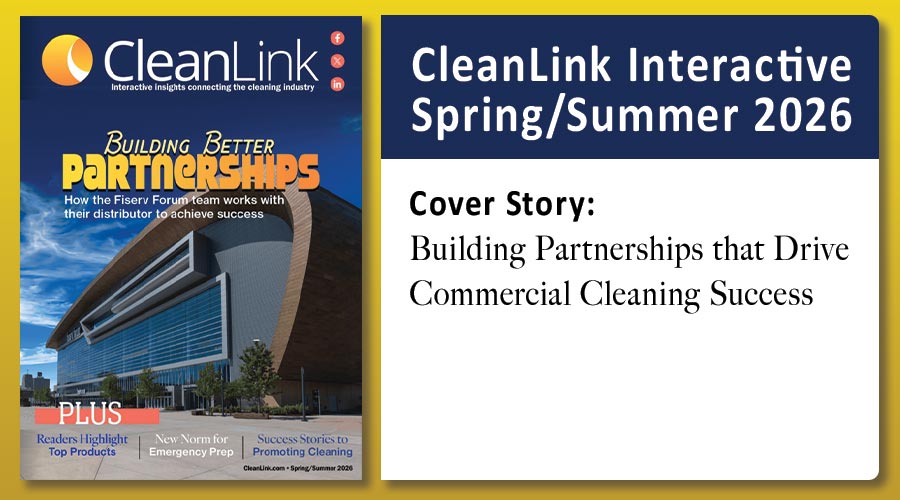
 CleanLink Interactive Spring/Summer 2026 Issue
 Recognizing the 2026 Reader Choice Award Winners
 2026 Emerging Leader Award
 How Surfactant Use is Expanding in Commercial Cleaning
By Lauren Belskie, Marketing Operations Manager at Imperial Brady
In high-traffic environments, restrooms are expected to meet and exceed occupants’ expectations for cleanliness and comfort. That means more than spotless surfaces; it means fully stocked dispensers, dry floors, minimal wait times, reliable fixtures, and an experience that feels seamless from entry to exit.
Today’s occupants move quickly and immediately notice when something is not working. An empty soap dispenser, a slow hand dryer, or overflowing trash can instantly undermine the perception of an otherwise well-maintained facility.
In busy settings such as airports, universities, healthcare facilities, entertainment venues, and corporate campuses, those small breakdowns compound during peak periods.
So, what separates a restroom that simply looks clean from one that consistently functions under pressure?
For building service contractors and in-house facility managers, meeting these expectations requires more than routine cleaning. It requires thoughtful product selection, capacity planning, and systems designed to handle sustained volume without constant intervention. The right products help restrooms absorb traffic surges, reduce complaints, and support efficient labor deployment.
1. Install High-Capacity Dispensing Systems
Although restrooms make up only a small portion of a facility’s footprint, they generate a disproportionate share of complaints. Many of those concerns stem not from overall cleanliness, but from empty dispensers and supply shortages, especially during peak traffic periods.
Stock outs do more than frustrate occupants; they disrupt hygiene. When paper towels or soap are unavailable, some users skip key hand hygiene steps, increasing the risk of germ transmission throughout the facility.
Keeping restrooms consistently stocked is critical, but staffing every restroom around the clock is unrealistic, particularly amid labor shortages and tight budgets. That is where high-capacity dispensing systems make a measurable difference.
There are a variety of high-capacity dispensing systems available, including those for paper towels, toilet tissues, hand soaps, and hand sanitizers. These are designed to extend refill intervals and reduce the likelihood of run-outs. Many also feature controlled dispensing to regulate usage and minimize waste.
High-capacity systems help facilities:
• Reduce refill cycles during peak demand
• Avoid customer complaints
• Minimize emergency restocking
• Prevent bottlenecks caused by empty units
• Control product consumption
Depending on the dispenser and the amount you need, you may even be eligible for reduced-cost or free dispensers. Contact your current distributor to learn more.
2. Configure Touchless Fixtures
Touchless solutions eliminate the issue of germy, high-touch surfaces in the restroom. Sensor activated faucets, flush valves, soap dispensers, and towel dispensers reduce the number of touch points while streamlining the handwashing process. Commercial grade units are built for durability, vandal resistance, and adjustable sensitivity to prevent false activation.
These systems are powered by battery or hardwired energy sources and are built for commercial durability. Many models even allow adjustable run times and sensitivity settings. Touchless systems reduce cross-contamination concerns, lower mechanical failure rates, and improve occupant confidence in cleanliness.
3. Optimize Waste Receptacle Size and Placement
Trash cans are often overlooked until garbage overflow occurs.
High-capacity waste receptacles, slim profile containers that preserve walking space, and liner retention systems that speed up bag changes are critical in heavy use restrooms. Placement matters as much as size.
During peak periods, inadequate waste capacity leads to:
• Overflowing receptacles
• Blocked walkways
• Increased slip hazards from discarded paper towels
• Negative occupant perception
You don't want to slow traffic, have wet hands dripping on the floor, or have everyone using one conveniently located dispenser. It leads to more frequent restocking, crowding, and slipping hazards.
4. Implement a Comprehensive Odor Control System
High-traffic restrooms experience accelerated organic buildup in urinals, floor drains, grout lines, and waste receptacles. Without proactive maintenance, odor intensifies during peak demand. It is critical to have a well-rounded odor control system.
Strategies in a comprehensive odor control program include:
• Active odor control systems
• Passive odor control systems
• Urinal blocks and screens
• Enzymatic drain cleaner
• Scheduled deep cleaning
The most effective public restroom odor control programs utilize a combination of both active and passive systems.
Active Odor Control Systems
Active odor control systems rely on mechanical propellants, like fans or aerosol sprays, to deliver fragrances in your restroom. They spread fragrance around the entire restroom, while passive odor control systems tackle odors in smaller areas.
Generally, these systems are best used if you have a large restroom or significant odor issues. The use of a propellant helps the system spread the fragrance throughout the entire restroom.
Active odor control systems include aerosol dispenser systems and fan propelled systems.
Passive Odor Control Systems
Passive odor control systems are best when placed near the doors, in stalls, and in other areas with a lot of natural airflow.
Some passive odor control systems include gels, solids, toilet clips, urinal screens, and urinal blocks.
Urinal Blocks and Screens
Urinal screens and blocks are also great for reducing odor.
Most modern urinal screens are infused with powerful, long-lasting fragrances and odor-neutralizing agents that are released consistently over time. This not only masks unpleasant smells but also helps neutralize them at a molecular level.
Some urinal screens are even designed to reduce urine splash back, which can leave floors wet and increase the risk of slip-and-fall accidents. By keeping floors drier, you also cut down on bacterial contamination and promote an overall cleaner restroom environment.
Enzymatic Drain Cleaner
Enzymatic drain cleaners break down organic material before it creates persistent odor or plumbing issues. Enzyme-based cleaners are the key to breaking down urine proteins. These proteins are the source of the urine smell you’ll find in the restroom. Using this type of cleaner will eliminate the smell at its source instead of simply masking it.
5. Deploy Smart Restroom Monitoring Systems
Smart restroom systems, like IoT-connected dispensers for paper towels, tissue, or soap and sanitizer, take the guesswork out of restocking and help to avoid run-outs and long lines in restrooms.
In IoT dispensers, the sensor transmits usage and other data through the cloud, wi-fi, or a third-party cellular network. The system then notifies building managers and janitorial staff when product levels are low, the device is jammed, the battery is insufficient, and more. Once resolved, many systems even send confirmation messages to verify the correction of an issue.
Additionally, this allows your staff to get more done in the same amount of time. You can reallocate labor resources to more important tasks like cleaning and disinfecting rather than unneeded towel changeouts.
In addition to improved productivity for your cleaning staff, smart restroom systems offer several benefits, including enhanced maintenance schedules, reduced product consumption and waste, fewer complaints, and improved facility appearances.
6. Equip Janitorial Staff with the Right Time-Saving Equipment
Time-saving ergonomic equipment allows teams to maintain restrooms without shutting them down.
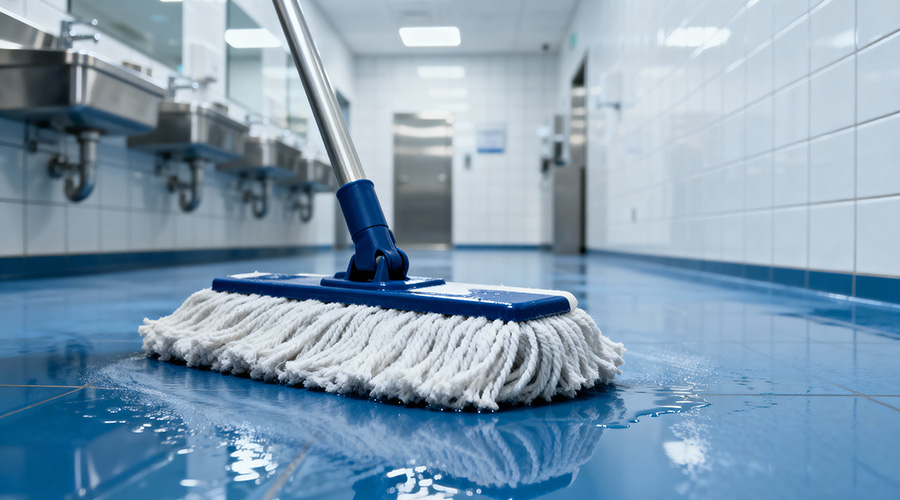
For example, compact battery-powered auto scrubbers designed for tight spaces, low-moisture cleaning systems, and quiet, daytime capable equipment help maintain floor safety during operating hours. These machines mechanically scrub and recover solutions in one pass, leaving floors drier than traditional mopping methods.
In high-traffic environments, extended restroom closures are rarely an option. Efficient janitorial equipment allows teams to shorten cleaning cycles, reduce drying time, improve soil removal, and maintain safety without large barricades.
7. Ensure Product Standardization and Process Consistency
Consistency is critical in high-traffic restrooms where multiple team members often service the same space throughout the day. Without standardized products and processes, results can vary from shift to shift, leading to inconsistent cleanliness and increased operational challenges.
Standardizing key restroom components such as dispensers, cleaning chemicals, microfiber systems, and tools helps streamline operations and makes results more predictable.
Staff can be cleaning the right way but with the wrong systems or tools. Therefore, it's less about the workers being reliable and more about the failure of the overall system. When teams work with the same products across locations or shifts, training becomes simpler, restocking becomes more seamless, and staff can respond to issues more quickly.
For occupants, the benefit is a more dependable experience. A standardized approach helps ensure that restrooms meet expectations regardless of who serviced the space last.
For facility managers and building service contractors, standardization reduces confusion, improves efficiency, and makes inventory management easier. It also minimizes product misuse, protects surfaces from incorrect chemical applications, and helps teams maintain a consistent level of service even during busy periods.
8. Provide Regular Cleaning Team Training
Even the best products and equipment cannot deliver results without proper training. In high-traffic restrooms, where demand is constant and service intervals are short, cleaning teams must be equipped with the knowledge and techniques needed to work efficiently and safely.
Regular training helps staff understand correct cleaning procedures, proper chemical usage, and how to maintain high-traffic spaces without disrupting occupants. It also ensures that employees are familiar with the equipment and tools available to them, allowing them to complete tasks more quickly and with better results.
It is important to provide formal training in addition to in-house training. For many cleaning teams, it is common practice to only rely on current staff members to train new staff on how to perform a cleaning procedure and which commercial cleaning products to use. Often, veteran staff don’t know the right products or processes needed to complete the task either.
Commonly, veteran staff members train new staff with procedures that were passed onto them when they were hired. As a result, they could be training new staff with improper procedures, bad habits, and out-of-date practices. Just because something “has always been done this way” does not mean it is the correct or most efficient way.
From an occupant perspective, well-trained teams translate to cleaner, safer restrooms and fewer disruptions. Floors dry faster, supplies are replenished promptly, and issues such as odor or waste overflow are addressed before they become noticeable problems.
Lauren Belskie is the Marketing Operations Manager at Imperial Brady, where she leads content strategy, SEO, digital marketing initiatives, and educational resources for professionals across the foodservice, janitorial, packaging, and facility management industries.
Lauren holds a Bachelor's degree in Marketing and an MBA from Quinnipiac University. She is a 2024 ISSA Emerging Leader Award recipient, serves as the ISSA New Jersey State Advocacy Leader, and is the ISSA Hygieia Northeast Co Captain. She is also a member of ISSA Hygieia's Recruitment and Onboarding Committee.
With expertise in B2B marketing, content marketing, SEO, and industry education, Lauren has authored hundreds of educational articles, guides, and training resources focused on cleaning and sanitation, foodservice operations, sustainability, workplace safety, packaging, and facility management. She is also a frequent contributor to webinars, industry events, and thought leadership content designed to help businesses improve operational performance and stay informed on industry best practices.
Connect with Lauren on LinkedIn: linkedin.com/in/laurenbelskie.
posted on 3/26/2026
