
 CleanLink Interactive Spring/Summer 2026 Issue
 Recognizing the 2026 Reader Choice Award Winners
 2026 Emerging Leader Award
 How Surfactant Use is Expanding in Commercial Cleaning
By Myles Cook
Laundry operations play a central role in hygiene management across healthcare and long-term care environments. Bedding, towels, resident clothing, and staff uniforms continuously move through laundry systems every day. Despite this, laundry handling practices often receive far less attention than other infection prevention measures like surface disinfection or hand hygiene.
Poorly managed laundry workflows create opportunities for cross-contamination. Environmental services teams frequently work under time pressure and within physical spaces that were never designed for modern infection prevention standards. As a result, contaminated textiles can be handled, transported, or processed incorrectly, and everyday laundry routines can quietly introduce risks that go unnoticed.
Understanding where these risks occur during the laundering process can help facilities reduce cross-contamination and strengthen overall hygiene management.
Why Laundry Handling Matters
Textiles used in healthcare environments are regularly exposed to microorganisms through contact with bodily fluids, skin cells, and contaminated surfaces. When these materials move through a laundry system, microorganisms may transfer to surrounding surfaces, equipment, or hands if handling procedures are not carefully managed.
Infection prevention guidance has long emphasized the importance of correct linen handling practices. These include placing soiled linen into designated containers, minimizing agitation during transport, and ensuring that contaminated textiles remain separated from clean materials.
However, many healthcare laundry rooms were not originally designed for the level of infection-control oversight now expected. Equipment may have been added over time, rooms repurposed, and workflows developed around the available space rather than around hygiene principles.
Over time, this can make it harder to maintain clear separation between contaminated and clean processes.
Linen Collection Risks
The laundering process begins well before textiles enter the washing machine. Collection and transport of soiled linen represent one of the earliest opportunities for contamination to spread if cleaning procedures are inconsistent.
Contaminated linen should be placed directly into designated bags or containers at the point of use. Shaking or sorting items in patient areas can disperse microorganisms into the surrounding environment and increase the likelihood of surface contamination.
Transport routes also deserve careful attention. In some facilities, carts used for contaminated linen travel through the same corridors used to return clean linen to care areas. While this may seem convenient from an operational perspective, it can create avoidable contamination risks.
Clear transport routes and routine cleaning of linen carts can help reduce these issues.
Sorting and Handling Practices
Sorting activities can present additional challenges. Some facilities separate heavily soiled items before washing, particularly when materials are contaminated with bodily fluids.
This process inevitably increases handling and may disturb microorganisms present on textiles. If sorting takes place close to areas where clean linen is folded or stored, contamination could potentially spread to items that have already completed the laundering process.
One practical approach is to establish clearly defined zones within the laundry area. Contaminated linen intake, sorting, washing, drying, and clean-linen handling should occur in separate stages whenever possible.
Even in smaller laundry rooms, simple adjustments can make a difference. Repositioning work surfaces or changing how carts move through a room can help maintain separation between contaminated and clean processes.
In many facilities, these patterns develop gradually. Frontline staff adapts to the available space and equipment over time, often without realizing how the workflow has changed.
Consistency in Washing Parameters
In practice, the laundering stage is designed to remove soil and reduce microbial contamination on textiles. However, the effectiveness of this process depends on several factors working together.
Water temperature, detergent chemistry, mechanical action, and cycle duration all contribute to effective laundering. If these variables change from one cycle to the next, the results can be inconsistent.
In some facilities, chemical dosing may be carried out manually, which can introduce variation. Differences in how staff operate equipment can also affect wash performance.
Clear procedures and routine monitoring help ensure that laundering processes remain consistent. Cleaning crews should understand the importance of following established parameters so that each wash cycle delivers reliable hygiene results.
Monitoring Laundry Performance
Another overlooked area is the ongoing monitoring of laundry performance. Even when procedures are well-designed, small variations in day-to-day operations can gradually reduce effectiveness if not identified early on.
For example, wash cycles may occasionally be shortened to increase throughput during busy periods. Chemical dosing levels may fluctuate if equipment is not regularly checked. Over time, these adjustments can affect both cleaning performance and microbial reduction.
Facilities can reduce this risk by periodically reviewing laundry records and operational practices. Monitoring elements such as wash temperatures, cycle durations, and maintenance schedules helps ensure that laundering processes remain consistent.
Observation can also be a valuable tool. Watching how linen moves through the laundry room often reveals practical challenges that written procedures may not capture. Employees may have developed workarounds to deal with space limitations or equipment constraints, which can unintentionally introduce new contamination risks.
Regular discussion between infection prevention teams, environmental services staff, and facility managers can help identify these issues proactively.
Equipment Layout and Workflow Design
The physical layout of laundry equipment can have a significant influence on infection prevention outcomes.
Ideally, laundry workflows should follow a directional pattern. Contaminated linen enters through one area, moves through washing and drying stages, and exits through a clean-linen handling zone that is separate from incoming materials.
When washers, dryers, and folding areas are positioned without considering this sequence, staff may need to move linen back and forth across the room during routine tasks. Over time, these movements increase the likelihood that contaminated and clean items come into contact.
Facilities reviewing their laundry rooms often discover that relatively small adjustments can improve workflow. Reorganizing work surfaces or repositioning carts may reduce cross-traffic between contaminated and clean stages.
Environmental Surfaces
Environmental surfaces inside laundry rooms can also contribute to cross-contamination if they are not cleaned regularly. Worktops, sorting tables, carts, and folding areas frequently come into contact with textiles at different stages of the laundering process.
If contaminated linen is placed on these surfaces before washing, microorganisms may remain even after the linen has been removed. When clean textiles come into contact with the same surfaces later, contamination could potentially be reintroduced.
Routine cleaning of work surfaces and carts should therefore be part of standard laundry procedures. Assigning clear responsibility for these tasks helps ensure compliance.
The Role of Staff Training
Even well-designed laundry rooms depend on consistent staff practices. Environmental services personnel and laundry operators must understand how their daily tasks contribute to infection prevention.
Training programs should address practical issues such as proper bagging and handling of contaminated linen, minimizing agitation of soiled textiles during transport, maintaining separation between contaminated and clean work areas, and operating equipment according to established wash parameters.
Because laundry staff often work separately from clinical teams, their role in infection prevention can receive less attention. Including laundry personnel in infection prevention discussions can help reinforce the importance of their work.
Storage of Clean Linen
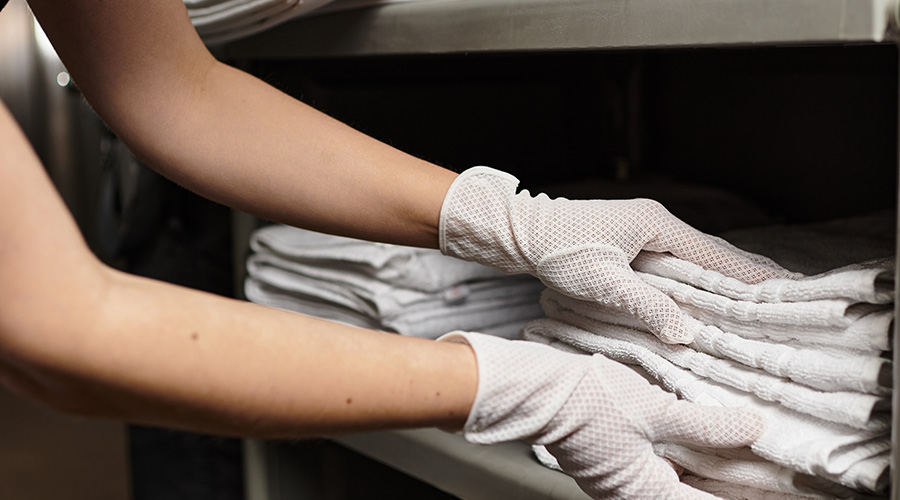
The final stage of the laundry process—clean linen storage—is another point where infection risks can arise.
Clean textiles should be stored in areas protected from dust, moisture, and potential contamination. Storage shelves, carts, and transport containers should also be cleaned regularly.
Facilities should avoid storing clean linen in the same spaces where contaminated items are handled. Even brief contact between clean textiles and contaminated surfaces can compromise the effectiveness of the laundering process.
Reviewing Laundry Workflows
Environmental hygiene programs typically focus on cleaning protocols, disinfectant use, and hand hygiene compliance. Laundry operations sometimes receive less attention despite their importance in managing contaminated textiles.
However, laundry operations form a continuous link in the chain of infection prevention. Every sheet, towel, and uniform processed through a facility represents an opportunity either to remove contamination safely or to spread microorganisms through the environment.
Periodic review of laundry workflows can help facilities identify operational challenges that may increase infection risk. Examining how linen moves through a facility—from patient rooms to collection points, transport routes, laundry rooms, and storage areas—can reveal opportunities for improvement.
Many improvements do not require major infrastructure changes. Adjustments to workflow organization, staff training, or equipment placement can often strengthen infection prevention outcomes and practices across the entire operation.
When laundry workflows are designed with infection prevention in mind—and when staff maintain those practices consistently—facilities can reduce environmental contamination risks while improving operational efficiency.
Myles Cook is Managing Director of Able Cleaning and Hygiene, which works with healthcare and care providers on infection control and operational hygiene practices.
posted on 5/26/2026
