
 CleanLink Interactive Spring/Summer 2026 Issue
 Recognizing the 2026 Reader Choice Award Winners
 2026 Emerging Leader Award
 How Surfactant Use is Expanding in Commercial Cleaning
By Karina Villasenor
The janitorial industry is changing whether we’re ready or not. The companies that figure this out, not just on paper, but in how they treat their people every day, are the ones that will still be thriving in 10 years. The fundamentals are not complicated, but consistency is where most organizations fall short.
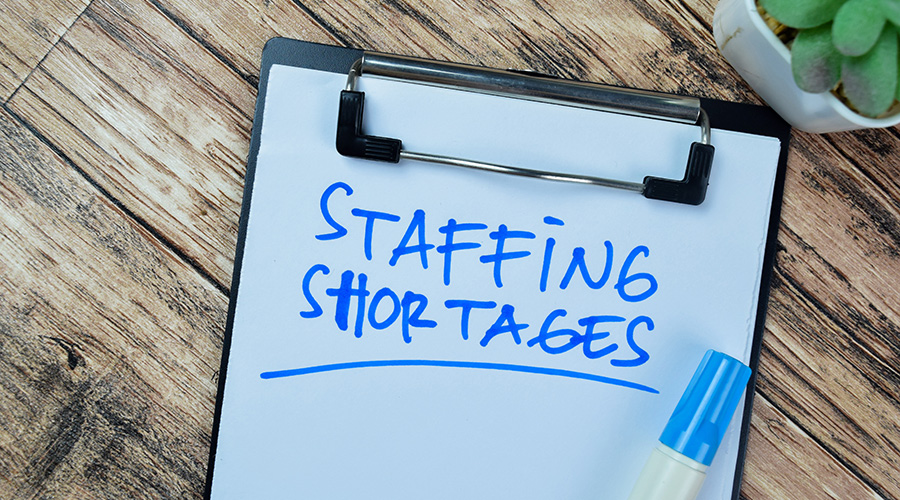
With industry turnover rates historically exceeding 200 percent annually and a shrinking labor pool, there is an urge to recruit harder and faster. Too many companies are still trying to hire their way out of a retention problem. The companies that will win the talent battle in 2026 and beyond aren't just offering more; they're rethinking what today’s workforce actually expects and what a job in this industry can realistically offer in return.
At 4M Building Solutions, that shift in thinking—a relentless focus on retention—has shaped everything from how we hire to how we promote. A few lessons have become clear over time.
Retiring workers, competition from retail and foodservice, and the growing gig economy have made traditional recruiting exceptionally difficult. Shifting immigration policies have added another layer of uncertainty for an industry that has historically relied on immigrant workers as a significant portion of its workforce. Many janitorial companies are struggling to find applicants at all, let alone qualified ones.
The challenge isn’t only supply, it’s perception. If cleaning is viewed as a dead-end job, it will attract workers who treat it like one. The industry's first task is reframing the work itself. Janitorial work is skilled, health-focused, and increasingly technical. Companies that communicate this—in job postings, in interviews and onboarding, and in daily operations—tend to attract candidates who are more invested from the start and more likely to stay.
Wages Open the Door
Yes, wages matter. Industry data shows 86 percent of janitorial companies are increasing pay to stay competitive. Benefits packages—paid time off, health coverage, performance bonuses—are increasingly expected, though what companies deliver varies significantly, and applicants are doing their homework.
Employees who feel seen, supported, and connected to something larger than their shift are significantly more likely to stay past the 90-day mark, historically the highest-risk window for turnover. In our experience, those first 60-90 days are where small moments (good or bad) tend to determine whether someone stays or leaves.
Regular recognition, even informal acknowledgment from a supervisor, often has a more immediate impact than more formal programs alone. The most effective organizations build systems that reinforce both. At 4M, we’ve formalized recognition through a program we call Goodworks, which encourages peer-to-peer recognition, offers rewards, and strengthens team building at the account level. Accolades from customers about our team members are escalated to our C-Suite for personal recognition and sharing through company communications channels.
In practice, that recognition is reinforced through multiple touchpoints: they’ll receive a thank you from the CEO with their teammates and manager recognized; they’ll be highlighted in a “Shining Star” social post and featured in the quarterly newsletter; they’ll receive a GoodWorks ticket that qualifies them for rewards; and they could even be nominated for annual recognition awards.
Your Best Recruiters Are Already on Your Payroll
One of the most overlooked recruiting strategies in this industry is already inside your organization. When employees see real opportunities for advancement, and believe in the culture they're part of, they become natural ambassadors. They talk to friends, family, and former colleagues. They share what they've experienced firsthand.
Structured employee referral programs formalize that enthusiasm. By paying referral bonuses tied to milestones, such as 30 days, 90 days, or six months, companies give current employees a financial stake in the success of the people they bring in. Over time, this creates a more self-sustaining recruiting pipeline: your team refers people who understand what they're walking into, integrate more quickly into the culture, and are more likely to grow with the company.
In several markets, we’ve seen referral hires stay meaningfully longer than non-referral candidates. Among our workforce, more than 60 percent of employees stay for more than one year, compared to an industry average of 22–25 percent. When you invest in your people and show them a future, they invest back.
The Career Path Nobody Talks About
One of the biggest missed opportunities in this industry is career development.
The conversation in our industry tends to stop at "competitive wages." Workers, especially younger ones, want to know where this job goes. What does growth look like? Is there a ladder, or just a ceiling? At 4M, we’ve put in place structured three-month training courses, which we call Lead 360, for hourly and salaried employees to help them move to the next level if that’s their goal.
BSCs must build deliberate pathways from frontline roles into supervision, management, and beyond. Specialized training in areas like hospital-grade disinfection, robotics operation, and advanced floor care doesn't just improve service quality; it gives employees skills they're proud of, not to mention credentials that travel.
Within our organization, one superb example is the recent retirement of an operational vice president after 42 years. He started with us as a part-time custodial worker at a public garden and rose to manage commercial cleaning and janitorial services at a Fortune 100 manufacturing facility.
Or a brother and sister duo, who followed their own separate pathways from entry-level positions to land as district managers in the company’s most robust region.
These examples aren’t as rare as many assume. They're the result of intentional investment in people who were never told this industry could be a career. When you show someone a future, they stop looking for the exit. Too often, companies have these stories but fail to share them consistently. Most BSCs can find similar examples within their ranks and should do everything possible to share them internally and with job seekers.
Compliance: The Cost of Getting It Wrong
I’d be doing a disservice to any HR professional or operator reading this if I didn’t address compliance directly. This is the part of the job that doesn’t forgive mistakes. In my experience, the companies that get into trouble aren’t usually cutting corners intentionally. They just didn’t keep up.
Three areas deserve immediate focus:
1.Independent contractor misclassification
The Department of Labor's updated 2025 rules emphasize economic dependence as a key test. Companies using misclassification to reduce payroll costs are playing a dangerous game.
2. Wage and hour compliance
Federal minimums, state variations, overtime rules, and a detail many companies overlook: travel time between job sites is generally compensable. This is an area where even well-intentioned operators can fall out of compliance without realizing it.
3. State-specific mandates
Paid sick leave accrual laws took effect across multiple states in 2025. Pay transparency requirements—including salary ranges in job postings—are set to take effect in 2026. HR teams and operators need to stay ahead of these, not react to them.
Technological Updates
Smart scheduling software, automated reporting tools, and robotic cleaning equipment aren't replacing workers. Instead, they’re helping teams operate more efficiently while freeing managers to focus on coaching, development, and retention.
For smaller BSCs, the barrier to technology adoption often feels high. In many cases, however, the cost of a single bad hire or compliance issue can outweigh the investment required to implement the right tools.
The Opportunity Inside the Crisis
None of this is easy, and I won’t pretend that it is. But the companies getting it right aren’t doing anything mysterious. They’re showing up consistently for their people, staying ahead of the rules, and actually believing that a custodial job can be the start of something real.
That’s what this industry can be. We just must demonstrate it.
Karina Villasenor is Vice President of Human Resources at 4M Building Solutions. She joined 4M in 2007 and serves on the executive leadership team, overseeing recruitment, benefits, and labor relations across the company's nationwide operations, which employ more than 7,000 team members.
posted on 5/20/2026
