
 CleanLink Women of Clean - 2026 Honorees Announced
 CleanLink Interactive Spring/Summer 2026 Issue
 2026 Emerging Leader Award
 Recognizing the 2026 Reader Choice Award Winners
Key Takeaways:
• IoT data helps teams prioritize restrooms that need service the most.
• Improved Productivity: Real-time alerts reduce unnecessary checks and prevent supply runouts.
• Usage data helps optimize staffing, cleaning schedules, and inventory.
By Keith Schneringer
Under the category of “what keeps facility cleaning managers up at night," cleaning and maintenance of restrooms is a strong candidate for the short list. Studies show restrooms are typically the number one source of cleaning complaints for a facility cleaning manager or building service contractor (BSC), and restrooms account for an oversized portion of any cleaning budget. Restrooms are the one place where a building occupant is pretty much guaranteed to visit at least once, if not multiple times per day. And because these spaces are so frequently used, they also tend to be the most scrutinized as relates to overall cleanliness and supply run-outs.
These common complaints—overall cleanliness and supply run-outs—have traditionally been addressed by strict adherence to a cleaning schedule. However, not all restrooms receive the same amount of traffic throughout the day, and while one restroom that was fully stocked at 8 a.m. may need attention before noon, another restroom may receive relatively little traffic but still be checked unnecessarily because it appears on a fixed cleaning schedule. When custodial teams are already stretched thin, sending workers from restroom to restroom to determine what needs attention can consume valuable labor without necessarily improving cleanliness.
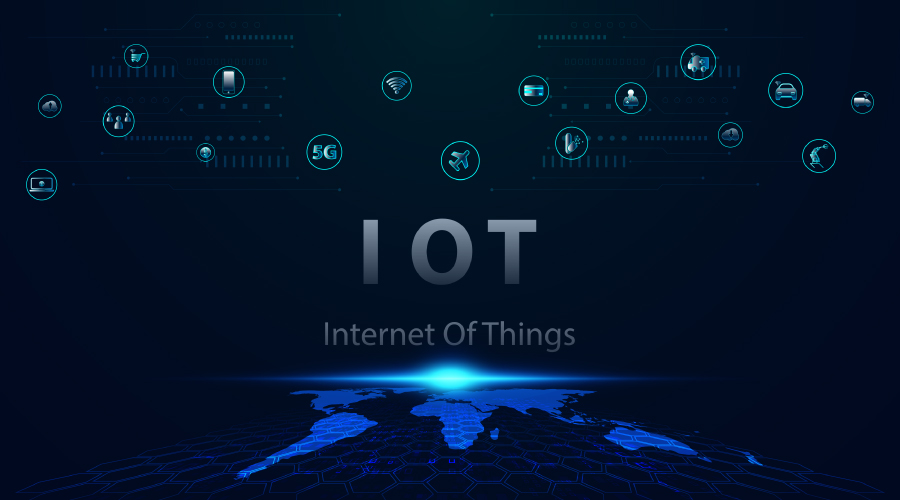
Internet of Things (IoT) technology can improve this traditional approach.
Connected restroom dispensers and sensors can provide cleaning teams with real-time information about product levels, restroom usage, and service needs. Instead of relying exclusively on predetermined schedules, facility cleaning managers and BSCs can use data to help determine where attention is needed.
The result is not necessarily less cleaning. It is the opportunity for more targeted cleaning and servicing, directing limited labor resources toward the spaces where they can provide the greatest value.
Different Methods
Traditional restroom maintenance commonly follows a route-based model. A worker visits each restroom at designated intervals, inspects the space, cleans as necessary, and checks dispensers for soap, paper towels, and toilet tissue.
The simplicity of this approach is also its limitation.
Traffic doesn’t necessarily flow evenly to all restrooms, and it doesn’t always flow consistently throughout the day, either. Restrooms near cafeterias, conference areas, classrooms, transportation hubs, event spaces, or building entrances may experience sudden periods of intense use. Other locations can remain relatively quiet for hours.
A fixed schedule can potentially miss these variations. IoT-enabled restroom systems help to track conditions such as:
• Soap, paper towel, and toilet tissue dispenser levels
• Historical product consumption
• Time since the last service
• Supply conditions requiring attention
• Dispenser conditions requiring attention
This information is communicated via the IoT platform, and facility cleaning managers, BSCs, and cleaning workers receive notifications so that the necessary restroom services can be provided.
Rather than asking the question, "Which restroom is next on the route?" cleaning teams can now know the answer to "Which restroom needs us next?"
The potential labor benefit extends beyond eliminating unnecessary dispenser checks.
Consider a cleaning professional responsible for restrooms throughout a large office building, school, healthcare campus, airport, or other facility. Without visibility into restroom conditions, the cleaning worker may spend time walking between locations only to discover that no supplies or additional service are required.
Those minutes add up.
With better information, supervisors can prioritize work based on actual conditions. Workers can be directed toward high-use restrooms while lower-use locations remain on an appropriate inspection and cleaning schedule.
Data can also help workers prepare before beginning a route. If a system indicates that several dispensers need refilling, the employee can bring the appropriate supplies rather than discovering shortages after arriving and returning to a janitorial closet.
That distinction is important. IoT technology does not perform the cleaning or refill dispensers. Its value comes from providing better information to the people who do.
For facilities facing persistent labor constraints, this technology can help organizations make better use of available worker hours without simply asking employees to work faster.
Support Better Hygiene
Productivity is only part of the equation. Empty soap, towels, or tissue dispensers can quickly become a visible service failure and potentially interfere with good hygiene practices.
A traditional inspection identifies an empty dispenser only after an employee reaches it. A connected system may provide an indication that supplies are approaching a predetermined refill point before a complete runout occurs.
Instead of responding to an occupant complaint or discovering an empty dispenser during the next scheduled service, staff can address the condition earlier.
Supply management for connected dispensers moves from reactive to predictive.
And while a dispenser sensor cannot determine whether a sink needs cleaning, a floor presents a slip hazard, or a high-touch surface requires attention, it does provide information that can be used to streamline and improve restroom maintenance.
A number of short-term benefits have been cited, but the longer-term value of connected restroom technology lies in the data collected over time. Individual alerts help employees respond to immediate conditions, but weeks and months of information can reveal patterns.
Facility cleaning managers and BSCs may discover that certain restrooms consistently experience peak traffic at particular times. Soap consumption may differ significantly between locations. A particular dispenser may require replenishment much more frequently than another. Service demand may rise predictably around events, shift changes, meal periods, or seasonal occupancy patterns.
Those insights can inform decisions about staffing, cleaning schedules, and supply needs.
Rather than relying solely on assumptions about restroom use, managers can compare expected demand with actual usage.
This can also improve workloading, the process of determining the labor required to perform defined cleaning tasks at an established level of service. Historical restroom data can provide another input when evaluating frequencies, routes, and staffing requirements.
The objective should not be to use data to simply reduce labor minutes. Instead, it can help determine whether labor is being deployed where and when it provides the greatest benefit.
Be More Predictable
Connected dispensers can also provide useful information beyond the restroom itself.
Consumption data can help cleaning teams better understand how quickly products are being used across individual locations, buildings, or an entire portfolio. Over time, this information can support more accurate forecasting and inventory planning.
Managers may be able to identify unusually high consumption, compare usage patterns between similar facilities, and establish more appropriate stocking levels.
Better visibility can potentially reduce two opposite problems: running out of essential products and maintaining excessive inventory "just in case."
For multi-site organizations, aggregated data may be particularly valuable. Comparing product consumption and service patterns can help identify operational differences that would otherwise be difficult to see.
There is also a human side to connected cleaning.
Technology is most effective when employees understand why it is being introduced and how it can make their work easier. If workers view sensors primarily to monitor their individual performance, adoption may suffer.
A better approach is to use data as a decision-support tool. Instead of requiring an employee to repeatedly check locations that do not need service, technology can help identify priorities, reduce unnecessary walking, and allow more time for cleaning tasks that require human skill and attention.
Custodial professionals also possess knowledge that sensors do not. Their observations can help facility cleaning managers and BSCs interpret data, identify unusual conditions, and improve workflows.
The strongest cleaning systems combine IoT-enabled data with worker experience and professional judgment.
IoT-enabled restroom dispensers are one example of a broader shift toward data-informed facility cleaning.
For facility cleaning managers and BSCs challenged by staffing shortages, rising service expectations, and pressure to operate more efficiently, knowing where supplies are running low and where restroom demand is increasing can help turn the rigidity of a traditional cleaning schedule into a more responsive cleaning operation.
The goal is ultimately straightforward: get the right cleaning worker with the right supplies to the right restroom spaces at the right time.
When IoT technology helps accomplish this goal, the "smart restroom" becomes less about the technology itself and more about enabling cleaning teams to work smarter while continuing to maintain the clean, well-stocked, and hygienic restroom spaces that building occupants expect.
Keith Schneringer has been in the sanitary supply industry since 1990 and is currently the Senior Director of Industry + Supplier Marketing for Imperial Brady. In his current role, Keith is responsible for marketing to the jan/san and facility care, foodservice, and industrial packaging industries, for developing vertical-market-specific programs to better assist customers, and for leading the company's sustainability initiatives. He is a LEED AP O+M, CIMS-GB ISSA Certification Expert, former President of San Diego Green Building Council, stakeholder in the standard development process for ISSA CIMS-GB as well as the Green Seal GS-1, GS-37, and GS-52 standards, and has been recognized as Advocate of the Year by ISSA. Before assuming his current responsibilities, he worked as an account consultant, sales manager, marketing manager, and director of channel marketing + sustainability for WAXIE Sanitary Supply.
posted on 11/25/2026
