
 CleanLink Interactive Spring/Summer 2026 Issue
 Recognizing the 2026 Reader Choice Award Winners
 2026 Emerging Leader Award
 How Surfactant Use is Expanding in Commercial Cleaning

Key Takeaways:
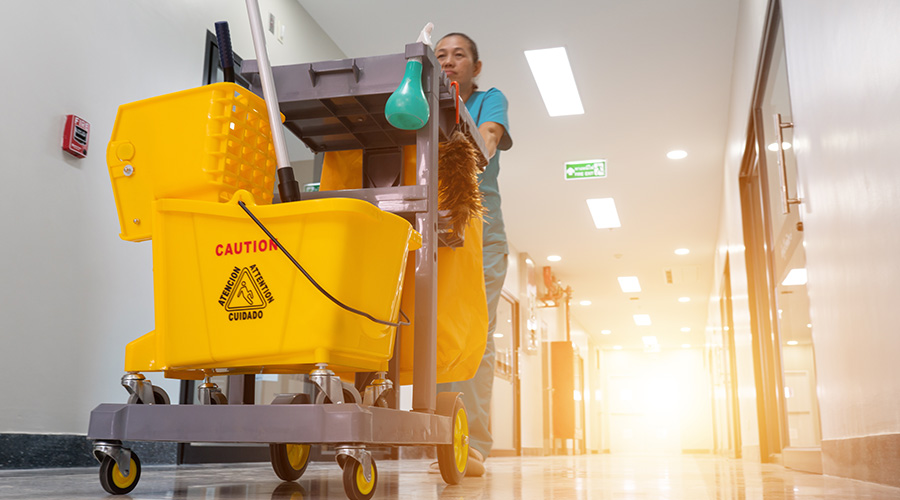
• A streamlined, well-organized commercial cleaning cart stocked with essentials reduces supply waste, speeds up training, and improves cleaning consistency.
• Color-coded microfiber cloths, maintained basic janitorial tools, and task-appropriate cleaners support efficient cleaning operations.
• Using EPA-registered disinfectants, wearing PPE, and using wet floor signs when accessible creates safer cleaning operations.
By Shari Cedar, Contributing Writer
Walk into any janitorial supply shop, and you’ll find a product for every problem—and a few more problems you didn’t even know existed. As an industry, janitorial has gotten very good at adding things. But when we ride along with our cleaning crews or audit a client’s building, the best-performing teams with the most satisfied customers are rarely the ones with carts overflowing with products. They’re the ones with the right items that are organized well.
So, let’s start from the beginning. If you were building a cart from scratch for a commercial space, what would you actually need?
Microfiber, and plenty of it.
If I could only put one item on a cart, this would be it. Quality microfiber cloths trap and lift soil instead of simply pushing it to another area—and they do it with less chemical and less effort. Color-code microfiber cloths by task and location (restrooms, break rooms, general surfaces, etc.) so nothing crosses over. Launder them properly: using fabric softener can clog the fibers and kill performance. I’ll take a cart with a dozen fresh microfiber cloths over one with a single, worn-out rag any day.
The basic tools still matter.
The broom and dustpan, mop bucket, mop stick and mop head, wet floor sign, door stopper, and duster all belong in the basic setup. They may not be glamorous, but these tools are used all shift long and need to be clean, maintained, and within reach.
The right chemicals for the right space.
You do not need a bottle for every surface, but you do need the right product for the task. In restrooms, that means a neutral cleaner for the floor and non-acid bathroom cleaners (NABC) for toilets and urinals. Outside the restroom, a multipurpose cleaner handles most routine surfaces such as desks, counters, tables, sinks, and door hardware.
A disinfectant used deliberately.
Cleaning and disinfecting are not the same thing—we see a lot of confusion here. Keep an Environmental Protection Agency (EPA)-registered disinfectant on the cart for high-touch points and other areas where disinfection is called for. Then, train your team on dwell time. A disinfectant that’s wiped away in five seconds isn’t doing its job. Used with intention, a disinfectant is a targeted tool rather than a daily, blanket application.
A glass cleaner with a few dedicated tools.
Streak-free glass is one of the first things a client notices. A simple glass cleaner, a squeegee or lint-free cloth, and a scrub pad or scraper for stubborn spots round out the essentials. Add a small detail brush for corners, grouts, and keypads (there’s always something hiding in the keypad).
Personal protective equipment (PPE) and safety basics.
Gloves are a must, along with properly labeled spray bottles and current safety data sheets. A wet floor sign is equally important and should always be readily available anytime floors are cleaned. A well-stocked cart protects your people, clients, and everyone else moving through the facility.
So, just why does the cart matter? A streamlined cart is a competitive advantage. It cuts costs, reduces waste, and speeds up training. It can also improve consistency, which is extremely valued by commercial cleaning customers. A well-organized cart is reflective of your organization—it shows discipline, attention to detail, and pride in the work. A crew that knows exactly what’s on its cart and why spends less time hunting for supplies and more time delivering a space that looks, smells, and feels clean.
There’s no shortage of new cleaning technology, and I’m not saying it’s not worth exploring—because it is. But results still come from fundamentals: the right cloth, the right product, and a well-trained team that knows how to use both.
Shari Cedar is the CEO & Co-Owner of AK Building Services, where she drives the company’s vision to redefine what clean means through innovation, leadership, and a people-first culture.
AK Building Services is a family-owned, industry-leading commercial janitorial services provider based in Florida. The company is proud to be GBAC-Certified (Global Biorisk Advisory Council), WBEC-Certified (Women’s Business Enterprise Council), and ISN-Certified, reflecting its commitment to safety, quality, and excellence. AK Building Services is also a member of Building Service Contractors Association International (BSCAI).
Find Cedar on LinkedIn here.
posted on 10/22/2026
