
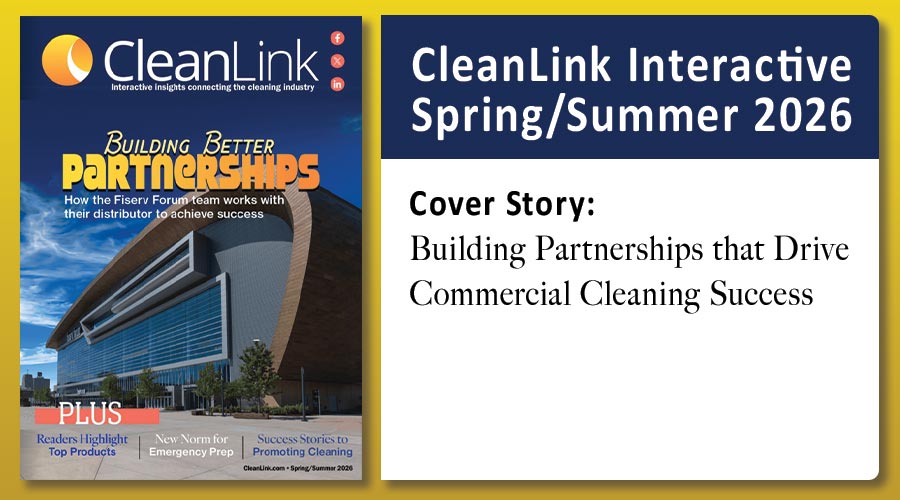
 CleanLink Interactive Spring/Summer 2026 Issue
 Recognizing the 2026 Reader Choice Award Winners
 2026 Emerging Leader Award
 How Surfactant Use is Expanding in Commercial Cleaning

Key Takeaways
- Strong relationships build trust before the RFP.
- Client perception is shaped by every interaction, especially professionalism and preparation.
- Visible leadership commitment demonstrates accountability and strengthens client confidence.
By Ron Segura
In parts one and two of this three-part series, we explored how productivity, scope, communication, technology, and proposal presentation may have influenced our bid for the janitorial work. While we were not awarded the contract, we now have an opportunity to reflect three factors that are often less visible but just as important: relationships, client perception, and leadership commitment.
Price and scope matter, but prospects often choose the contractor who gives them the greatest confidence. Let’s examine how these factors may have affected the decision and how we can strengthen our approach moving forward.
Every relationship starts with the first interaction. Whether it is an appointment setter or a salesperson, the prospect is already forming an opinion of our company. Are we prepared, professional, and focused on providing value?
Being invited to participate in a request for proposal (RFP) means the prospect views us as qualified. However, qualification alone rarely wins contracts. Strong relationships, helpful insights, and a genuine understanding of the client’s operation often make the difference. If our first meaningful conversation occurred during the walkthrough, we may have missed earlier opportunities to establish trust.
Successful relationship-building is about becoming a resource, not simply reaching out when there is a bid opportunity. Regular check-ins, facility visits, sharing industry knowledge, and staying informed about a prospect’s priorities help create familiarity and trust. When an opportunity arises, we want prospects to already know who we are and feel confident in our commitment to their success.
Winning beyond the numbers begins with relationships. Trust creates opportunities long before a proposal is submitted.
We may view ourselves as responsive, knowledgeable, and easy to work with, but what matters most is how the prospect sees us. Every interaction contributes to that perception, including our responsiveness, professionalism, punctuality, preparation, and follow-through.
The bid walkthrough provides an important opportunity to build confidence, but it can also create concerns if we are not careful. Common issues include:
- Arriving late, which may suggest poor reliability.
- Asking questions already addressed in the RFP, which can signal a lack of preparation.
- Asking questions that do not provide value, rather than using the opportunity to demonstrate expertise.
- Focusing too much on why the contract is being bid instead of understanding the prospect’s goals and objectives.
Prospects often view behavior during the bidding process as a preview of how a contractor will perform after the award. The impression we create during the sales process can significantly influence the final decision.
Every interaction is an opportunity to build confidence, credibility, and trust.
Leadership's Role
A comment I frequently heard from clients dissatisfied with their incumbent contractor was something like “Before the contract was awarded, communication was almost excessive. Afterward, the managers who made the promises disappeared until renewal.”
This concern is not simply about communication. It is about confidence. Clients want to know that the leadership team making commitments during the sales process will remain engaged after the contract begins.
As we reflect on this opportunity, we should ask whether our proposal demonstrated a clear leadership commitment. Did we explain who would be responsible for the relationship? Did we define executive involvement, meeting schedules, and escalation procedures? Did we show that accountability would continue after the award?
During my time at Disney, I met monthly with a vendor executive who remained actively involved long after the contract was signed. He made the commitment and continued supporting it. While that account was large, the lesson applies to every client relationship.
Leadership commitment means conducting executive visits, participating in business reviews, remaining accessible when issues arise, and following through on promises. These actions strengthen partnerships and reassure clients that accountability will not disappear after the sale.
The selected contractor may have presented this commitment more clearly. In future proposals, we can strengthen our position by identifying leadership responsibilities, outlining communication schedules, and explaining how concerns will be addressed.
Visible leadership separates promises from plans and demonstrates long-term accountability.
Conclusion
When we lose a janitorial contract, the answer is rarely just about price. The successful contractor may have built stronger relationships, inspired greater confidence, or demonstrated a more visible leadership commitment.
The lesson is simple: relationships open doors, perception builds confidence, and visible leadership creates accountability. Reflecting on these factors is not about criticizing the prospect’s decision. It is about understanding how we can improve our own approach.
We cannot change this outcome, but we can influence the next one. By earning trust before the proposal, strengthening confidence throughout the process, and demonstrating accountability after the award, we position ourselves for future success.
As we review every lost opportunity, this question should guide us: If we were the prospect, would our proposal have given us enough confidence to award the contract to ourselves?
Ron Segura is President of Segura & Associates, a consulting firm that helps organizations become more efficient and communicate better. With decades of experience in business leadership and client relations, he is dedicated to building strong connections in today’s fast-changing digital world.
posted on 10/5/2026
