
 CleanLink Interactive Spring/Summer 2026 Issue
 Recognizing the 2026 Reader Choice Award Winners
 2026 Emerging Leader Award
 How Surfactant Use is Expanding in Commercial Cleaning
Key Takeaways:
• Proactive winterization protocols require facility cleaning managers to audit equipment, review emergency procedures, and identify slip-and-fall risk zones well before inclement weather hits.
• Strategic inventory management allows commercial cleaning professionals to leverage pre-season discounts on essential supplies.
• Advanced floor care maintenance is crucial for shielding facilities from winter moisture and debris degradation.
The 1934 classic song "Winter Wonderland" evokes icy imagery of snow-laden sidewalks and frost-covered windows. This picture could not be painted without quality facility exterior and entryway maintenance. As the current El Niño continues its influence on climate conditions across the United States, the National Oceanic and Atmospheric Administration (NOAA) predicts many regions will face more precipitation this winter.
While weather may not be altogether predictable, the need for preventative maintenance is. Inclement weather can quickly snowball into a safety risk, compromising both the building and its occupants. Facility cleaning managers can proactively employ effective snow and ice removal protocols to ensure their facilities remain a beautiful sight and safe haven for building occupants.
Winterizing Checklist
Winter weather prep should start in summer. Facility cleaning managers should take time to review plans and procedures—identifying areas associated with slip-and-fall injuries, preparing snow and ice removal equipment, and outlining weather emergency protocols for frontline staff. This is also a great time to evaluate a facility's inventory and preorder product, such as ice melt, as jan/san distributors may be offering pre-season discounts.
Floor care is another factor to consider before winter weather makes its impact. Some commercial cleaning professionals elect to refinish floors—stripping, sealing, and coating the floor in wax—to protect flooring from moisture and debris degradation. Others choose to schedule floor and carpet care maintenance following winter, as certain snow and ice removal products can melt through the wax coating.
In either case, implementing a comprehensive matting program is essential. According to the 2026 Travelers Injury Impact Report, slips, trips, and falls contribute to 27 percent of on-site injuries, with indirect costs outweighing injury expenses by five to one. From scraper mats to wiper mats to a combined matting solution, utilizing multiple mats outside and inside a facility can remove contaminants and preserve floor integrity.
Exterior maintenance should not be overlooked. Frontline staff should receive training on proper personal protective equipment (PPE) to wear in winter weather, deicing chemistry and application, and snow removal equipment use, care, and storage. In the case of an inclement weather event, cleaning crews should know how to safely clear walkways, monitor refreezing risks, and rotate or replace matting as the weather allows.
Winter Weathering
Mats are placed, equipment is up-to-date, and supplies are stockpiled. Now, as the snow begins to fall, facility cleaning managers will need to ensure surfaces are safe for walking and driving.
Frontline teams can start by applying an anti-icing agent to sidewalks and parking lots prior to the snow hitting the pavement. Even a light layer of snow can cause ice to form beneath, causing invisible slip-and-fall hazards. The most popular anti-icing agent is chloride-based salts, like rock salt.
However, salt brine is also becoming a beneficial deicing tool. A Clear Roads study found that less salt was required in salt brine (40 to 72 percent less) than rock salt, making this liquid solution a cost-effective, sustainable alternative to traditional products. Overall, facility cleaning managers should select a salt that aligns with the surface type and temperature to determine which product would work best.
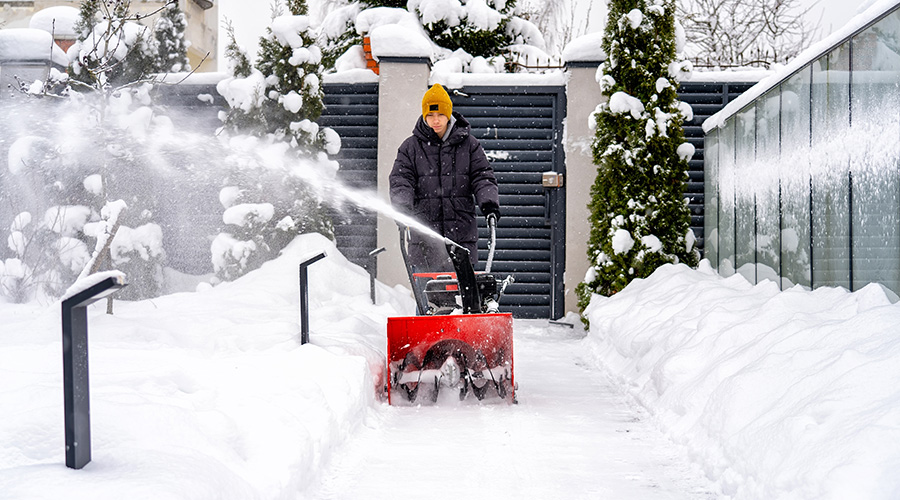
The next step after the anti-icing agent prevents ice from bonding to the surface is to remove the snow. The Snow & Ice Management Association (SIMA) recommends clearing snow after every few inches of snowfall—instead of waiting for it to stop—to mitigate its impact. A tried-and-true tool, manual shoveling still has its place in snow removal operations. Manual shoveling should be applied for small spaces—entrances and tight areas. For facilities with a larger footprint, investing in snow blowers/throwers or vehicle-mounted snowplows can increase labor output and minimize the amount of time frontline staff spend outdoors.
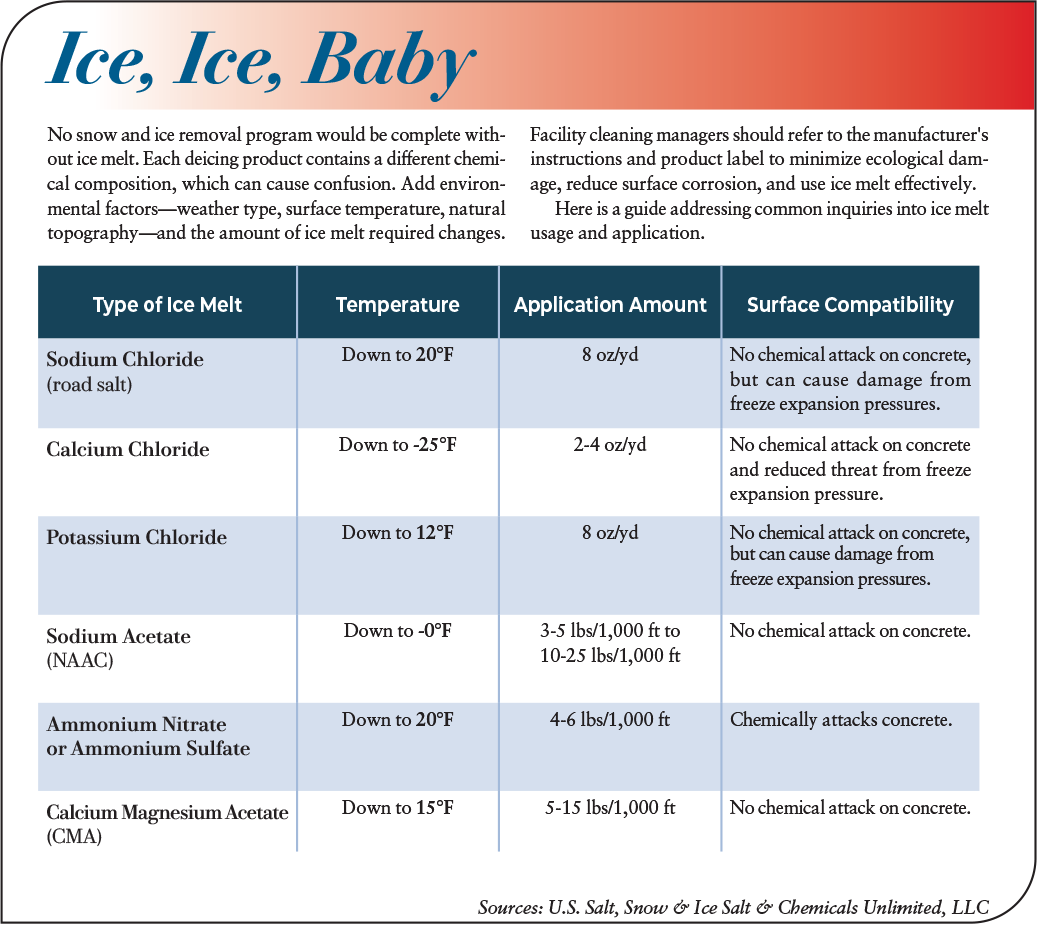
After snow removal, it is beneficial to apply ice melt products to remaining ice or precipitation. Deicing controls winter weather buildup by melting away snow and ice. However, the chemical composition of these products can be corrosive if applied excessively, damaging concrete and steel. Therefore, facility cleaning managers should instill a "less is more" mantra, applying just enough product to do the job.
Despite the efforts on the exterior, anyone entering a facility can bring in outside contaminants. Although anti-icing, snow and ice removal, and deicing minimize the volume of debris entering a building, matting is a necessary barrier. In fact, an effective matting program can prevent 80 to 90 percent of moisture and debris from entering a facility.
The remaining 10 percent of unwanted matter can include slush and snow, which leaves moisture, as well as salt and ice melt residues, which results in a white-colored film. Both can compromise surface traction and flooring appearance, making rapid and routine floor maintenance essential. Frontline teams can address this tracked-in mess through floor care tools and equipment that remove moisture—wet-dry vacuums, microfiber flat mops, and autoscrubbers.
From Frozen to Functioning
When the storm settles, facility cleaning managers should reevaluate their cleaning program. Snow and ice removal equipment should be assessed to avoid mechanical issues attributed to overuse. The timing of snow and ice removal should also be addressed, as ongoing operations can be impacted by foot traffic, and coordination of the two can create a safer program.
Exterior and interior inspections also establish a safe and healthy environment. Facility cleaning managers should prioritize high-traffic areas, such as entryways and exits, ensuring these areas remain unobstructed. Lakeside Project Solutions recommends reapplying ice melt to walkways, parking lots, and loading docks to further alleviate winter weather hazards.
Inside the facility, floors must remain an ongoing focus. Dirty floors can create a negative public perception of a business, according to 68 percent of Cintas Corporation survey respondents. About 57 percent of Americans say dirty building entryways would influence their opinion, whereas 51 percent name poor parking lot maintenance.
Floors can be treated with neutralizing cleaners to dissolve chemical residues from snow and ice removal products. Floor care frequency, in and outside of an entryway, can be increased to reduce slip-and-fall risks. Facility cleaning managers should have open communication with frontline staff to address any remaining areas of concern.
When facilities respond proactively to winter weather threats, snow and ice become part of the routine rather than an operational risk. Applying the correct anti-icing and deicing product amount, in the right sequence, using appropriate equipment and tools can enhance snow and ice removal. As a result, high-traffic areas are clean and safe, creating a functional environment for all.
Taylor Vraney is the Assistant Editor working on Facility Cleaning Decisions, Sanitary Maintenance, and Contracting Profits magazines. She's also very active in contributing to CleanLink.com. Prior to her time in media, Taylor served as a Special Education teacher, which gives her a strong perspective on custodial operations and its role in creating healthy environments for building occupants.
Taylor currently oversees Sanitary Maintenance's Sales Leaders Award program, which gave her a quick introduction to some of the many outstanding personalities that make up this great industry. At industry events, Taylor got first-hand experience with products and equipment, and even recorded the experience to demonstrate what frontline workers experience on the daily.
Taylor handles the collection of content for the Cleaning Insider newsletter and facilitates CleanLink's monthly polling questions.
Follow Taylor on LinkedIn here.