
 Celebrating BSCAI's 60th Anniversary eBook
 Recognizing the 2026 Reader Choice Award Winners
 2026 Emerging Leader Award
 How Surfactant Use is Expanding in Commercial Cleaning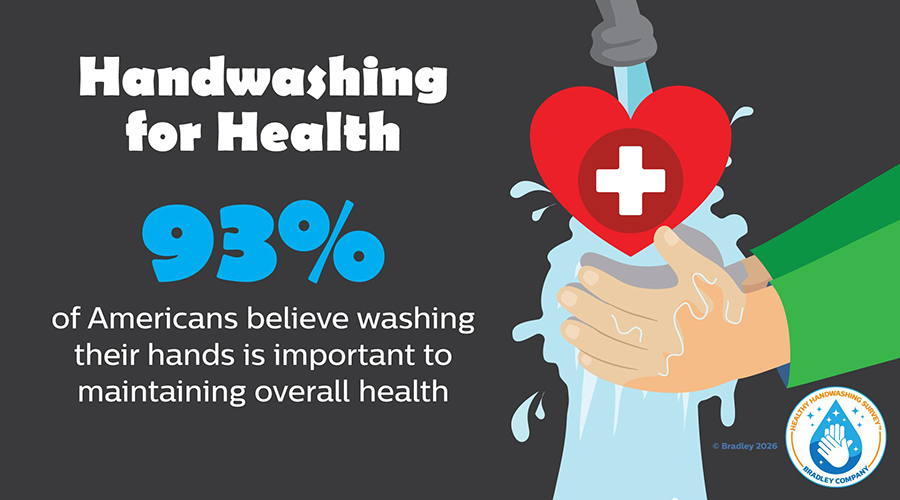
As the U.S. tackles a tough flu season, commercial cleaning executives will need to examine the efficacy of current infection control and prevention cleaning systems. According to Bradley Company’s annual Healthy Handwashing Survey, 70 percent of Americans are concerned about contracting the flu, compared to 59 percent who felt this way three years prior.
To address their anxieties, individuals are turning to diligent hand hygiene regimens. The survey found that 81 percent of Americans wash their hands more frequently or more thoroughly during flu outbreaks and seasonal virus surges. Nearly all respondents (93 percent) believe handwashing is important to maintain overall health, reinforcing its role as one of the most trusted and accessible methods to mitigate the spread of illness.
Bradley executed its first Healthy Handwashing Survey in 2009 during the H1N1 virus outbreak. Back then, just 45 percent of Americans said they elevated their hand hygiene in response to seasonal virus outbreaks. Now, 17 years later, handwashing has surged as a sickness prevention strategy.
“Handwashing, using soap and warm water, is one of the simplest and most effective ways to reduce the spread of disease, including the flu,” says Brian M. Forster, Ph.D., Microbiologist and Chemical Hygiene Officer at Saint Joseph’s University, Philadelphia. “Our hands touch many surfaces during the day, including our face, and are an easy way for us to pick up something that can make us sick.”
Cutting Corners on Hand Hygiene
Although many people understand the health benefits of handwashing, the survey reveals that healthy habits often don’t last—especially in public restrooms. Last year, 81 percent of Americans shared they always washed their hands after using a public restroom. In 2026, that figure dropped to 76 percent.
On average, Americans report washing their hands about eight times per day, but frequency varies widely. Women wash their hands about two times more each day than men, a long-standing pattern that continues to underscore the gap between awareness and everyday practice.
Skipping the Suds
Lack of handwashing follow-through in public restrooms remains a visible, and troubling, concern. More than three-fourths of respondents (77 percent) say they have seen others leave a public restroom without washing their hands, up from 68 percent in 2024. At the same time, one in five admit they are more likely to skip handwashing when no one else is around, underscoring the role social accountability plays in hand hygiene compliance.
While lathering up with soap and water is the best way to wash hands, 44 percent of Americans admit to just rinsing with water. Men are more likely to bypass soap than women (50 percent vs. 38 percent).
“For many people, the decision to wash their hands in a public restroom is influenced by the environment,” notes Jon Dommisse, Vice President of Business Development and Strategy for Bradley Company. “If a restroom appears poorly maintained or understocked, it can discourage proper handwashing—at exactly the moment when it matters most for public health.”
Altogether, the 2026 findings paint a clear picture: Americans understand the importance of handwashing and respond quickly during heightened flu activity, but sustaining those behaviors, especially in public settings, remains a challenge. Health experts continue to emphasize that frequent, thorough handwashing throughout the day, not just during outbreaks, is one of the most effective ways to help reduce the spread of flu, colds, and other contagious illnesses. Commercial cleaning executives can support this missive through training frontline teams to uphold hand hygiene protocols, as well as maintaining clean handwashing facilities.