 CleanLink Interactive Spring/Summer 2026 Issue
 Recognizing the 2026 Reader Choice Award Winners
 2026 Emerging Leader Award
 How Surfactant Use is Expanding in Commercial Cleaning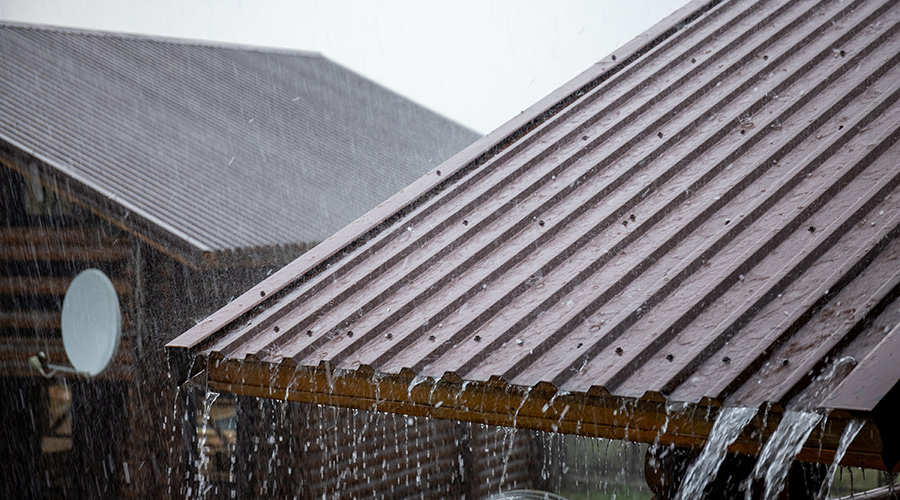
The National Oceanic and Atmospheric Administration (NOAA) has issued an El Niño Advisory, warning of a 63 percent chance that intensifying tropical Pacific conditions will yield a historic "super" El Niño.
With extreme weather patterns projected to extend well into 2027, facility managers, building owners, and cleaning professionals must pivot from routine seasonal maintenance to aggressive climate risk management.
U.S. Weather Outlook
The 2026–2027 climate cycle will alter the polar jet stream, disrupting standard seasonal expectations across North America in the following ways:
Southern U.S.: Significantly wetter conditions with high risks of localized winter flooding.
Northern U.S. and Canada: Warmer-than-average winter temperatures.
Global Storms: Heightened Pacific storm frequency and intensity.
"View this El Niño as an imminent operational risk," cautions Klaus Reichardt, CEO and Founder of Waterless Co., Inc. "It shifts everything from water demand and energy loads to safety protocols and maintenance priorities."
Reichardt highlights five primary vulnerabilities facilities must address before winter peaks:
1) Stormwater System Stress
Sudden, intense downpours can overwhelm unmaintained gutters and catch basins, triggering flash floods and structural asset damage.
2) Volatile Freeze-Thaw Cycles
Sharp temperature swings accelerate freeze-thaw damage, cracking building façades, heaving parking lots, and degrading roof membranes.
3) Unseasonal HVAC Strain
Extended winter warmth forces commercial chillers to run longer, spiking facility water use and mechanical failure rates.
4) Slip-and-Fall Liabilities
Heavy moisture tracked into lobbies requires high-frequency cleaning and advanced matting systems to mitigate high-cost liability claims.
5) Indoor Air Quality (IAQ) Risks
Persistent outdoor dampness fosters indoor mold and bacteria growth, compromising building IAQ and occupant health.
"The best offense is a good defense," Reichardt says. "Facility managers must implement preventative maintenance strategies now to protect tenants and ensure business continuity."
Building Resilience Via Readiness
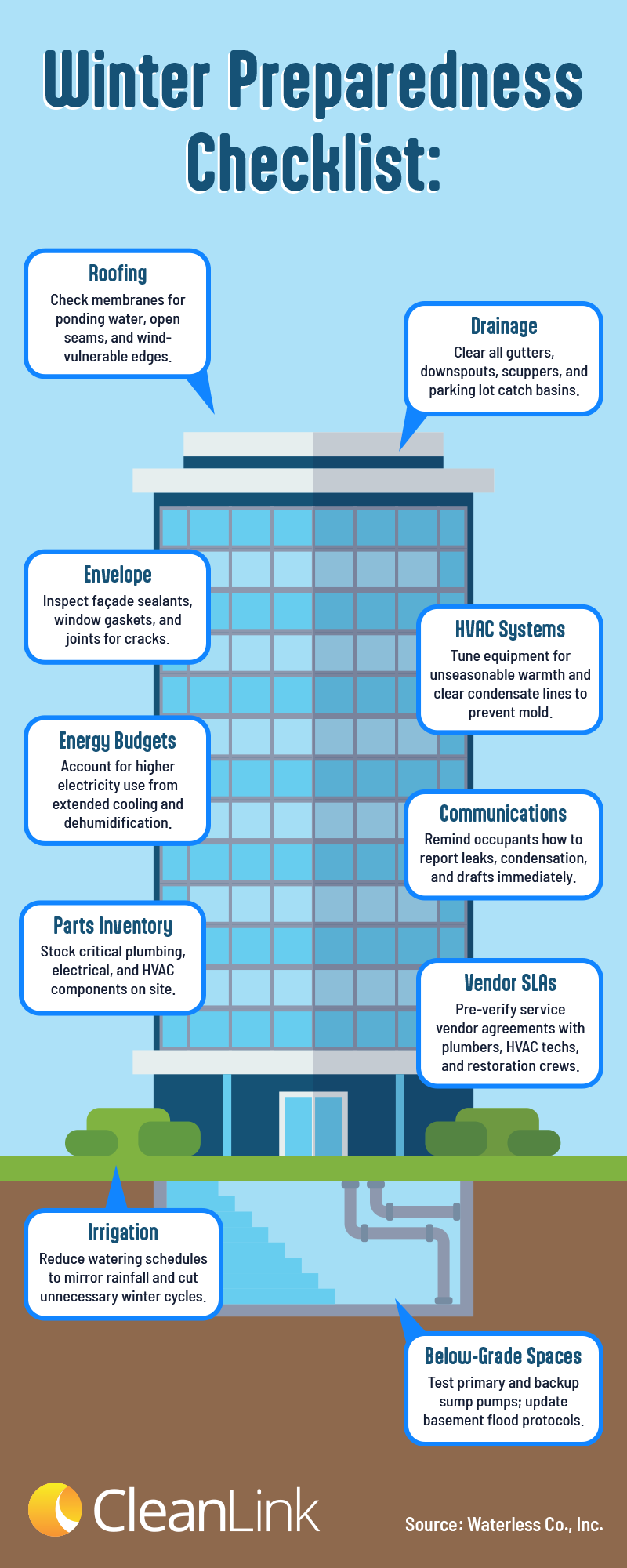
Protect your facility and ensure operational continuity with this streamlined 10-point winter preparedness checklist: