
 CleanLink Women of Clean - 2026 Honorees Announced
 CleanLink Interactive Spring/Summer 2026 Issue
 2026 Emerging Leader Award
 Recognizing the 2026 Reader Choice Award Winners

Key Takeaways:
• Frontline cleaning teams must maintain rigorous cleaning and disinfection protocols on child changing tables to protect young restroom occupants.
• Facility cleaning managers must adhere to state, federal, and ADA standards for changing station measurements.
• Restroom operations can be elevated through intentional integration of facility design.
Restroom care should address the health and safety of all occupants—including children. Child changing tables are a facet of restroom operations that require frontline team vigilance in infection prevention protocols to protect developing immune systems. This equipment also demands intentional facility design to promote accessibility and preserve personal dignity. Below are key child changing table elements driving positive and pristine restroom experiences for occupants of all ages.
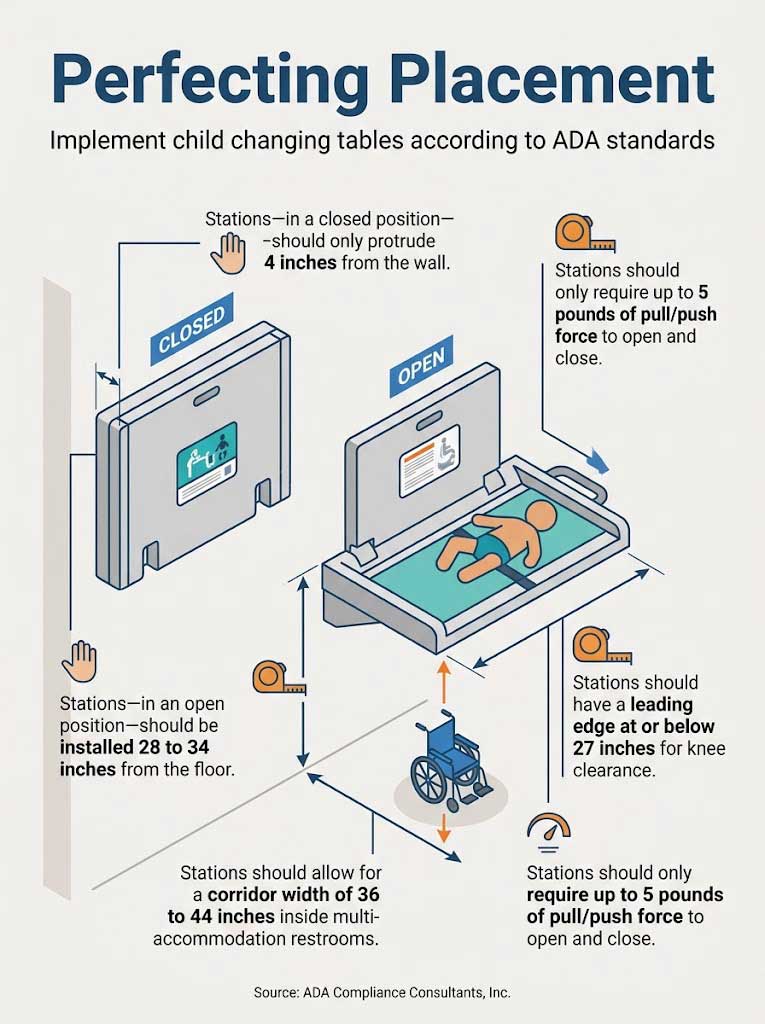
Facility cleaning managers should align child changing table placements with state and/or federal codes to ensure safety and uphold accessibility. The following Americans with Disabilities Act (ADA) standards must be addressed by the employment of this "work surface."
Changing table configurations and materials can be customized to align with restroom space and traffic capacity. For instance, vertical, wall-mounted stations are more convenient for small restroom facilities, whereas horizontal stations are a popular option for high-capacity restrooms. Regardless of which changing table is implemented, facility cleaning managers must make sure its safety features—straps, weight limit, hinges, and more—are properly installed and maintained.
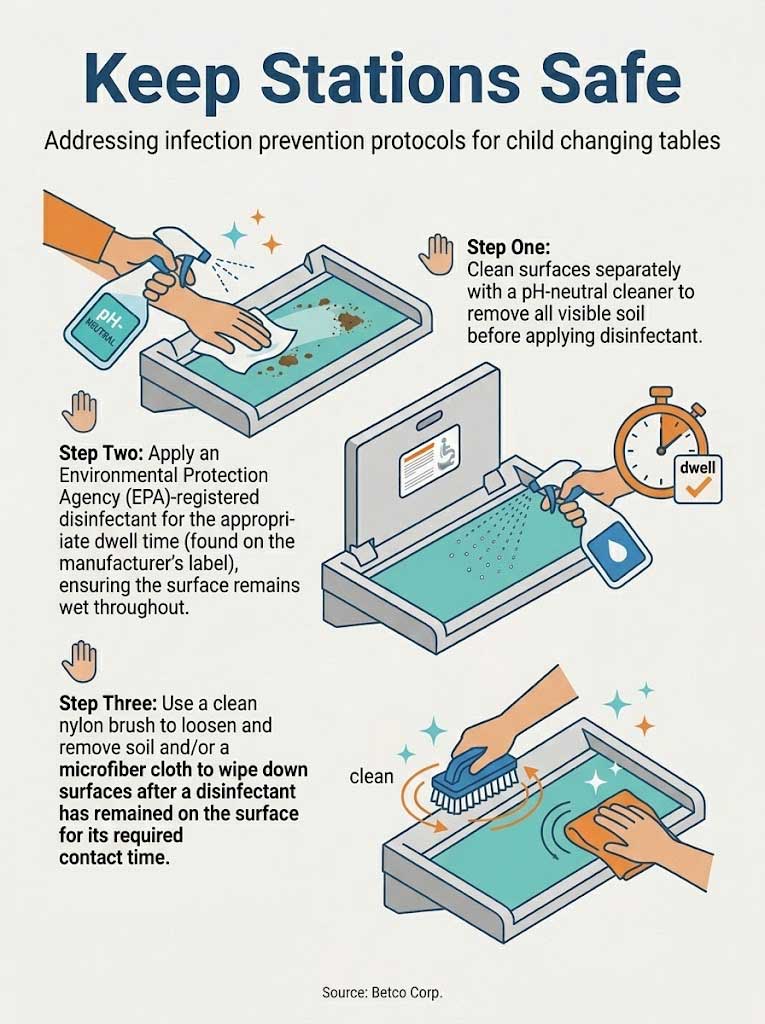
Restroom surfaces can be a breeding ground for various bacteria and viruses—at least 77,000 distinct types acccording to a 2015 Applied and Environmental Microbiology study. This makes cleaning and disinfecting child-sized changing tables not only an integral part of a facility cleaning system, but also an ethical imperative. Children and infants are vulnerable to infectious diseases due to their developing immune systems. Therefore, frontline teams must adhere to cleaning frequency and compliance guidelines to ensure child changing stations remain hygienic and safe for use.
As children and infants are susceptible to harsh chemicals and odors, facility cleaning managers should consider the cleaners and disinfectants they use are conducive to their health. These products must also address common bacteria found on changing table surfaces—typically those found in fecal matter, like E. Coli and MRSA. While some child changing stations include antimicrobial product protection, daily cleaning and disinfecting remains an essential element of a restroom hygiene regimen.
Child changing stations should be installed in public restroom facilities to ensure accessibility for all caretakers—regardless of gender. In fact, 73 percent of parents are more likely to visit businesses with baby changing stations. Including stations in men's and women's restrooms, as well as in all-gender or family restrooms, offers parents and guardians equitable opportunities to support children's hygiene needs.
Expanding restroom inclusivity is an ongoing process, with federal and state laws embracing equality through legislation. In 2016, the U.S. Congress passed the Bathroom Accessible in Every Situation Act (BABIES Act) to mandate the inclusion of changing tables in both male and female restrooms in federal buildings. Since this national law, other states have enacted their own laws:
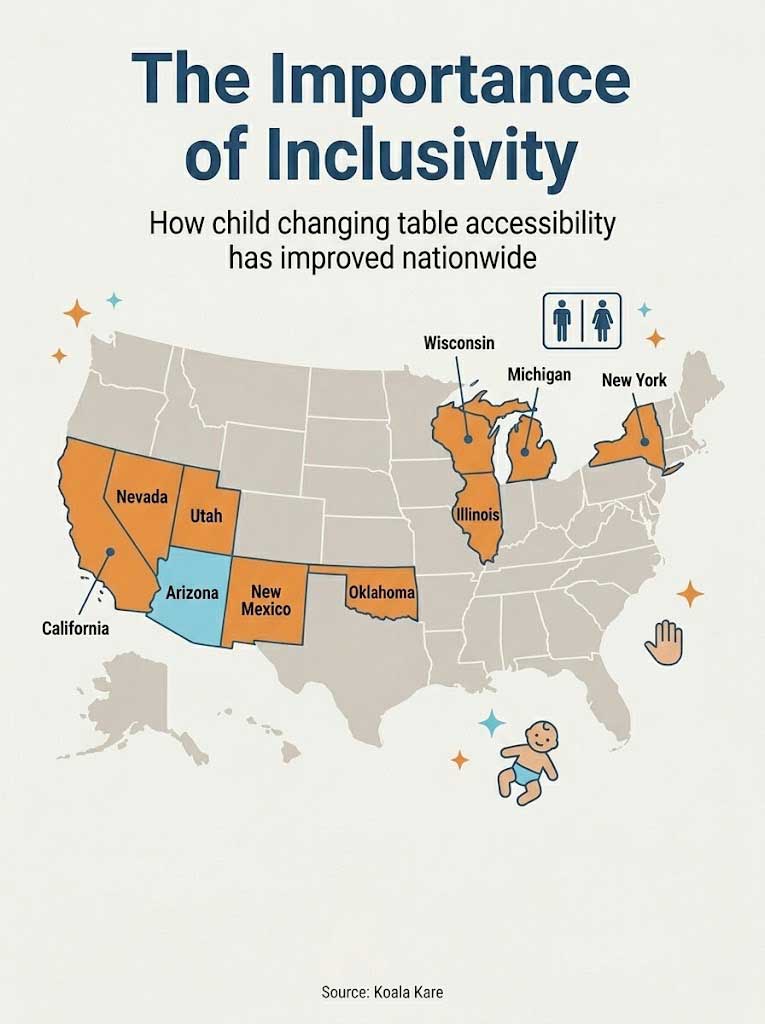
Arizona: Requires one changing station for children and adults when building or overhauling a restroom.
California: Requires one child changing station availability for men and women in public buildings.
Illinois: Requires child changing station availability for men and women in public buildings.
Michigan: Requires the presence of child changing stations in both women's and men's restrooms.
Nevada: Requires child changing stations to be provided in all public buildings.
New Mexico: Requires child changing stations to be provided in new restroom construction in public buildings.
New York: Requires child changing stations in all men's restrooms.
Oklahoma: Requires one universal changing station in specified public buildings.
Utah: Requires child changing stations in the restrooms of new or substantially renovated buildings.
Wisconsin: Requires child changing stations in public restrooms.
Other cities within and outside of these states have also passed legislation around changing tables for enhanced safety, health, and accessibility for restroom occupants. These improvements address exclusionary practices that have compromised personal hygiene or dignity in public spaces. Further enhancements could include intentional design elements—such as height-adjustable surfaces or the addition of universal changing stations.
Taylor Vraney is the Assistant Editor working on Facility Cleaning Decisions, Sanitary Maintenance, and Contracting Profits magazines. She's also very active in contributing to CleanLink.com. Prior to her time in media, Taylor served as a Special Education teacher, which gives her a strong perspective on custodial operations and its role in creating healthy environments for building occupants.
Taylor currently oversees Sanitary Maintenance's Sales Leaders Award program, which gave her a quick introduction to some of the many outstanding personalities that make up this great industry.
Taylor handles the collection of content for the Cleaning Insider newsletter and facilitates CleanLink's monthly polling questions.
Follow Taylor on LinkedIn here.