
 CleanLink Interactive Spring/Summer 2026 Issue
 Recognizing the 2026 Reader Choice Award Winners
 2026 Emerging Leader Award
 How Surfactant Use is Expanding in Commercial Cleaning
By Dale Franke
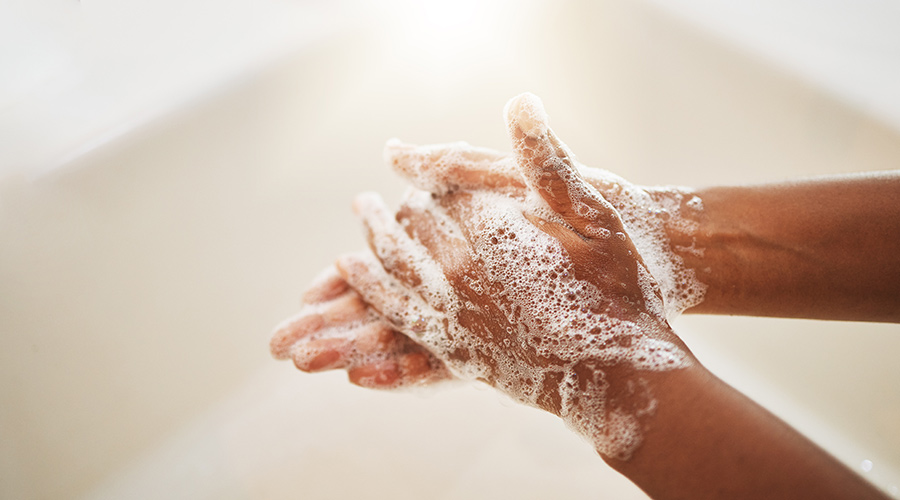
Hand hygiene is often discussed as a basic task—wash your hands, use sanitizer, and repeat. In fact, sometimes it is viewed as such a basic task that it’s not even discussed at all. In reality, hand hygiene is something far more consequential: It is a system safeguard. When it fails, every other control meant to protect people and facilities is weakened.
Across healthcare, education, foodservice, and commercial facilities, hands remain the primary vehicle for germ transmission. Most infections don’t start with dramatic exposure events, they begin with everyday contact—touching a surface, shaking hands, handling food, adjusting PPE. Clean hands interrupt that chain immediately. When hand hygiene breaks down, risk multiplies downstream.
For cleaning and maintenance professionals, this makes hand hygiene foundational, not optional. At its core, hand hygiene stops disease transmission at the source. We touch our faces dozens of times each hour, creating countless opportunities for germs to enter the body through the eyes, nose, and mouth. Clean hands dramatically reduce that risk.
This protection is especially critical for vulnerable populations.
In healthcare settings, schools, long-term care facilities, and foodservice environments, a single missed hand hygiene moment can have outsized consequences. Children, older adults, and immunocompromised individuals face a higher risk from even common infections, making consistency essential.
What’s often overlooked is that hand hygiene also delivers the highest return on prevention of almost any safety measure. Just look at the facts:
- Proper hand hygiene can reduce respiratory infections by roughly 20 percent.
- It can prevent approximately 30 percent of diarrhea-related illnesses.
- It lowers absenteeism and lost productivity across organizations.
- No vaccine, chemical, or piece of equipment provides comparable impact with such low cost and effort.
Preventing Cross-Contamination
For facility managers and cleaning professionals, hand hygiene plays a central role in preventing cross-contamination. Hands transfer germs constantly—from person to person, from surfaces to people, and from food or equipment to consumers.
This makes hand hygiene foundational across janitorial services, food preparation, healthcare environmental services, and distribution operations. Surface disinfection and PPE matter, but if hands are contaminated, those controls quickly lose effectiveness.
Equally important is the signal clean hands send. Consistent hand hygiene reinforces professionalism, care, and accountability. It builds trust quietly but powerfully among employees, customers, patients, and the public. In fact, in many environments, visible hand hygiene is a direct reflection of an organization’s safety culture.
The Compliance Gap
Despite widespread awareness, hand hygiene compliance remains inconsistent. While most people believe they wash their hands properly, data consistently shows they do not. Studies estimate roughly 80 percent of infectious diseases are transmitted by hands, yet about 20 percent of adults miss critical hand hygiene moments. In healthcare environments, average compliance rates often hover around 40 percent in high-income settings and fall closer to 20 percent in lower-resource environments.
This gap matters. Research shows that even a 10 percent increase in hand hygiene compliance can lead to an approximate six percent reduction in healthcare-associated infections. The challenge, then, is not knowledge; it is reliability.
While soap and water remain the gold standard when hands are visibly dirty or after restroom use, alcohol-based sanitizers containing 60 to 95 percent alcohol serve as a powerful and effective backup when handwashing is not immediately available.
Regardless of the method or product used, the key is consistency. Missed moments are often more damaging than imperfect ones. The goal is not flawless execution, but dependable behavior built into daily routines.
Designing Systems
Increasingly, organizations are recognizing that reminders alone are not enough. Sustainable improvement requires systems that make the right behavior the easiest behavior. One emerging trend is the use of smart monitoring and real-time feedback. Sensor-based systems can track hygiene events and provide immediate cues at critical moments, shifting hand hygiene from assumed behavior to measurable action.
We are also starting to see hand hygiene treated more like operational data. Performance is reviewed alongside safety and quality metrics, tracked by unit, shift, or function, and tied to broader KPIs. This elevates hygiene from a personal habit to an organizational responsibility.
Today, hand hygiene is directly tied to patient and student safety, workforce availability, regulatory compliance, and organizational trust. Illness-related absences strain staffing levels, compliance failures create operational risk, and public expectations around cleanliness and safety continue to rise. Organizations that perform best do not rely on signs or slogans alone. They build systems that make hand hygiene unavoidable, not through enforcement, but through smart design and accountability.
Clean hands protect people, protect performance, and protect reputation. For cleaning professionals and facility leaders, hand hygiene should never be viewed as a simple task on a checklist. It is a critical safeguard, one that quietly determines whether all other safety measures succeed or fail.
Dale Franke is the Vice President of Sales and Marketing at Acme Paper and Supply Company, one of the nation's largest suppliers of sanitation solutions, disposable food service packaging, restaurant equipment and supply, retail and industrial packaging, and custom-designed packaging. Franke has nearly 30 years of experience in the facility supply industry and more than 10 years of experience in sales leadership. He can be reached directly at dfranke@acmepaper.com. For more information visit https://store.acmepaper.com/.
posted on 2/19/2026
