
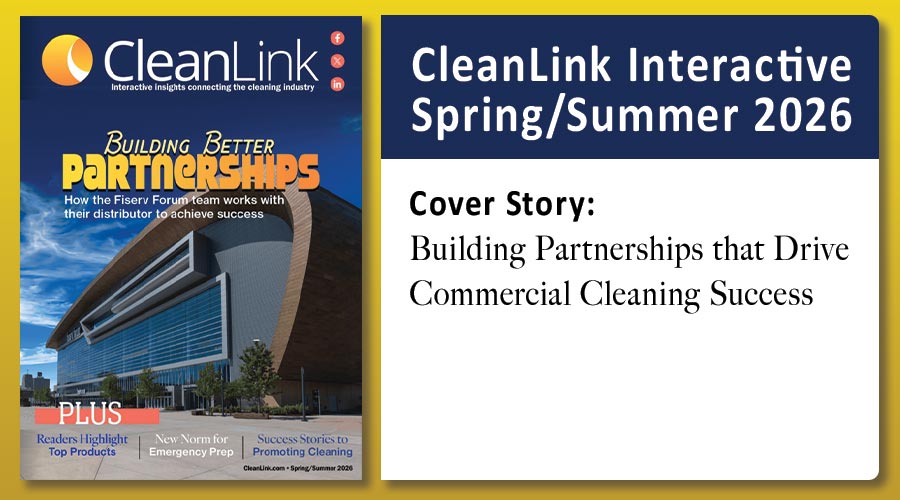
 CleanLink Interactive Spring/Summer 2026 Issue
 Recognizing the 2026 Reader Choice Award Winners
 2026 Emerging Leader Award
 How Surfactant Use is Expanding in Commercial Cleaning
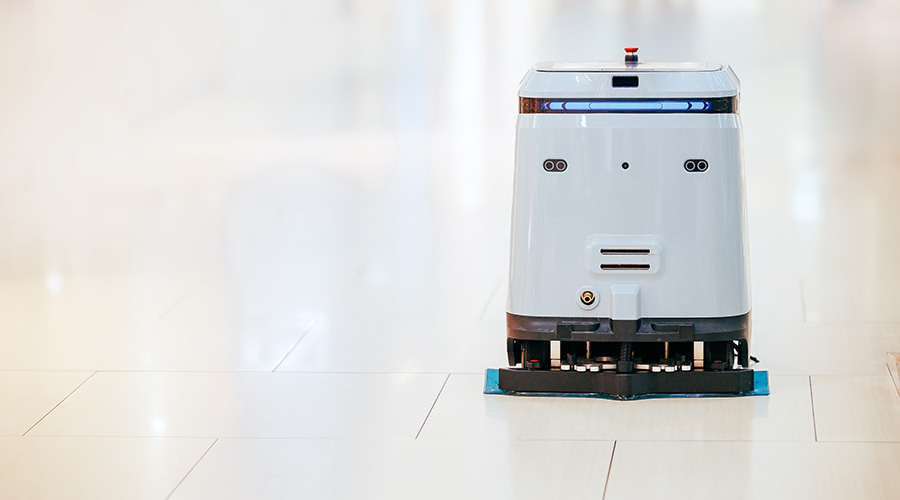
Autonomous cleaning equipment has moved from novelty to legitimate consideration for many facilities. But, according to these experts, robotic equipment remains one of the most misunderstood categories in floor care.
“These machines are not all the same,” Griffin cautions. “Some are still being sold before they’re really ready for prime time.”
He strongly recommends on-site demonstrations that allow customers to see how machines perform in their facilities. These demos illustrate how autonomous equipment navigates obstacles, manages battery life, and responds to foot traffic.
Burgos agrees, noting he’s found demonstrations can be a turning point for skeptical customers. In fact, a recent demo at a busy hospital quelled his customer’s worries about an autonomous scrubber bumping into anyone.
“When the area became very congested, the machine stopped working and sent them an alert indicating it could not safely operate at that time,” he says. “Seeing those safeguards in action reassured the customer more effectively than any specification sheet.”
Beyond demos, distributors must also help customers evaluate whether autonomous machines will work in their facility, as some spaces are simply better suited for more traditional equipment.
“Square footage is a good barometer for an opportunity for robots or autonomous cleaning,” says Schneringer. “It should also be noted that robots work best in long, straight paths and in big square rooms. Facilities with frequent turns, tight spaces, or constant traffic may struggle to realize their full value.”
Burgos says he asked a lot of questions before recommending an automated floor care machine in the past. He asks things like: Do you have a lot of turnover? What is your current floor care process? How long does it take to clean a specific area? What is your budget?
Distributors can also help customers position automation positively among employees. It’s common for frontline cleaning professionals to voice concerns about job security when automated floor care is implemented. However, experts routinely state that autonomous equipment frees staff to focus more on detailed labor and less on mundane and repetitive tasks.
“We like to position this equipment as a workforce enhancer,” Schneringer says.
Chemistry, Sustainability, and Training
Distributors should also stay current on the latest developments in floor care chemistry and inform customers about new formulations and regulations. Sustainability goals, indoor air quality requirements, and state-level mandates change frequently and drive how products are developed, specified, and used.
A good example is new legislation to remove PFAS from cleaning products. Schneringer says Minnesota was an early adopter of such laws, and other states are looking at similar regulations. Distributors can help customers make smarter buying choices and avoid problems by watching these trends.
Proper dilution remains a critical concern as over-concentration can damage floors, create safety risks, and lead to regulatory exposure. Distributors can help facilities reduce chemical inventories, adopt automated dilution and closed-loop dispensing systems, and use low-VOC, low-residue formulations.
“We can help customers use less chemistry overall and use products more intelligently,” Griffin says.
As floor care grows more complex, training is more important than ever. Good distributors help customers find solutions, and this often involves teaching them how to use a product. This time commitment is an investment that will pay the distributor back.
“If you start with a good product, you provide valuable training, and the client sees results, that’s it. They’re going to stick with you,” Burgos says.
Schneringer emphasizes that a strong training program not only improves employee performance, but it can also lead to retention.
“Employees who are trained on how to do the work invariably do better work,” he says. “And they stay longer because they know what’s expected of them.”
Looking ahead, Griffin believes continuous learning will define distributor success.
“The technology is moving faster than the industry,” he says. “The people who keep learning will move with it. The ones who don’t will be replaced.”
Distributors who take the time to understand customer needs, guide them on surface care, recommend the right equipment, streamline chemical programs, and provide thorough training will move from vendor to trusted partner and become indispensable in helping facilities navigate fast-paced floor care changes.
Ronnie Wendt is a freelance writer and owner of In Good Company Communications in Waukesha, Wisconsin.
How New Technology and More Reshapes Floor Care