 CleanLink Interactive Spring/Summer 2026 Issue
 Recognizing the 2026 Reader Choice Award Winners
 2026 Emerging Leader Award
 How Surfactant Use is Expanding in Commercial Cleaning
Key takeaways:
• Respond to heightened concern about infectious disease by positioning cleaning and disinfecting solutions as part of healthier, safer facility environments.
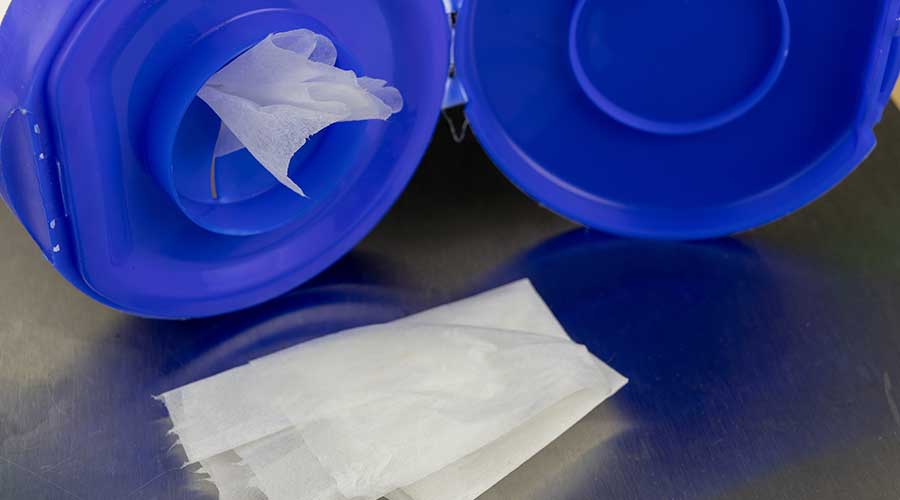
• Ready-to-use chemical wipes are a growing opportunity, but distributors must help end users select products suited to their facility type and cleaning needs.
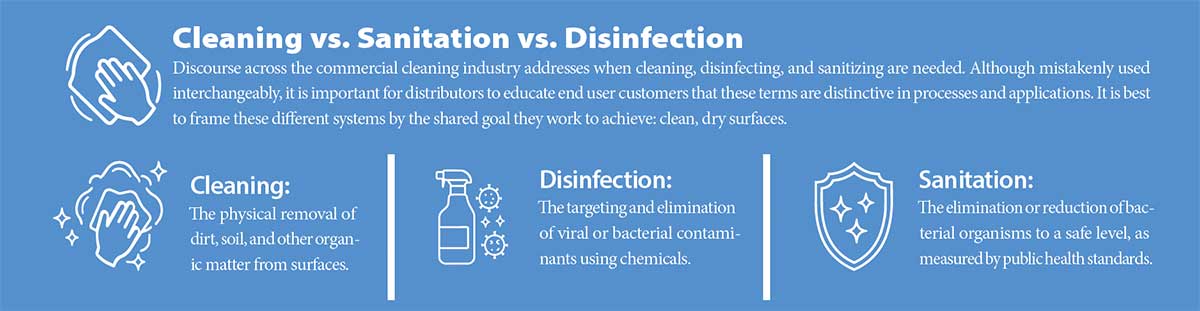
• To ensure wipes are used effectively, distributors should educate customers on dwell time, shelf life, surface compatibility, and the differences between sanitizing and disinfecting claims.
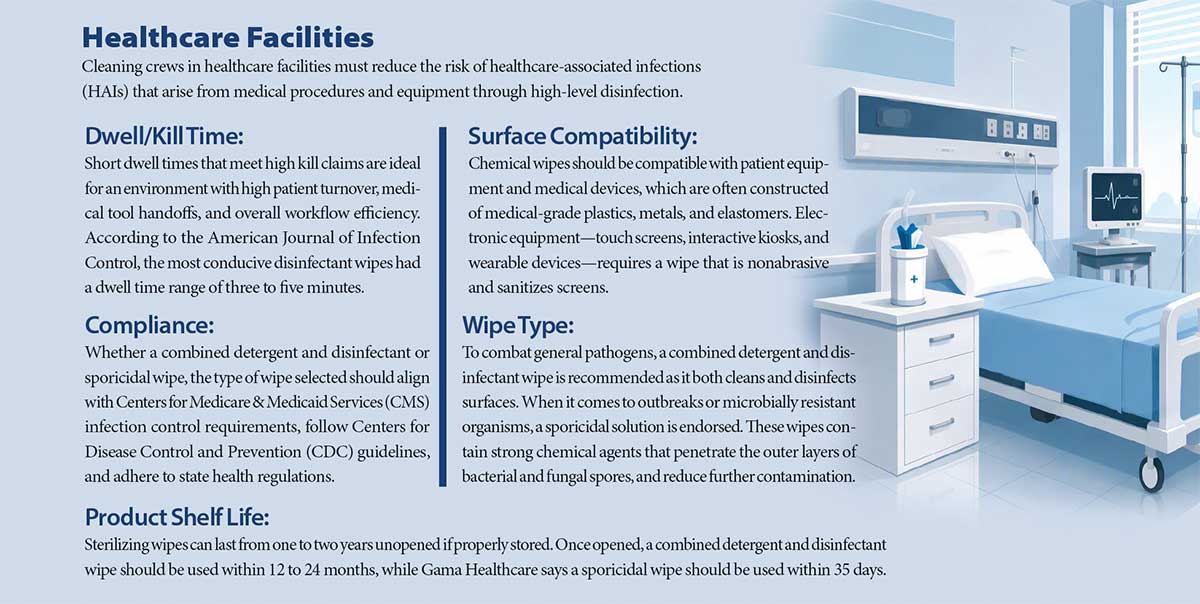
Of all the tasks a facility cleaning manager or building service contractor (BSC) must tackle, maintaining safe and healthy environments is at the top of the list, and they are turning to their jan/san distributors for guidance. The commercial cleaning industry is essential to public health as cleaning operations can improve indoor environmental quality, contribute to positive guest experiences, and mitigate the spread of infectious diseases.
Cleaning and disinfecting are crucial elements for any cleaning team aiming to achieve these outcomes. Yet, consumers across the United States worry about ongoing outbreaks, such as the measles, and consistent disease threats, like long COVID. In fact, 61 percent of Americans are concerned about infectious diseases spreading in public settings.
Industry members are aware of this shift in occupant perception. According to the “2026 Building Service Contractor Market Study,” supported by Sanitary Maintenance’s sister publication Contracting Profits, 47 percent of BSCs say that a healthy, sanitary, and safe environment for building occupants is most important to their customers. That is why it is no surprise that the market is saturated with ready-to-use chemical wipes.
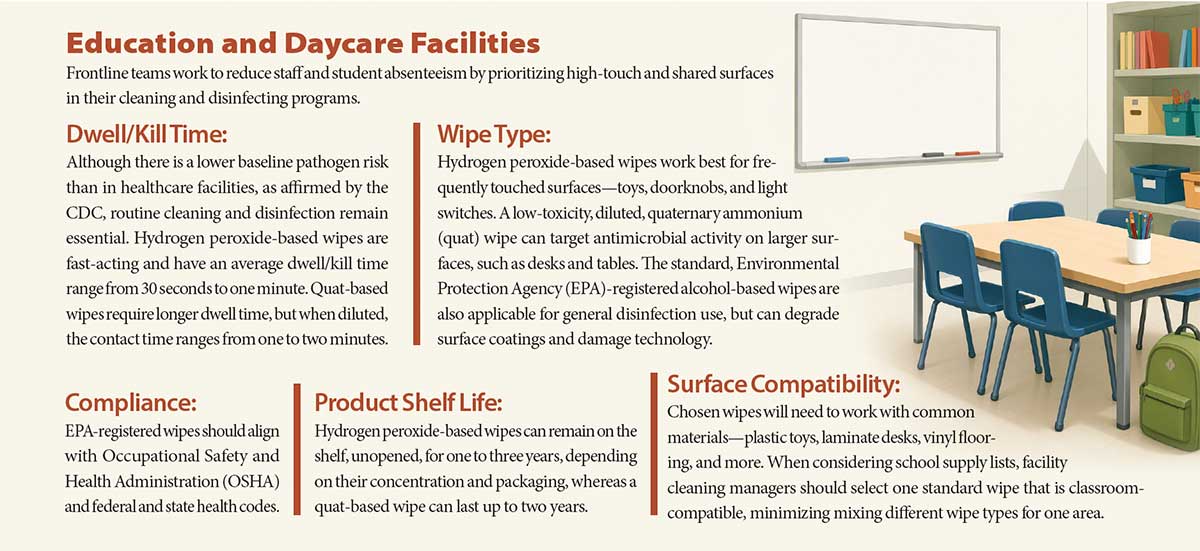
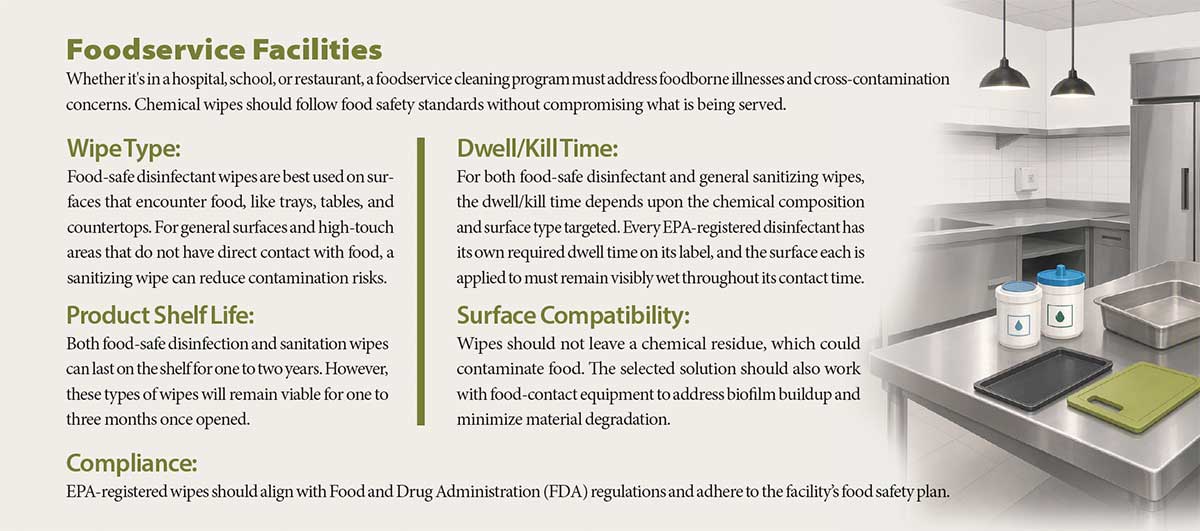
According to a global industry analysis, the chemical wipes market is growing along with consumer sentiments and commercial cleaning operational needs. In 2025, the wipes market reached $24.2 billion and is expected to dominate with a 67.2 percent market share by 2035. Despite their availability, end users remain uncertain about their effectiveness. Answers to questions around dwell time, shelf life, and surface compatibility, as well as how disinfection and sanitation wipes differ by facility type, are imperative for successful integration.