
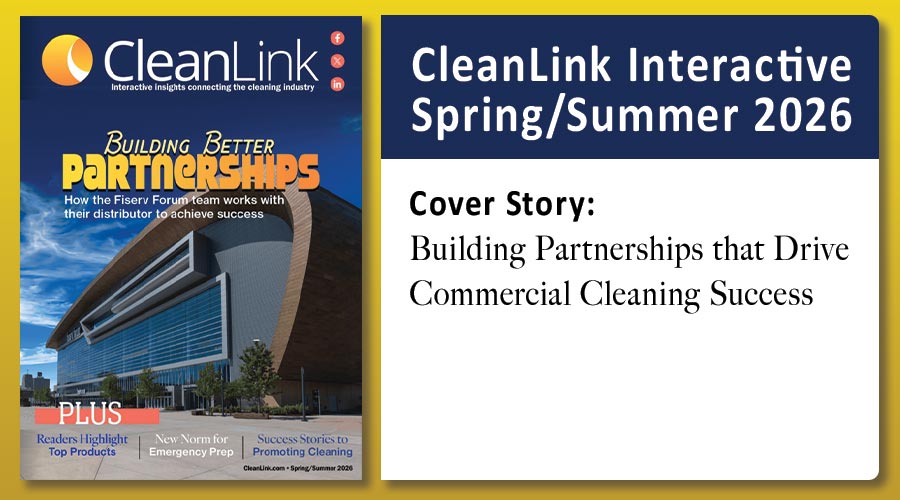
 CleanLink Interactive Spring/Summer 2026 Issue
 Recognizing the 2026 Reader Choice Award Winners
 2026 Emerging Leader Award
 How Surfactant Use is Expanding in Commercial Cleaning
Sustainability has become one of the most frequently used words in hospitality, education, healthcare, and traditional office settings. But it is also one of the most misunderstood terms among cleaning end users.
Many organizations want to “go green,” yet they struggle with balancing safety, cost, operational efficiency, and performance expectations. Some fear higher expenses, while others worry that “green products” won’t clean as effectively as their traditional counterparts. Many end users simply don’t know where to start.
It’s up to jan/san distributors to outline the truth to these end users in need. That fact is that sustainability is not about sacrificing performance. When implemented correctly, sustainable cleaning methods can actually improve safety, reduce costs, increase efficiency, and enhance both employee and guest satisfaction. Sustainability that actually works is practical, measurable, and aligned with operational excellence—it’s not just a marketing buzzword.
Traditional cleaning programs often rely on dozens of different chemicals—each with their own safety requirements, training needs, storage considerations, and risks. Many of these chemicals can cause respiratory irritation, skin sensitivity, or long-term health concerns for cleaning professionals who use them daily. Considering this, jan/san distributors can get customers—whether they are in-house commercial cleaning operations managers or building service contractors (BSC)—on their green journey by helping them simplify and replace harsh chemicals with safer alternatives. One of the most effective approaches is reducing the overall chemical footprint through multi-purpose, non-toxic, or low-toxicity cleaning solutions.
Electrolyzed water systems are one example. These systems use a combination of sodium chloride and water, which is then subjected to electricity to create effective cleaning and disinfecting solutions. Other options include cleaning products that were vetted and certified by a third party, hydrogen peroxide-based cleaners, or neutral multi-purpose formulations designed to reduce toxicity while maintaining performance. The goal is to give customers solutions that meet safety, effectiveness, and operational needs while minimizing unnecessary chemical exposure. The result is safer working conditions, reduced risk of exposure, and fewer compliance concerns.
When janitorial staff and building occupants feel safer, engagement improves. When engagement improves, performance follows.
Cut Costs, VOCS
When it comes to sustainability, one of the biggest myths among end users is that it is more expensive than traditional cleaning products and methods. In reality, sustainable cleaning programs can often reduce end user operating costs significantly. That’s because traditional cleaning programs can often generate unnecessary expenses through excessive chemical purchasing, overstocked inventory, product waste due to improper dilution control, higher transportation and storage costs, and injury and exposure-related claims.
These issues and the hefty price tags that come with them should be articulated to customers in an easy-to-understand way.
For example, make customers aware that sustainable cleaning programs focus on controlled usage, proper dilution systems, and mitigating the number of products required. This can be accomplished by replacing multiple specialty chemicals with a smaller number of versatile, safe solutions, which also reduces purchasing complexity, storage needs, and training requirements. Concentrated products, automated dilution systems, and on-site generation technologies can also reduce shipping costs, packaging waste, and overall consumption.
This is where sustainability aligns directly with lean operational principles. By removing waste, end users can improve both efficiency and financial performance.
This is the key for customers who have always tried to trim costs in an effort to work tight margins. However, their focus on indoor air quality (IAQ) is a bit more recent, which is convenient because one of the more overlooked benefits of sustainable cleaning is better IAQ.
Many traditional chemicals release volatile organic compounds (VOCs), which can create odors, irritation, and discomfort. In hospitality, this directly impacts guest experience. In healthcare, it affects patient recovery and staff well-being. In schools, it enflames asthma, which can lead to student and/or staff absences.
Building occupants don’t want to smell chemicals when they enter a room. Patients don’t want to associate their healing environment with harsh odors. End users who implement safer, lower-toxicity cleaning solutions can reduce or eliminate these issues. The result is an environment that feels clean, not one that is chemically treated. This subtle difference has a powerful psychological impact.
Distributors would be wise to educate end users not only on how clean environments promote comfort, trust, and confidence, but how adding sustainability to the mix can emphasize health. Help customers find those products that create a pleasant environment.
SIDEBAR: How Green Cleaning Makes Things Better
Some of the most encouraging things about the cleaning industry’s embrace of sustainable practices are the improvements across an entire cleaning operation. Whether it is a hospital, school, or commercial office, the implementation of green products/cleaning can help customers solve several of the problems they’ve grappled with for some time. Here are a few sales points distributors can use when talking to end users.
How green cleaning creates a safer workplace:
Reduced harsh chemical exposure for frontline staff
Lower risk of respiratory irritation and sensitivities
Safer working conditions with reduced exposure and simpler safety compliance
How sustainable products are easier to train staff on:
Fewer products, simpler selection decisions
Simplified systems minimize dilution and mixing complexity
Safer products build employee confidence, improving engagement and training adoption
Settings where green cleaning makes the greatest difference:
Hospitals—protects vulnerable patients and reduces staff exposure
Schools—safer environments for children and faculty
All facility types—safer for occupants while protecting surfaces, furniture, and finishes
Benefits of Switching to Sustainable Systems