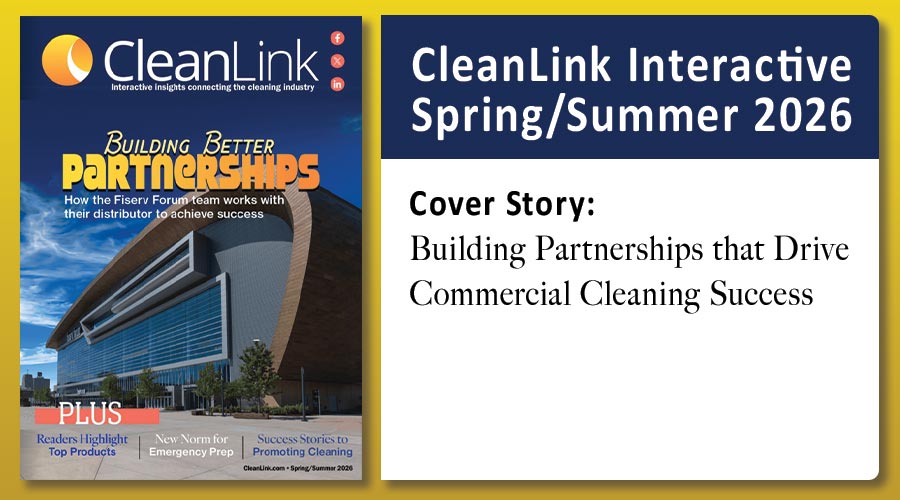
 CleanLink Interactive Spring/Summer 2026 Issue
 Recognizing the 2026 Reader Choice Award Winners
 2026 Emerging Leader Award
 How Surfactant Use is Expanding in Commercial Cleaning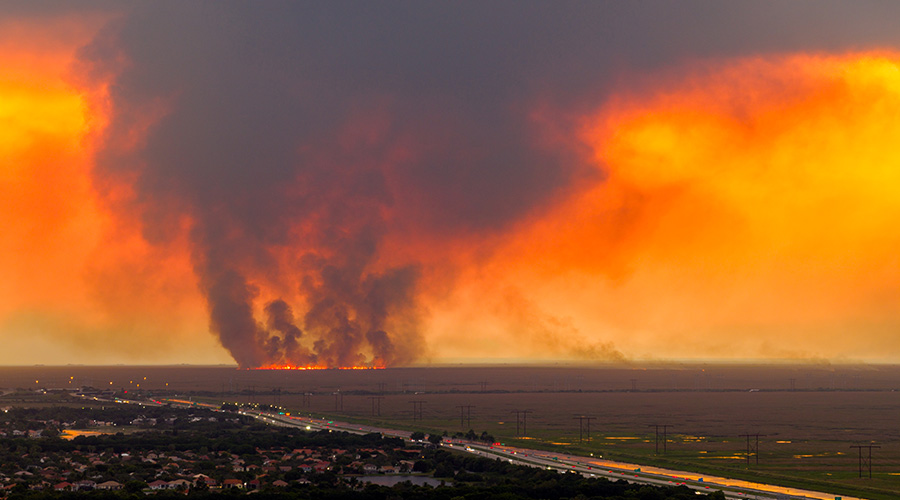
Wildfires are burning across the country in increasing frequency and severity. Climate change has created warmer and drier climates, particularly in the West. These conditions create a year-round environment where wildfire activity is more likely. This reality is reflected in the numbers. In 2026, the United States reported 39,520 fires, damaging 3,633,827 acres—a record high.
When the outdoor air is contaminated, indoor environments are threatened. An indoor air quality (IAQ) study found that interior spaces retain harmful volatile organic compounds (VOCs) following a fire. The smoke, chemicals, and odors that linger long after a wildfire can impact the respiratory health of building occupants. Moreover, poor IAQ can also affect productivity by 3 to 9 percent, factoring into employee absenteeism rates.
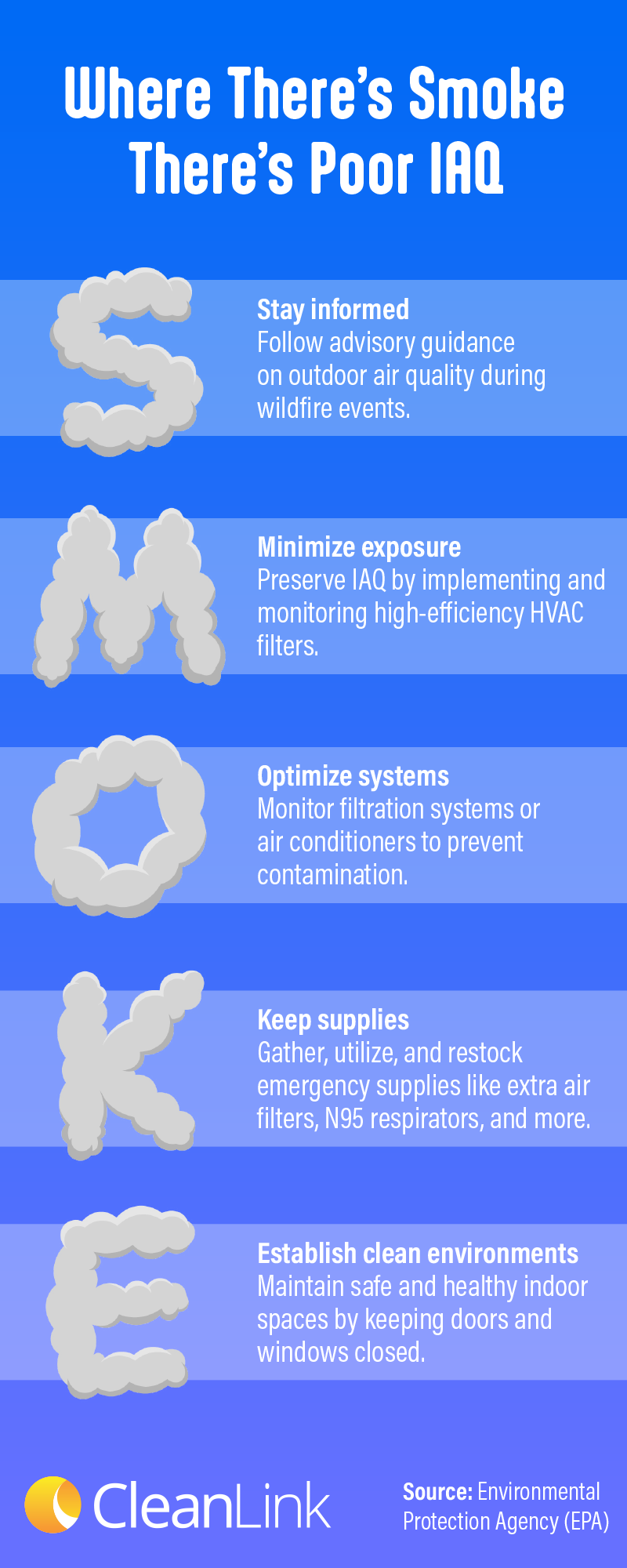
The Environmental Protection Agency (EPA) recommends the following guidelines to safeguard indoor environments by addressing SMOKE: