
 CleanLink Interactive Spring/Summer 2026 Issue
 Recognizing the 2026 Reader Choice Award Winners
 2026 Emerging Leader Award
 How Surfactant Use is Expanding in Commercial Cleaning
Cities that have experienced droughts and water shortages in the past couple of years are likely to experience water shortages at present, according to new data.
"The United Nations predicts this decade will be our most difficult in history when it comes to water," says Klaus Reichardt, CEO and Founder of Waterless Co., Inc. "Our only option is to reduce consumption and use water more efficiently."
Tracking global water conditions, Waterless Co. Inc. identified the six cities most likely to experience serious to acute water scarcity in 2026:
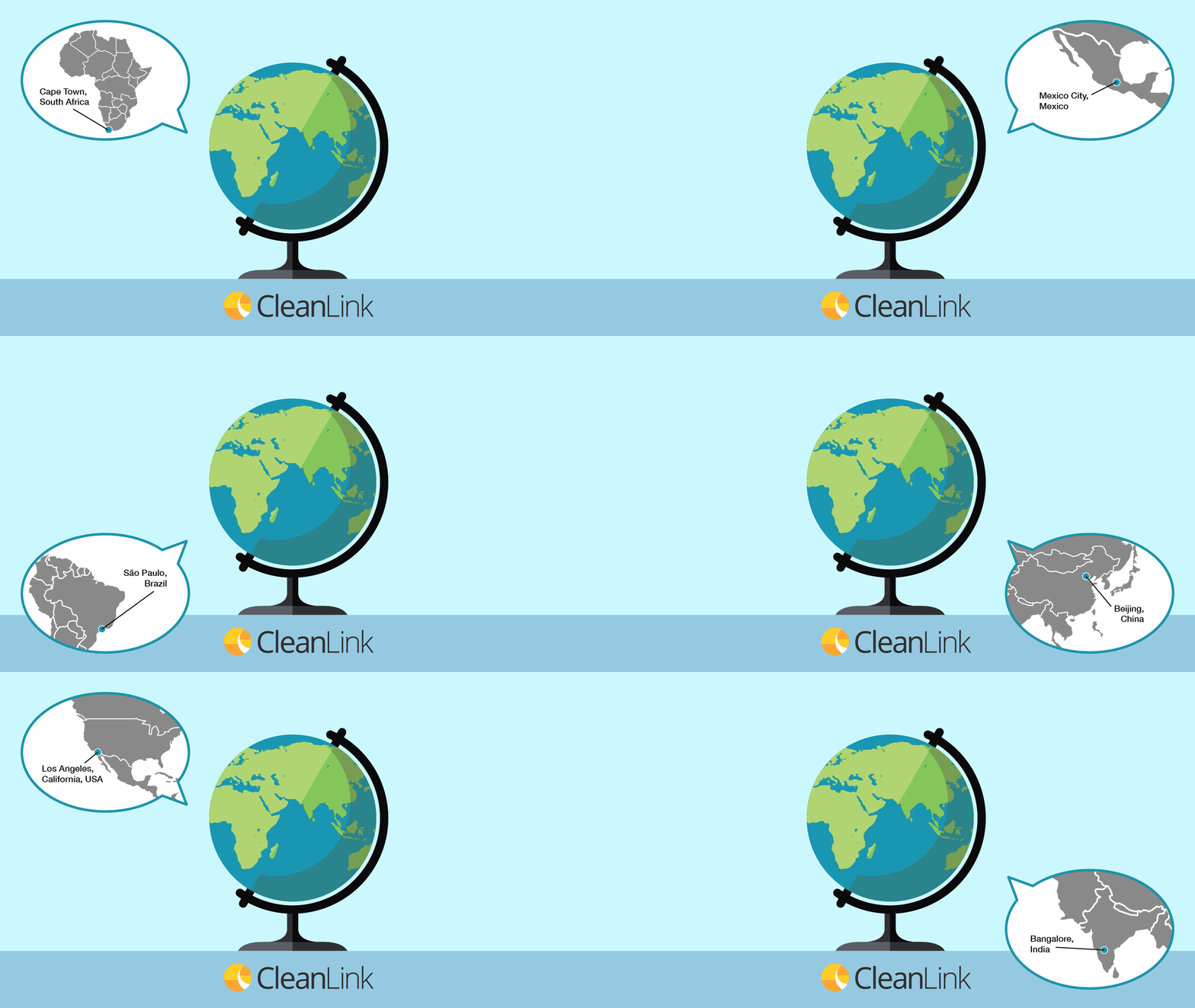
1) Cape Town, South Africa
Cape Town has made progress on water efficiency since its 2018 "Day Zero" scare. However, rising demand, aging infrastructure, and unpredictable rainfall have driven sharp swings in dam levels in 2026. City officials say the risk of new restrictions has reached its highest level in years.
2) Mexico City, Mexico
A significant share of this city's water is piped in from outside the region, and years of low rainfall have left the system critically strained. Many residents continue to face rationed, intermittent access to running water.
3) São Paulo, Brazil
São Paulo's main reservoir network hit a 10-year low in early 2026 before heavy rains brought a partial rebound. Neighboring city, Rio de Janeiro, has since agreed to share river water with São Paulo as a safeguard—a sign of how fragile the region's supply remains.
4) Beijing, China
This capital city draws much of its water from farming regions to its northern and southern areas. But without water, farmers can't grow crops for the country's roughly 1.4 billion people. This leaves officials managing a constant balancing act between urban and agricultural needs.
5) Los Angeles, California, United States
The only American city on the list, Los Angeles has seen dramatic swings in 2026—starting the year drought-free for the first time in 25 years, only to face renewed strain by spring as state water allocations and Colorado River deliveries were both cut. The city's water agency has kept conservation measures in place as a result.
6) Bangalore, India
Known as the "Silicon Valley of India," Bangalore's population has grown rapidly since the 2000s, straining a water system still heavily dependent on tanker trucks and depleted groundwater. Experts have long warned the city could be among the first in the world to run dry.