
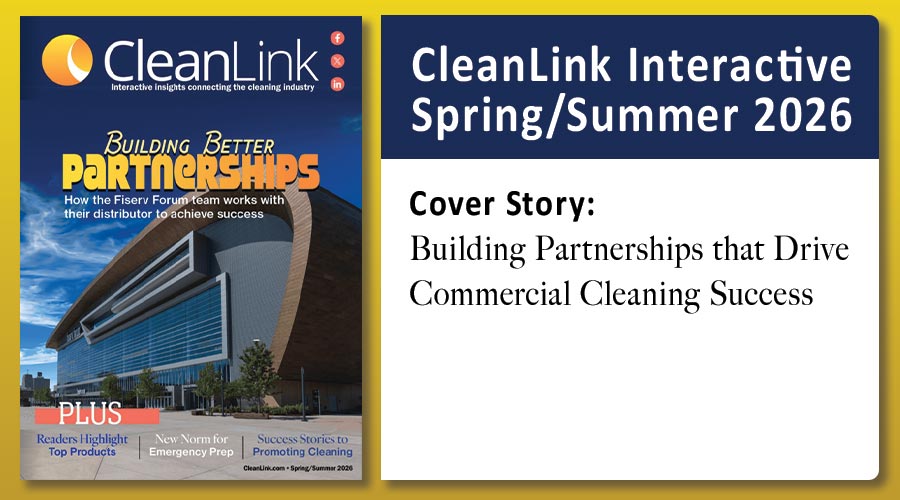
 CleanLink Interactive Spring/Summer 2026 Issue
 Recognizing the 2026 Reader Choice Award Winners
 2026 Emerging Leader Award
 How Surfactant Use is Expanding in Commercial Cleaning
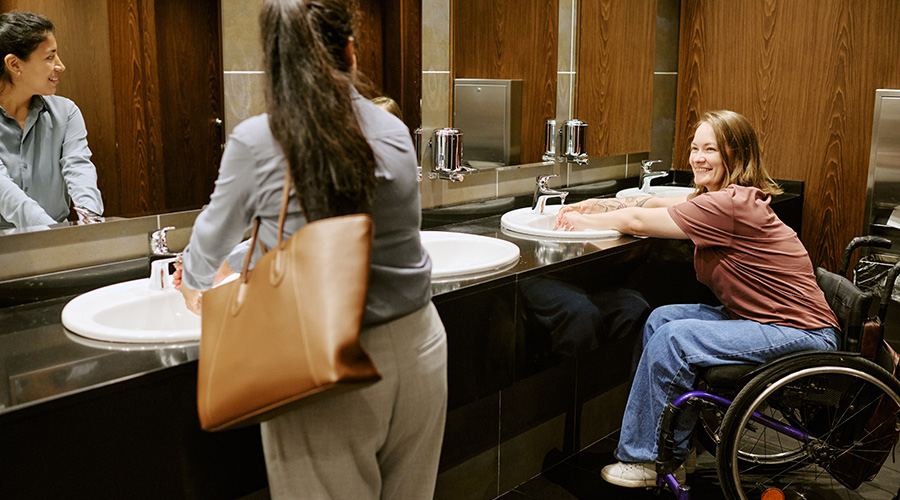
Tork, an Essity brand, announced the next phase of its Better Hygiene for All initiative, a global effort to help improve public restrooms by identifying and addressing barriers that can prevent people from meeting their hygiene needs.
As part of this effort, Tork is creating more ways to listen, learn, and support action through:
• An inclusive hygiene resource hub, which gives facility cleaning managers practical guidance, data, tools, and real-world examples to help deliver public restrooms that meet the hygiene needs of as many people as possible. The hub also invites restroom users to share their experiences to help inform future improvements.
• A Global Expert Network for Better Hygiene for All, a forum that brings together like-minded leaders in facility management, architecture, advocacy, and hygiene to work collectively and share insights to improve public restrooms worldwide.
Barriers to hygiene in public restrooms are more common than many commercial cleaning operators realize and go far beyond visible cleanliness alone. A barrier to hygiene can arise when there is a mismatch between a person’s abilities, needs, or circumstances and the restroom environment—from harsh soaps that affect skin sensitivities, to noisy air dryers that overwhelm people with auditory or neurological sensitivities, to dispensers that are difficult to use for people with limited hand mobility.
More than half of people face hygiene barriers in public restrooms, and only one in five public restrooms meet basic cleanliness expectations. As a result, people may spend less time in a venue, leave earlier, or avoid returning altogether.
“Inclusive hygiene in public restrooms starts with understanding what people need to feel safe, comfortable, and cared for,” says Amy Bellcourt, Vice President Corporate Communications, Professional Hygiene, Essity. “Through this journey, we’ve listened closely to people who have shared their experiences and feedback on barriers to hygiene in public restrooms, and to facility managers who are in search of better guidance and practical tools to support their daily operations. Better Hygiene for All brings those voices, tools, and examples together to help drive meaningful progress.”
Through its multi-year journey to advance inclusive hygiene, Tork is working to help create restroom environments that consider the full range of barriers and meet the hygiene needs of as many people as possible. Recently, the brand debuted the Tork Coalition for Inclusive Hygiene—a North America-based expert network that is now expanding globally with the Global Expert Network launch—and the Inclusive Hygiene Playbook, a research-backed guide teaching cleaning managers how to address the most common hygiene barriers in public restrooms.
This summer, Tork brought Better Hygiene for All to life through two real-world efforts designed to support better restroom experiences in high-traffic settings in North America.
For instance, Tork served as the official professional hygiene provider for Philly250 Hospitality Hubs and hydration stations along the Benjamin Franklin Parkway in June and July. The organization provided easy-to-use, high-capacity hygiene solutions, along with hygiene expertise, handwashing education, and staff training to support a more comfortable and welcoming experience for 164,000 visitors over a five-week period. Guests were also invited to share live restroom feedback through QR codes, reinforcing the value of clean, reliable restroom access at public events, with visitors praising the cleanliness of the facilities and the convenience they provided at busy gatherings.
At Lincoln Financial Field, Tork also collaborated with the Eagles Autism Foundation community and completed restroom upgrades near the stadium’s sensory room in May. Informed by the Tork Coalition for Inclusive Hygiene, the upgrades include easy-to-use Tork hygiene solutions such as adult changing tables, enhanced privacy, and sensory-conscious lighting and sound design. The improvements were designed to help more fans and guests feel welcomed, comfortable, and confident as they attend games and events.
“It’s really important to have accessible spaces in all areas, so opening a bathroom that has some additional features is huge,” shares Stephanie Stricker, a member of the Eagles Autism Foundation community and parent of children on the autism spectrum. “We definitely need this everywhere—especially in an airport, or in other stadiums around the world. It just takes all the stress away of worrying about what comes next.”
Together, these efforts show how practical hygiene improvements can help more people comfortably participate in shared public experiences.