
 CleanLink Women of Clean - 2026 Honorees Announced
 CleanLink Interactive Spring/Summer 2026 Issue
 2026 Emerging Leader Award
 Recognizing the 2026 Reader Choice Award Winners

Key Takeaways:
• Custodial staff played a key role in keeping LA Metro clean and safe during the 2026 FIFA World Cup.
• LA Metro used lessons from the Super Bowl LVI and Los Angeles Dodgers celebrations to prepare for incoming World Cup crowds.
• The 2026 World Cup provided valuable insights for cleaning operation preparations for the Super Bowl LXI and 2028 Summer Olympics.
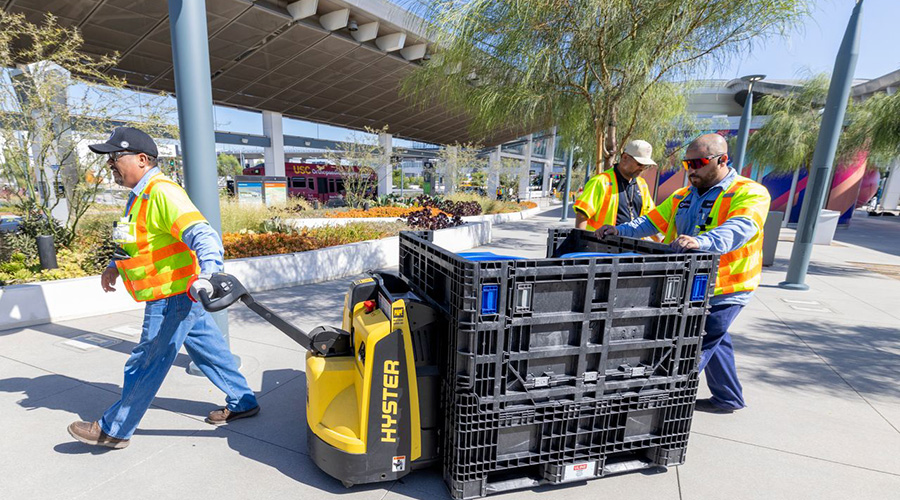
Considering how much more work had to be done on World Cup game days, it’s surprising that the only cleaning hiccup LA Metro had was a brief miscalculation of staffing needs. A great deal of credit for this success goes to the custodial staff, who, Limon says, not only demonstrated fantastic expertise but also a strong desire to work on game days. LA Metro had to offer overtime to cover the cleaning demand for this event—shifts for custodial staff were capped at eight to 12 hours to keep everyone fresh and safe.
While volunteering to work an extra shift gave custodians the option for additional revenue, Limon says that wasn’t the reason most signed up. The majority took on the work because they wanted to “be a part of something special.”
“I was out there every single day, about 18 to 19 hours a shift. I interacted with everyone, bouncing around, and I had never seen so many smiles on a custodian’s face. I mean, literally, ever,” Limon recalls with pride.
Great enthusiasm by custodians not only leads to a cleaner and safer experience for riders, but better vibes, too. Limon remembers one couple visiting from Belgium who asked him, “Is this how it is in LA all the time?” The couple asked this because of how pleasant the custodial staff were; proving facility cleaning operations can improve occupant experience just by putting on a smile.
Credit also goes to LA Metro’s leadership, which leveraged the transit system’s experience cleaning for other major events by preparing a plan that benefited custodians and tourists alike.
For example, the city experienced a surge of visitors when 150,000 football fans flocked to SoFi Stadium, which hosted Super Bowl LVI in February of 2022. Of course, LA Metro played a major role in helping fans get to the stadium for that game. Much of what custodians faced on that winter afternoon was similar to what they ended up seeing during the World Cup, granted, on a smaller scale.
“We had long queuing lines. We had things set up for ADA (Americans with Disabilities Act) riders,” Limon says of the Super Bowl cleaning experience. “A lot of effort went into getting people from the Metro to SoFi Stadium.”
That Super Bowl also showcased riders’ habits as it relates to food and beverage consumption, which ultimately led to the decision to provide extra cardboard waste receptacles and a longer queuing line for the World Cup.
“With [Super Bowl LVI], we saw how many folks carried drinking containers,” says Limon. “They're also bringing snacks because they don't want to spend $20 on a hot dog inside the game. They’d rather eat a $5 cheeseburger before entering the stadium.”
Seeing this in practice, the team quickly learned that they needed to provide additional waste receptacles for these travelers to dispose of all that trash.
“We also saw how they needed to use the restrooms, so we brought in portable toilets,” says Limon. “We learned from experience how to make those special cleaning needs more manageable.”
These cleaning requirements extended to spills and debris on the ground, with a focus on preventing dangerous slip-and-fall hazards. LA Metro wanted to make walkway cleanup a priority for the World Cup and took into consideration what it learned from the Los Angeles Dodgers’ 2020, 2024, and 2025 championship parades, where 20,000 to 30,000 fans took to celebrating World Series titles, leaving excess trash in their wake.
“We've learned you must be ready; you must be quick to react,” Limon shares. “What's great is that our workforce understood that, and they were ready. I have never seen so many people up for the challenge. It was exciting to see. What we witnessed during the Super Bowl and the Dodgers’ championship parades, we witnessed every single day during the World Cup.”
Moving Forward
The final 2026 World Cup match at SoFi Stadium concluded on July 10, giving LA Metro staff an opportunity to decompress and celebrate success. However, Limon and other members of LA Metro’s leadership team couldn’t daydream about those wins for too long. The Super Bowl returns to SoFi Stadium in February 2027, and with it comes months of meetings and big decisions.
Understandably, much of the cleaning preparation LA Metro will do for Super Bowl LXI will rely on what was done before. However, not everything from the last Super Bowl can be replicated, as some schedules, facilities, and staffing have changed. Luckily, the successes accomplished during the World Cup will help.
When the Super Bowl first came to SoFi Stadium in 2022, the Hawthorne/Lennox Station on the transit system’s C-Line was LA Metro’s hub. When the Super Bowl returns to SoFi Stadium in February, the new LAX/Metro Transit Center will serve as LA Metro’s hub, as is the case currently on NFL game days when the Los Angeles Chargers or Rams are at home. Thankfully, Limon says the new hub should make cleaning on Super Bowl Sunday easier, especially since it was the main hub for the World Cup, too.
“I think having the LAX/Metro Transit Center as our largest GETS location for the World Cup helped,” Limon explains. “That was a good learning experience as far as what to expect for the Super Bowl. We're going to use the same setup and system, and we're also going to staff up."
Changes, like having a new hub on Super Bowl Sunday, are explored and discussed during briefing and debriefing sessions. LA Metro likes to involve the key players from all its locations in these meetings, including lead custodians, supervisors, and managers. Each person outlines what went well and what didn’t.
“What we did for Super Bowl LVI and what we did for the World Cup is probably enough for the upcoming Super Bowl,” says Limon, who has been in several meetings related to cleaning for upcoming events. However, he’s not sure the plan will be enough for the 2028 Summer Olympics, which take place not only at SoFi Stadium, but at various other venues in the Greater Los Angeles area, like the Los Angeles Memorial Coliseum, Crypto.com Arena, Rose Bowl Stadium, and Intuit Dome.
The expectation is a much larger ridership for the 2028 Summer Olympics than what existed during the 2026 World Cup. This additional foot traffic means additional trash, which has Limon thinking it will be necessary to space waste receptacles every 25 feet at stops associated with the Olympics, as opposed to the 50-foot spacing instituted at the Super Bowl and World Cup.
In terms of staffing, the thought is that an extra worker might be needed per restroom. Then in open, larger plazas, some staff are recommending doubling the number of custodians present—perhaps one person covering a certain amount of space, and two more for convivence's sake. There are a lot of additions to consider.
No matter what decisions are made between now and the 2028 Summer Olympics, expect them to be educated. After all, LA Metro’s cleaning plans get better with every lesson learned.
Jake Meister is the Managing Editor for Trade Press Media Group's Cleaning Group of brands. He works on three magazines: Sanitary Maintenance, Contracting Profits, and Facility Cleaning Decisions, as well as on Cleanlink.com, the home of all three publications. Jake has over five years of experience covering the commercial cleaning industry as an employee of Trade Press Media Group but also spent time as a freelance journalist for the company.
Jake has attended many commercial cleaning events where he enjoys connecting and networking with representatives from all corners of the industry. This often lays the groundwork for profile articles featured across the group. He excels at identifying outstanding individuals and/or programs that showcase the great things the commercial cleaning industry represents.
In addition to writing, Jake moderates many of CleanLink's educational webcasts, and he is the voice behind much of the social posts.
Follow Jake on LinkedIn here.
How LA Metro's Cleaning Program Successfully Scores