
 CleanLink Interactive Spring/Summer 2026 Issue
 Recognizing the 2026 Reader Choice Award Winners
 2026 Emerging Leader Award
 How Surfactant Use is Expanding in Commercial Cleaning
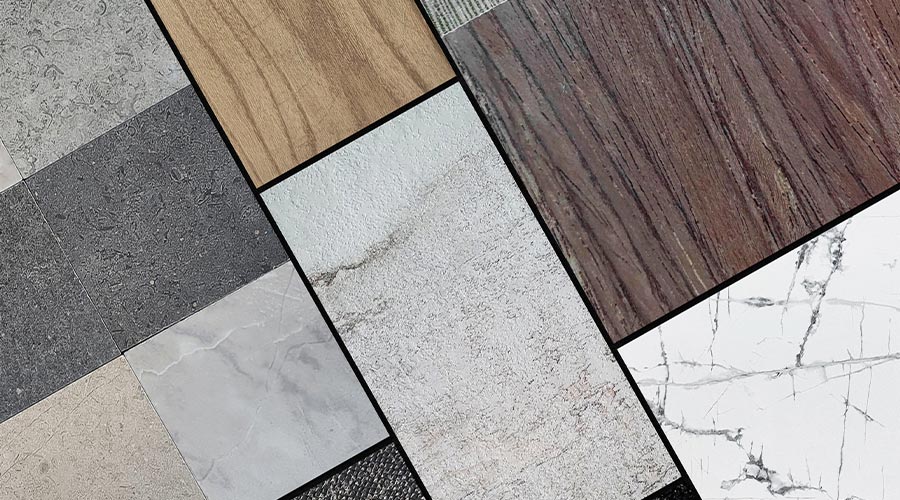
While not as popular today as luxury vinyl tile (LVT), VCT still has a place in many older buildings. In fact, it is favored in commercial and institutional facilities for its low cost and durability, as well as its ease of installation and maintenance.
Direct from the factory, VCT has no wear layers, save a light coating to prevent tiles from sticking together, Hulin explains. After removing any preexisting seal with a general-purpose cleaner and green pad, the floor is prepped for finish application. Hulin suggests using approximately five coats of finish, depending on whether the finish has 20 percent solid material (thinner) or 25 percent solid material (thicker).
According to Allen, VCT floor finishes tend to wear faster than concrete and wood finishes. However, choosing a high-quality floor finish and cleaning floors daily can reduce the frequency of high-speed burnishing—a costly, labor-intensive process.
"If floors are dulling with minor scratching, high-speed burnishing with a floor restorer product can restore gloss," he says. "Deeper scratches may require a top scrub and recoat."
Periodic top scrubbing and recoating removes damaged layers prior to applying fresh sealant and is preferable to stripping and recoating—another laborious process that involves the use of potentially harmful chemicals. Experts agree that the old thinking that floors must be stripped completely bare is untrue.
When scrubbing and recoating, Thompson warns BSCs against using chemicals and abrasive pads for scrubbing.
“VCT is not hard like concrete, so if you use a chemical and a black pad—which has heavy grit on it—you’re actually scratching the floor,” he says. “That’s not top scrubbing—although some people call it that.”
To prep the surface, many experts stress the use of an oscillating floor machine with an eco-prep pad and just enough water to prevent dust particles from becoming airborne. The result is a smoother, even surface that requires two coats of finish rather than the standard five coats.
Wonders of Wood
Unlike concrete and VCT, wood is a natural, renewable flooring material. As a result, no two boards are alike. While it’s an attractive, durable floor choice that can last for decades when properly cared for, wood is very sensitive to temperature and humidity changes.
“Wood and water do not get along,” says Hulin. “A lot of damage happens to wood because people mop it with a heavy, soaked mop and let the water lie on the floor until it dries. Meanwhile, the water seeps into the seam lines, which causes warping and other problems.”
For routine maintenance of wood floors, consultants recommend using a damp mop or cylindrical autoscrubber to control the amount of water used. For dust mopping, a treated or untreated cotton dust mop is widely recommended.
“Microfiber is not the best choice for wood floors because sometimes it can lead to microscopic scratches on the finish,” says Allen.
For wooden gym floors, he advises using a dust mop allocated solely for the gym. Mops should be cleaned after every use and stored “wicks down” off the ground. The cleaner the dust mop, the cleaner the floor.
Experts recommend periodically scrubbing and rinsing floors that have a wax or oil finish, as well as scrubbing and recoating wood floors that have a surface finish, such as polyurethane. This restores shine without sanding the wood.
According to Thompson, BSCs can use the same technology and equipment used for top-scrubbing VCT—an oscillating autoscrubber, prep pad, and minimal water. How do they determine the "right" amount of water? Thompson says it depends on what is left behind after the machine passes.
“I don’t want to see any of the white residue left by the abraded polish, so I need to control my water just enough to float the poly off the floor to recover it,” he explains.
He adds that it’s imperative to have a good squeegee—free of nicks, cuts, or tears—to aid in quick and efficient water recovery.
For interim maintenance, propane burnishers are still a viable option to restore dull or lightly scuffed floors that have a water-based finish. Thompson cautions BSCs not to wait until the floor is overly scratched.
No matter the surface, the key to long-lasting floors is understanding how each material behaves and tailoring maintenance accordingly. Simple daily practices such as implementing effective matting, using proper dust mopping, and incorporating the right equipment can slow wear and reduce the need for labor-intensive restoration.
Kassandra Kania is a freelance writer based in Charlotte, North Carolina, and is a frequent contributor to Contracting Profits.
How to Restore and Maintain Hard Floors