
 CleanLink Interactive Spring/Summer 2026 Issue
 Recognizing the 2026 Reader Choice Award Winners
 2026 Emerging Leader Award
 How Surfactant Use is Expanding in Commercial Cleaning
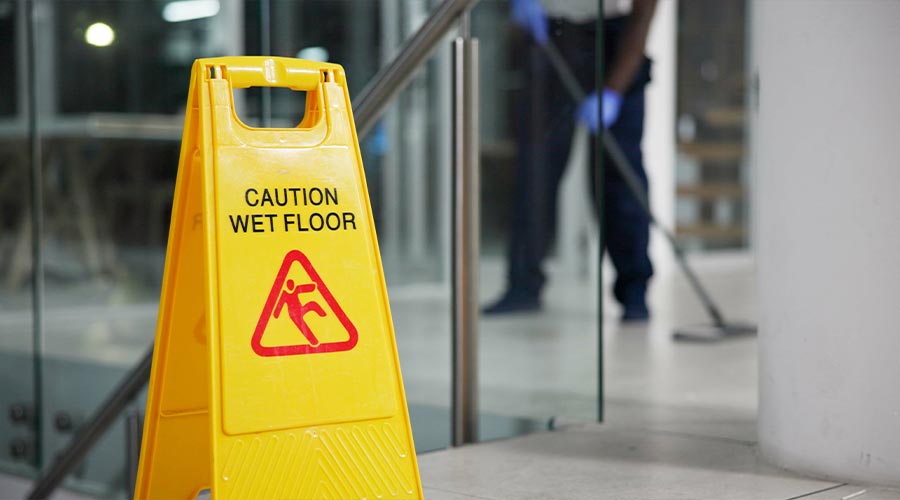
Caring for floors remains one of the most burdensome responsibilities for most building service contractors. Routine maintenance—along with stripping, scrubbing, and burnishing—is labor-intensive and depends on skilled custodians working under time and budget constraints.
Still, floor care is about more than aesthetics. Properly maintained floors last longer and improve safety for occupants and visitors. Understanding these broader values helps BSCs prioritize resources and justify best practices.
Daily Care Essentials
Although different flooring types have unique needs, many daily care routines and challenges are universal. One of the biggest threats is sand tracked in on shoes, which causes surface wear.
“Sand is as aggressive as granite, so the No. 1 maintenance tip is keeping it off the floor with proper matting,” says Dave Thompson, director of the Academy of Cleaning Excellence in Orlando.
Bill Allen, territory manager for Fagan Sanitary Supply, West Elizabeth, Pennsylvania, recommends using a combination of scraper and wiper mats at entrances. For debris tracked into the building, he says a dust mop is an essential tool that’s often overlooked. When selecting a dust mop, pick one compatible with the floor finish on which it will be used.
This is routine maintenance, which is where many floors fail, usually due to incorrect mopping techniques. One such technique includes the use of excess chemicals.
“Custodians work quickly, throw down water and detergent, and redeposit soil on the floor,” says Stan Hulin, President of Future Facility Technology Inc., Oregon City, Oregon. “This can lead to tacky floor syndrome.”
Thompson adds that it can be somewhat simple to identify when excess chemical is used. The water becomes dirty and foamy, which often indicates that there is already too much chemical on the floor. Rinsing floors with water alone can often be enough, but experts suggest using autoscrubbers instead of mops and limiting chemicals whenever possible.
While these fundamentals apply to all floors, BSCs should also understand the specific needs of popular materials like wood, concrete, and vinyl composition tile (VCT) to reduce labor without sacrificing appearance.
Catering to Concrete
Today, concrete flooring is popular in a wide range of facilities due to its durability, low maintenance, and wear resistance. Often found in industrial facilities, such as warehouses and distribution centers, concrete floors withstand heavy machinery and high foot traffic. Commercial buildings, like retail stores and offices, are also turning to concrete flooring for its modern appearance. There are a few types of concrete floors, and it's important to understand the qualities of each.
Raw concrete: Unfinished concrete is common in areas where appearance is unimportant, such as garages and factory floors. It is strong but porous, making it susceptible to moisture, stains, and dust.
In caring for raw concrete, Hulin recommends daily sweeping and wet mopping with a general cleaner or degreaser, depending on the environment. The concrete’s porosity will dictate whether to use a pad or a brush, in conjunction with the appropriate chemical, to remove dirt and soil.
Finished concrete: Polyurethane- and urethane-coated concrete floors are extremely durable and are common in commercial spaces. In addition to daily cleaning, Hulin suggests monthly or quarterly maintenance using a moderate scrubbing pad—blue or green—and a two-pass system for heavy soil.
On the other hand, acrylic finishes are thinner and softer than urethane coating—and more likely to require stripping and refinishing to restore shine, Hulin adds.
Polished concrete: Increasingly popular, polished concrete achieves its sheen through mechanical grinding with diamond abrasives rather than coatings. Routine care is also simple. Quick cleanups can be tackled using small autoscrubbers, especially near entrances.
“Autoscrubbers are best for addressing soil loads that, if left untreated, can dull polished concrete,” says Allen. “This is especially true in areas with salt and ice melt that act like a grinder when tracked in wet, and like fine sandpaper when dry."
One advantage of polished concrete is that its shine can be restored mechanically, without chemicals, using diamond-impregnated pads.
"If I'm teaching a concrete class and we're talking about restoration, first we have to understand what caused the scratches because that will determine the level of pad grit needed to restore shine," Thompson explains.
For scratches caused by foot traffic, for example, he advises progressing from 400- to 800- to 1,500-grit pads, while deep gouges may need aggressive 35-to-50-grit pads.
"Each time I move up in grit number, I'm going to make finer and finer scratches, which reflect light better," he explains. "That's how you polish concrete."
Thompson recommends using a gloss meter to quantify surface reflectivity. This will allow BSCs to better guide the restoration process and make informed decisions about the appropriate grit progression when polishing concrete with diamond pads.
Tailoring Care to Floor Types