
 CleanLink Interactive Spring/Summer 2026 Issue
 Recognizing the 2026 Reader Choice Award Winners
 2026 Emerging Leader Award
 How Surfactant Use is Expanding in Commercial Cleaning
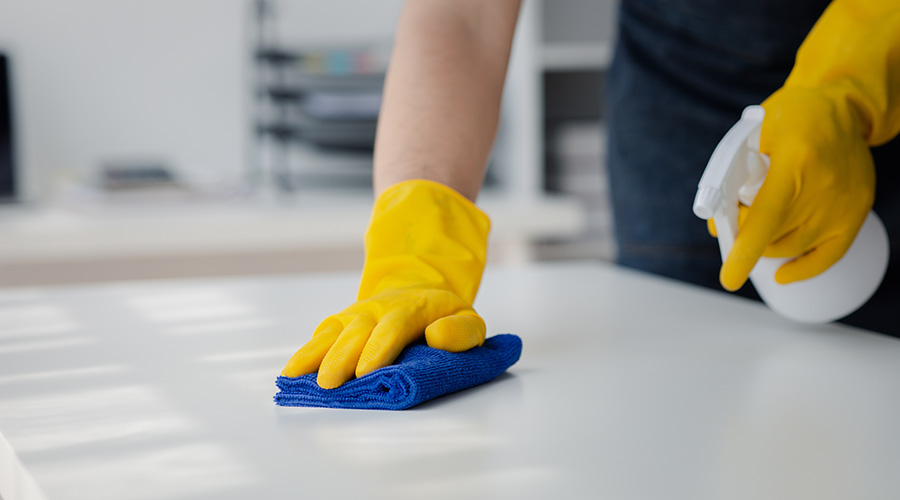
Selecting the right cleaner-disinfectant combination is only part of the solution. Without proper application techniques and adherence to recommended dwell times, even the most effective products can fall short in preventing the spread of infection. Fortunately, there are solutions and standardized processes BSCs can implement to streamline training and deliver consistent, effective results.
“In high-maintenance, high-traffic buildings, everyday cleaners and disinfectants should go through a dilution control system,” says Franke. “That takes the guesswork out of employees’ hands and reduces the likelihood of overmixing chemicals.”
Indeed, improper dilution remains a persistent challenge in the field. Overmixing can increase the risk of harmful chemical exposure for workers and may damage surfaces, while undermixing can reduce a product’s efficacy, compromising infection control efforts.
Another ongoing challenge in the industry is improper dwell times. Tanner admits that complying with labeled dwell times is not always practical. He recommends at least a 2-minute dwell time to achieve a practical infection control endpoint.
When training custodians, the key message is to apply disinfectant thoroughly, ensuring the surface remains visibly wet for the recommended contact time. According to Niffeneger, the use of microfibers can support the process.
“If you’re cleaning a countertop, a microfiber cloth is effective enough to remove soil and residual debris,” he says. “And when properly wetted and folded, it can provide up to eight usable cleaning surfaces—each retaining enough moisture to keep the area wet for the full seven to 10 minutes of required dwell time.”
Beyond investing in cleaning tools that improve efficiency, Niffeneger encourages BSCs to keep training straightforward and accessible.
“You want to make sure you train employees with hands-on demonstrations, bilingual cards if needed, color coding, and visual aids,” he says. “The goal is to make processes as simple as possible—and the employees appreciate that because they want to do the job well.”
To ensure training is successful, Tanner advocates having a system in place to measure outcomes.
“Studies show one of the biggest risks in cleaning and disinfection is that the surface won’t get cleaned or disinfected at all,” he notes. “Human error can be a source of lack of disinfection, so it’s a good idea to monitor whether or not all the intended surfaces are cleaned.”
One example is the use of a fluorescent marker, which leaves an invisible mark on a surface prior to cleaning. Afterward, a supervisor uses an Ultraviolet (UV) light pen to inspect the area. If a visible mark shows up under the UV light, the surface was not properly cleaned.
Lead with Value
Most customers already view infection control as an essential year-round service rather than a seasonal add-on. For those still on the fence, BSCs can underscore how consistent, proactive cleaning and disinfecting not only create a safer work environment but also help reduce absenteeism and support productivity.
The key to reinforcing that value, experts say, is simple: communicate it clearly, consistently, and often.
“Whether you’re working with an infection control professional, a building manager, or a school custodial supervisor, you have to constantly update them on what products you’re using and what you’re doing,” says Niffeneger. “Keep them in the loop—it’s a powerful selling tool.”
Tanner agrees, noting that infection control services—and actively promoting them—can help commercial cleaning contractors stand out in an increasingly competitive marketplace.
“Anyone who is offering a service needs to differentiate themselves from the competition,” he says. “The killing of pathogens is an invisible process, so the only way your customer will know that you’re keeping them safe is if you advertise it to them or demonstrate that their facility is being disinfected.”
Kassandra Kania is based in Charlotte, North Carolina, and is a frequent contributor to Contracting Profits.
How Cleaners and Disinfectants Improve Infection Control