
 CleanLink Interactive Spring/Summer 2026 Issue
 Recognizing the 2026 Reader Choice Award Winners
 2026 Emerging Leader Award
 How Surfactant Use is Expanding in Commercial Cleaning
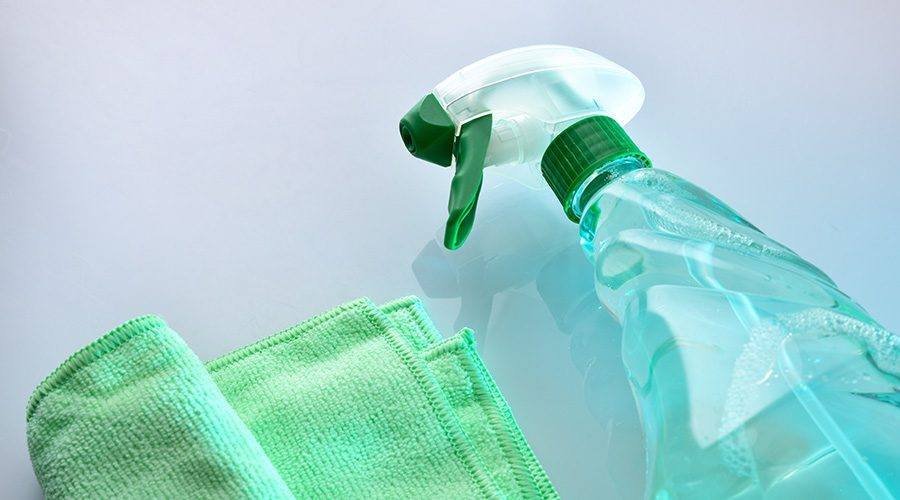
Once considered a priority for healthcare facilities, infection prevention is now routine in a building service contractor’s (BSC) cleaning contract. But meeting this expectation requires more than surface-level cleaning—it demands a clear understanding of how cleaners and disinfectants work together to reduce risk.
This shift redefines what it means to deliver a complete cleaning program, with proper training and correct product use essential to meet current industry standards.
“In today’s environment, infection prevention is no longer a compliance requirement—it’s a core expectation across verticals like healthcare, education, and hospitality,” notes Dale Franke, Vice President of Sales and Marketing, Acme Paper & Supply Co., Savage, MD. “Even in buildings that lease space, there’s an expectation that the place is not just clean but properly disinfected.”
Despite the widespread adoption of infection prevention practices, confusion remains around when and how to use cleaners versus disinfectants. While the two serve distinct purposes, they are still often used interchangeably.
“The first thing to know is the difference between a cleaner and disinfectant because the average person often confuses the two,” says Ben Tanner, President and CEO, Microchem Laboratory, Round Rock, Texas. “A cleaner’s job is to remove soil; a disinfectant’s job is to kill microorganisms.”
Cleaners and disinfectants are therefore complementary and should be used in sequence to optimize infection prevention. Cleaning first removes organic matter and visible soil that can interfere with disinfectant performance.
“When disinfecting, you want to clean first, because it’s hard to disinfect a dirty surface,” says Franke. “If there’s too much soil on the surface, it will prevent a disinfectant from doing its job.”
Product Selection
Indeed, soil level plays a key role in determining the appropriate cleaning product. For routine cleaning of light to moderate soil, an all-purpose cleaner is typically most effective. For kitchens and industrial environments where oil, grease, or heavy grime is a concern, a degreaser may be needed.
“An all-purpose cleaner does a nice job of not only removing soils but the germs on the surface,” says Paul Niffeneger, a consultant for education, healthcare, and the BSC community. “It won’t kill them, but in a lot of cases that’s okay.”
When the goal is to reduce or prevent the spread of infection, however, cleaning should be followed with the application of a disinfectant to effectively kill remaining microorganisms. BSCs should select disinfectants registered with the Environmental Protection Agency (EPA) and ensure their formulations match the facility and task at hand.
“I like to say that disinfectants are like golf clubs,” says Tanner. “Not one is perfect at everything, but many of them are good at certain things.”
Tanner shares that there is generally a trade-off between a disinfectant’s strength and breadth of efficacy and its toxicological profile. The most potent disinfectants are often more hazardous to humans—particularly in terms of inhalation and skin exposure—and can also be harsher on surfaces, increasing the risk of discoloration or material degradation.
Quaternary ammonium disinfectants and sanitizers fall at the lower end of the spectrum. Tanner says many quat-based products are also formulated as cleaners with a mild, soapy character, good stability, and pleasant fragrance. While quat-based disinfectants perform well against everyday bacteria, they are not effective against spores and have limited efficacy against non-enveloped viruses, like those responsible for the common cold.
According to Franke, quaternary ammonium disinfectants are widely used in commercial buildings. They are also a good choice in schools where soil removal is as important as controlling common microbial contamination.
For healthcare or high-risk environments, oxidative disinfectants, such as chlorine or hydrogen peroxide, are highly effective—and a step up from quaternary ammonia.
“Diluted bleach and hydrogen peroxide have broad-spectrum efficacy,” says Tanner. “They kill everything, from the viruses that cause colds to some of the mold you find in the environment and a certain number of endospores or spore formers.”
When disinfecting a critical environment such as an intensive care unit, a broad-spectrum, high-potency disinfectant is almost always the appropriate choice. However, while bleach-based disinfectants are highly effective, they can also pose adverse effects—particularly when they are not properly diluted or handled.
“As a consultant, if my clients are using bleach for disinfecting, I make sure they understand the dilution rates based on what they are cleaning,” says Niffeneger. “It’s a low-cost alternative that people will continue to use—and probably continue to misuse, unfortunately.”
For this reason, hydrogen peroxide disinfectants are an increasingly popular alternative to chlorine-based disinfectants. These products are fast-acting, leave minimal residue, and are considered safer for people and the environment.
While experts recommend a two-step process for disinfecting high-risk environments and visibly soiled surfaces, a one-step cleaner-disinfectant that combines cleaning and disinfection in a single product is appropriate for everyday cleaning of light soil.
“A one-step cleaner disinfectant is tested in a 5 percent soil situation, so anytime there is heavy soil, you need to clean with a cleaner first prior to disinfecting,” says Tanner.
How to Train Employees on Chemical Use