
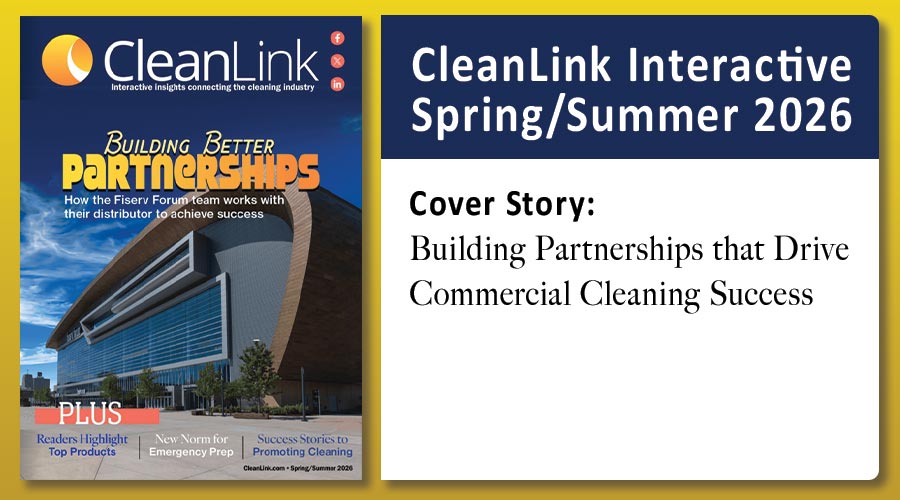
 CleanLink Interactive Spring/Summer 2026 Issue
 Recognizing the 2026 Reader Choice Award Winners
 2026 Emerging Leader Award
 How Surfactant Use is Expanding in Commercial Cleaning

Key Takeaways:
• Infection prevention is now a critical priority across nearly every industry, not just healthcare.
• Cleaning and disinfecting are different processes, and both are essential for reducing the spread of pathogens.
• Strong infection-prevention programs rely on proper training, standardized procedures, and ongoing accountability.
By Dale Franke
When people hear the term infection prevention, they often think of hospitals, surgical suites, and healthcare professionals wearing gloves and masks. While healthcare facilities remain on the front lines of infection control, the reality is much broader.
Today, infection prevention impacts virtually every environment where people gather, work, eat, learn, travel, or receive care. Schools, restaurants, offices, fitness centers, warehouses, hotels, manufacturing facilities, transportation hubs, and senior living communities all face increasing pressure to maintain cleaner, safer spaces.
In fact, in the years since the pandemic, expectations surrounding cleanliness have changed permanently. Employees, customers, students, patients, and visitors no longer view hygiene as a behind-the-scenes function, and, as a result, cleanliness has become a visible reflection of an organization's commitment to health, safety, and operational excellence.
Despite this heightened awareness, many organizations continue to struggle to implement consistent infection-prevention practices that deliver measurable results.
One of the most common misconceptions in facility maintenance is the belief that cleaning and disinfecting are the same thing.
They are not.
Cleaning removes dirt, debris, oils, and organic matter from surfaces. This step is critical because contaminants can interfere with the effectiveness of disinfectants.
Disinfection, on the other hand, involves using EPA-registered products to kill or inactivate harmful microorganisms, including bacteria, viruses, and fungi.
A surface may appear clean while still harboring pathogens. Likewise, applying a disinfectant to a dirty surface often reduces its effectiveness. Effective infection prevention requires both cleaning and disinfecting as part of a coordinated process.
The impact of poor disinfection practices extends far beyond hospitals and other healthcare settings. This includes:
Schools and Educational Facilities
Students and staff interact with countless high-touch surfaces throughout the day, including desks, cafeteria tables, door handles, restroom fixtures, athletic equipment, and shared technology devices. Effective cleaning and disinfection programs can help reduce absenteeism and support healthier learning environments.
Restaurants and Foodservice
In foodservice environments, improper cleaning and disinfection can contribute to cross-contamination, foodborne illness, and reputational damage. Consumers increasingly associate visible cleanliness with professionalism and trustworthiness.
Offices and Corporate Facilities
Shared workspaces create a plethora of opportunities for germ transmission. Conference rooms, break rooms, elevators, keyboards, and restrooms all serve as common touchpoints. Strong infection prevention programs help support employee wellness, productivity, and confidence in the workplace.
Fitness Centers and Recreational Facilities
Gyms present unique challenges due to shared equipment, high-touch surfaces, and exposure to perspiration and bodily fluids. Success depends on proper product selection, adherence to disinfectant dwell times, and consistent staff training.
Senior Living and Long-Term Care
Outside of acute-care hospitals, senior living and long-term care environments remain among the most vulnerable settings. Residents often have weakened immune systems, making effective infection-prevention protocols particularly important.
Hidden Gaps
Many organizations believe they are disinfecting effectively when, in reality, critical mistakes are limiting results.
Common issues include:
• Using the wrong product for the application
• Failing to follow dilution instructions
• Not allowing adequate dwell or contact time
• Using contaminated microfiber cloths or mop heads
• Cross-contaminating surfaces during cleaning
• Inadequate employee training
• Inconsistent procedures between shifts
• Assuming all disinfectants perform equally
One of the most common mistakes is spraying a disinfectant and immediately wiping the surface dry. Most disinfectants require surfaces to remain visibly wet for a specified period to achieve their efficacy claims.
These seemingly small errors can significantly reduce the effectiveness of an infection-prevention program. That is why training, standardized procedures, and product knowledge remain essential components of success.
Modern infection prevention is becoming increasingly data-driven and technology-enabled.
Organizations are adopting tools such as touchless dispensing systems, ATP surface testing, smart restroom monitoring, and QR-code cleaning verification systems. These technologies improve visibility, consistency, accountability, and operational efficiency. Facility managers can better track performance, verify completed tasks, and identify areas for improvement.
However, technology alone is not the solution. Even the most sophisticated systems depend on trained personnel and well-designed processes. Technology should support strong cleaning practices, not replace them.
Today's customers and building occupants notice more than organizations may realize. They notice dirty restrooms, empty soap dispensers, sicky floors, dust accumulation, poor odor control, and unsanitary high-touch surfaces.
Whether consciously or subconsciously, people associate cleanliness with professionalism, safety, and quality.
As a result, infection prevention is no longer solely a health initiative. It is also a business strategy. A well-executed program protects brand reputation, strengthens customer confidence, supports employee morale, and reinforces trust.
Building an Infection Prevention Program
Successful programs typically focus on five key elements:
1. Proper Product Selection
Use cleaners and disinfectants appropriate for the environment, surface type, and target pathogens.
2. Employee Training
Staff should understand cleaning procedures, dilution control, dwell times, personal protective equipment requirements, and methods for preventing cross-contamination.
3. Standardized Procedures
Written standard operating procedures help ensure consistency across departments, shifts, and facilities.
4. Focus on High-Touch Surfaces
Prioritize frequently touched areas such as door handles, light switches, countertops, handrails, touchscreens, elevator buttons, and restroom fixtures.
5. Continuous Evaluation
Regular inspections, audits, and performance reviews help identify gaps and create opportunities for improvement before issues become larger problems.
Looking Ahead
Infection prevention is no longer confined to hospitals and healthcare systems. It has become a fundamental expectation across nearly every industry.
Organizations that invest in effective cleaning and disinfection practices, employee training, accountability, and continuous improvement create safer environments and stronger experiences for everyone who enters their facilities.
Ultimately, cleanliness is one of the clearest reflections of an organization's culture and operational standards. Infection prevention is not simply a housekeeping responsibility—it is a visible commitment to the health, safety, and well-being of the people an organization serves.
Dale Franke is the Vice President of Sales and Marketing at Acme Paper & Supply Company, one of the nation’s largest suppliers of sanitation solutions, disposable food service packaging, restaurant equipment and supplies, retail and industrial packaging, and custom-designed packaging solutions. With over 30 years of experience in the facility supply industry and more than a decade in sales leadership, Franke is recognized for his deep industry knowledge, strategic insight, and customer-focused approach to helping businesses navigate evolving operational and supply chain challenges.
Throughout his career, Franke has worked closely with organizations across a wide range of industries to develop efficient, scalable solutions that support growth, sustainability, and operational excellence. His expertise spans sales strategy, distribution, packaging innovation, and facility solutions, making him a respected voice within the industry.
Franke can be reached directly at dfranke@acmepaper.com. Connect with him on LinkedIn or learn more at Acme Paper & Supply Company.
posted on 6/17/2026
