
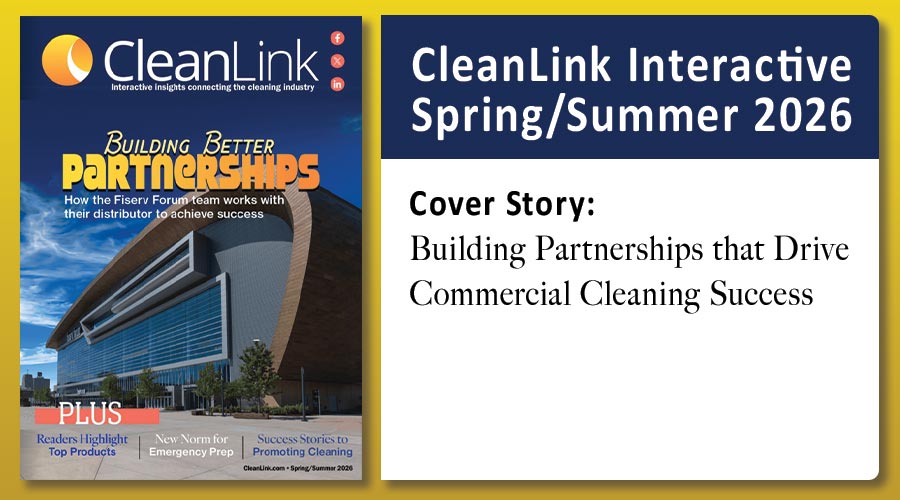
 CleanLink Interactive Spring/Summer 2026 Issue
 Recognizing the 2026 Reader Choice Award Winners
 2026 Emerging Leader Award
 How Surfactant Use is Expanding in Commercial Cleaning

Key Takeaways:
• Rapport may help salespeople maintain friendly connections, but true business relationships create trust, access to decision-makers, and opportunities for sales growth.
• Sales leaders should coach teams to move beyond surface-level relationships by asking deeper questions, engaging multiple stakeholders, and becoming trusted advisors.
• In increasingly complex sales environments, strong business relationships provide a competitive advantage by uncovering challenges early, influencing decisions, and protecting accounts from competitors.
In sales, we talk about relationships as if they are a competitive advantage. But when I look at most sales organizations, what I actually see is a lot of rapport—and very few relationships that move business forward.
There is a critical difference, and it's costing you.
Objective Management Group (OMG) recently analyzed the relationship-building competency across 9,516 salespeople evaluated in 2025. The average score was a middling 51 percent. This is barely passing, and in competitive markets, barely passing is losing.
The OMG data reinforces what I see in the field. Rapport building is common, but relationship building is not highly developed. The result is sales organizations that are more friendly than effective.
Rapport is Not a Relationship
Over the course of my career, I've seen a lot of salespeople who are genuinely likable. In fact, it is rare to find an unlikeable seller. Customers enjoy talking to them. They show up at the golf outing, they know who to call when there's a problem, and they've been doing business with the same accounts for years.
Leadership sees the long tenure and assumes the relationship is solid. It isn't. Rapport is comfortable. Relationships move the needle. They are not the same thing.
Rapport keeps you in the account. A real business relationship gives you access—to budget conversations, internal politics, competing priorities, and the actual decision-makers who control the outcome. A rep with rapport gets a returned phone call. A rep with a true business relationship gets an honest conversation about why the deal is stalling.
The problem isn't that these sellers lack warmth. The problem is that they've confused rapport with a productive business relationship. One creates goodwill. The other creates access, candor, and sales growth.
According to the LinkedIn State of Sales Report, 88 percent of buyers say they only engage with salespeople they view as trusted advisors. Think about what that means for the rep your customer likes but doesn't lean on. They're friendly enough to keep around but not differentiated enough to win on price.
These weak relationships will cost you money.
Sales cycles are getting longer, and buying committees are expanding. A rep locked into a single contact—no matter how warm that relationship feels—is permanently limited. When the budget decision moves up the organizational chart, they don't have a path in. When a competitor makes a move, they're the last to hear about it. When an objection surfaces late in the cycle, they're blindsided because the buyer never trusted them enough to say it sooner.
That is rapport disguised as a relationship.
HubSpot's research shows that 80 percent of sales require five or more follow-up interactions. Sustaining those conversations—and keeping them productive—requires a genuine business relationship. Rapport will get you a polite response. A relationship gets you the real conversation.
Advice for Leaders
Start by assessing your team against the relationship-building competency—not through observation, not based on their numbers, and not through tenure. You need to know who is genuinely building trust and who is relying on history and familiarity to hold accounts. Those are very different things, and they require very different coaching responses.
Then coach. Teach your reps to ask harder questions, expand beyond their primary contact, go deeper into business challenges, and earn access to conversations that actually drive decisions. A rep who only talks to the person who already likes them is not protecting your account—they are just occupying it.
Rapport and likability get you in the door. The relationship gets you in the room where the real decisions are made.
Your competitors are friendly, too. Relationships are your competitive advantage. Make sure your team is actually building them.
Jim Peduto, Esq., CBSE, is the Managing Partner and the Co-Founder of Knowledgeworx, LLC. Owners and CEOs rely on Jim's strategic thinking and transformational growth expertise to win market share and achieve performance gains.