
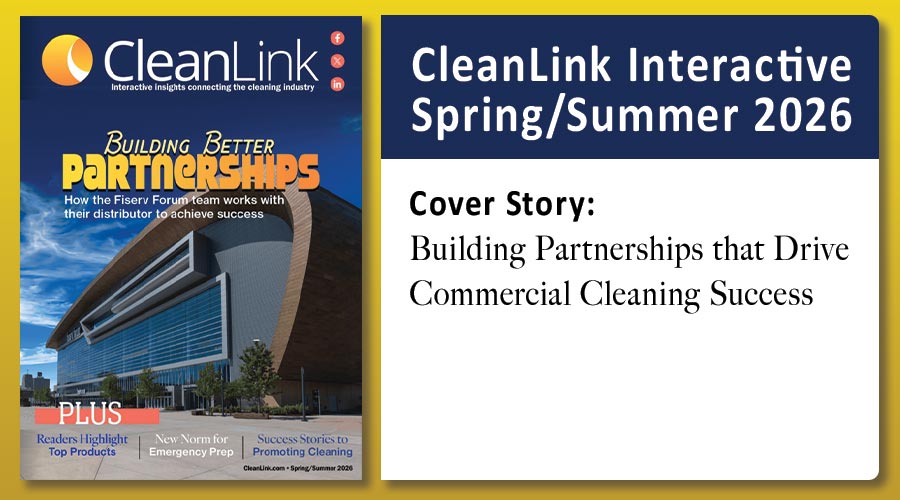
 CleanLink Interactive Spring/Summer 2026 Issue
 Recognizing the 2026 Reader Choice Award Winners
 2026 Emerging Leader Award
 How Surfactant Use is Expanding in Commercial Cleaning
Key Takeaways:
• Technology is becoming a powerful tool for helping cleaning professionals work smarter, safer, and more efficiently.
• Sustainability efforts are expanding beyond individual products to encompass the entire product lifecycle and operational process.
• Manufacturers are investing in training and ergonomic solutions that improve worker performance, wellbeing, and retention.
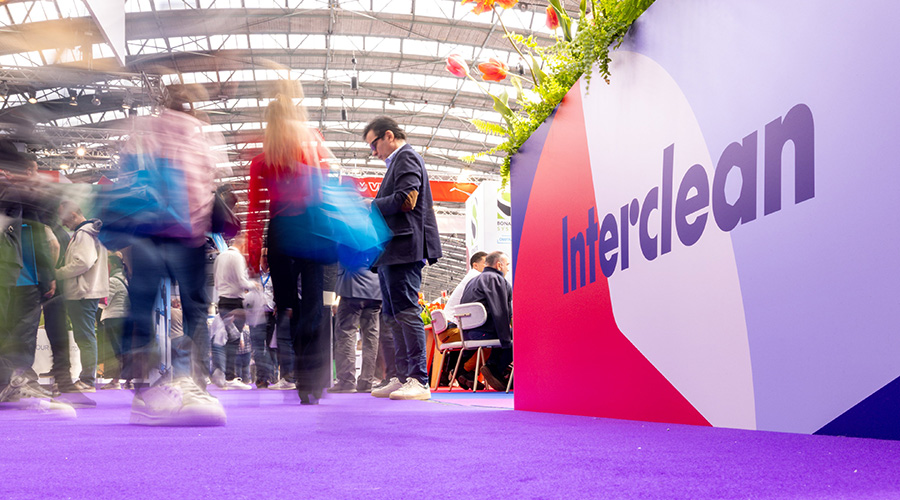
Jan/san professionals gained a firsthand look at the future of cleaning during Interclean Amsterdam earlier this year. The global event brought together more than 900 exhibitors and 30,000 attendees from 140 countries, creating a hub to showcase the latest advancements in cleaning products, equipment, and technologies that will shape the industry moving forward.
As the North American media partner for the event, Sanitary Maintenance was in attendance and explored the innovations that will redefine cleaning and facility care. From solutions designed to enhance occupant health and safety to sustainability-driven products and technologies that improve operational efficiency, the event showcased developments poised to influence the industry for years to come.
"I was proud to once again reunite the global cleaning and hygiene community in Amsterdam to celebrate the innovation, collaboration, and human connection that make the industry thrive and continue to shape a healthier and safer future," says Robert Stelling, Director of Interclean.
Growing Through Innovation
Continuing a longstanding tradition, Interclean Amsterdam officially kicked off with the announcement of the prestigious Amsterdam Innovation Award winners. The awards recognize groundbreaking solutions that are advancing a cleaner, safer, and more sustainable world while highlighting the innovation driving the professional cleaning industry forward. Selected from nearly 100 submissions, winners were honored across four key categories representing some of the most important trends shaping the industry today.
The first is the Sustainability and Environment category, where product submissions appeared more holistic than in years past. Instead of only focusing on tactical adjustments to products, jan/san manufacturers are reevaluating product development, packaging, transport, use, reuse, and waste/rebirth, as well as how each impacts the environment.
“Sustainability continues,” says Michelle Marshall, Chief Editor of European Cleaning Journal and Chair of the Amsterdam Innovation Award Jury. “It’s becoming more holistic as time goes on.”
The winner of this award pushes boundaries to raise the standard of holistic thinking. Essity Hygiene and Health AB took home the prize for their Tork Hygiene for All, an initiative that goes beyond product innovation to address inclusivity in public restrooms.
Meanwhile, the Health and Hygiene category recognizes innovations that help professional cleaning teams create healthier, safer environments while meeting critical hygiene standards. These solutions address essential needs that protect both building occupants and the frontline workers who keep facilities running safely. This award honored a standout product that demonstrates excellence in advancing health, hygiene, and safety across the cleaning industry. Vileda Professional's TraXero Wheel Cleaner was recognized for addressing an often-overlooked hygiene risk that is also labor intensive: disinfecting wheels and casters on cleaning carts.
Award submissions are broken down by category, but every entry has one similarity—they all focus on labor. This is most obvious in the Smart Technologies and Digitalization category, where new innovations are impacting the work of frontline cleaning teams. The winner in this category was Netherlands-based FacilityApps with its Virtual Reality Training for Cleaners. This is a plug-and-play, multilingual training program that enhances engagement through gamified learning, and improves accessibility for users with ADHD, dyslexia, and language challenges.
FacilityApps also took home the Cleaners' Choice Award, which is voted on by the nominees of the Dutch "Cleaner of the Year" election.
"We are seeing far more smart solutions in terms of training, data, and so much more," says Marshall. "It's very exciting."
Recognizing that the cleaning industry is still about the people, the Workforce and Ergonomics category also attracted some heavy-hitting product innovations. These submissions focused on the day-to-day challenges frontline workers face and how to create efficiencies while also reducing the physical demands of the job. The winner in this category—DRYFT by DRYFT World—also took home the Overall Innovation Winner Award for 2026.
According to the Amsterdam Innovation Award Jury, "DRYFT prioritizes the well-being of cleaning operatives. Its ergonomic design reduces repetitive motion, lifting, and fatigue, while maintaining high performance standards, demonstrating how innovation can directly improve daily working conditions."
While the jury votes on most of the awards, attendees at Interclean Amsterdam also get a say. Chosen by the public, the Visitors’ Choice Award honors the innovation that captured the most votes worldwide. The 2026 winner was KIRA B 200, by Alfred Karcher SE & Co. KG.
"Once again we have seen how the Interclean Amsterdam exhibitors from around the world are continuing to invest in innovation and evolution," says Marshall. "In each category there is a good spread of different companies, and all of our final nominees offer something different in the category where they’ve been selected."
The Human Connection
The technological advancements in commercial cleaning are growing at a rapid pace, but jan/san is still a people business. That was emphasized throughout the four-day event with expert-led training.
In addition to the must-see Main Stage, which facilitated the Show Opening keynote, Innovation Awards, and key networking events, Interclean Amsterdam also showcased specialty knowledge stages. Key presentations, expert panels, workshops, and future-focused conversations held on these stages all examined developments across data and technology, sustainability, and health and hygiene.
More than 75 speakers presented over 100 sessions that highlighted innovations in smart facilities, infection prevention, and cleaning for health and safety. These stages brought the industry to life and the attendees together.
Another hot attraction was also new to the event in 2026. Four Experience Centers gave attendees hands-on learning opportunities, live demonstrations, and direct interaction with the technologies shaping jan/san. Each Experience Center had an area of focus: Hospitality; Robotics; Healthcare; and Outdoor Cleaning. In these spaces, attendees were able to test and compare products, as well as assess solutions to challenges under realistic conditions.
"Our different Experience Centers are where advanced cleaning techniques, expert demonstrations, hands-on testing, and engaging fun elements come together in one immersive experience," notes Daniëlle Inostroza, Exhibition Manager at Interclean.
After participating in the Robotics Experience Center, one attendee shared comments about the opportunity on social media: "There’s a big difference between hearing about a solution and actually seeing it work on the show floor—and that’s exactly where real trust is built. Moments like this show how far the industry has come in turning smart technology into practical, everyday tools."
Tech Takeover
Whether focused on training, workload management, material handling, or infection prevention, technology once again took center stage at Interclean Amsterdam. While autonomous equipment attracted significant attention, manufacturers showcasing alternative technologies also generated strong interest among attendees.
As one presenter on the Data and Technology stage noted, “Technological collaboration is the connection between innovation and implementation.” That concept was evident throughout the show, where smart solutions ranged from process-improvement software and virtual reality training to language tools, Internet of Things (IoT) applications, and sustainability-focused strategies. Each offered opportunities to improve efficiency, overcome operational challenges, and strengthen cleaning programs.
Of course, no discussion of technology in the professional cleaning industry would be complete without examining the latest advancements in robotics and autonomous equipment, which continued to be among the event’s most talked-about innovations.
New autonomous machines entering the market are addressing many of the concerns that have historically slowed adoption, including equipment size, sensor capabilities, cost, and ease of use. According to manufacturers, the next generation of machines will be increasingly versatile, allowing end users to perform multiple tasks with a single piece of equipment and reducing overall investment costs. Expanded product lines featuring a variety of machine sizes are also giving facilities greater flexibility to match equipment to specific operational needs.
Advancements in connectivity are further enhancing the value of autonomous equipment. For larger end users operating multiple brands and types of machines, new technologies on display at the event promoted additional sensors and capabilities to communicate with other systems, including gates, elevators, and building infrastructure. These developments are helping create more integrated and efficient cleaning operations.
Manufacturers on the Interclean Amsterdam show floor emphasized that many of these innovations are being driven directly by customer feedback. As end-user expectations evolve, manufacturers are rapidly refining product features and capabilities in an effort to improve performance, simplify adoption, and build long-term brand loyalty.
While the technology on display at Interclean Amsterdam showcased impressive advances in automation, connectivity, and data-driven decision-making, the ultimate focus remains on the people responsible for maintaining healthy facilities. Innovations that were on display are designed to support—not replace—the cleaning professional. As technology continues to develop, its greatest value will be measured by its ability to help cleaning teams work more efficiently, effectively, and confidently.
“While the innovations, technology, and sustainability solutions on display were truly impressive, the true heart of Interclean remains the people," says Stelling. "From inspiring sessions to celebrations, we signed off the week with the knowledge that many new partnerships, insights, and shared commitments have been made toward creating a cleaner world.”
Interclean Amsterdam will return in 2028, continuing its mission to connect the global cleaning and hygiene industry and showcase quality, innovation, and collaboration.
Corinne Zudonyi has been in the commercial cleaning industry for over 20 years and is proud to serve as Editor-In-Chief of Contracting Profits (the official publication of BSCAI), Facility Cleaning Decisions, and Sanitary Maintenance (the North American media partner of Interclean Amsterdam) magazines, publications that serve the professional cleaning industry. Additionally, Corinne manages CleanLink.com, the leading digital resource for the commercial cleaning industry, and she uses her industry knowledge to steer educational topics for Clean Buildings at NFMT East.
Corinne is the sole U.S. representative to serve on the international Interclean Amsterdam Innovation Jury, where she weighs in on product trends impacting commercial cleaning on a global scale. She also works closely with Healthy Green Schools & Colleges to advance healthy and sustainable cleaning in educational facilities. As a member of the CLEAN Awards Jury, through the Building Service Contractors Association International, Corinne also helps recognize cleaning contractors and their companies for outstanding service to the industry.
Corinne can commonly be found moderating industry panel discussions, presenting education, and focusing on bringing awareness and affirmation for the wonderful work that people do to keep facilities clean and building occupants safe and healthy.
Follow Corinne on LinkedIn here.