
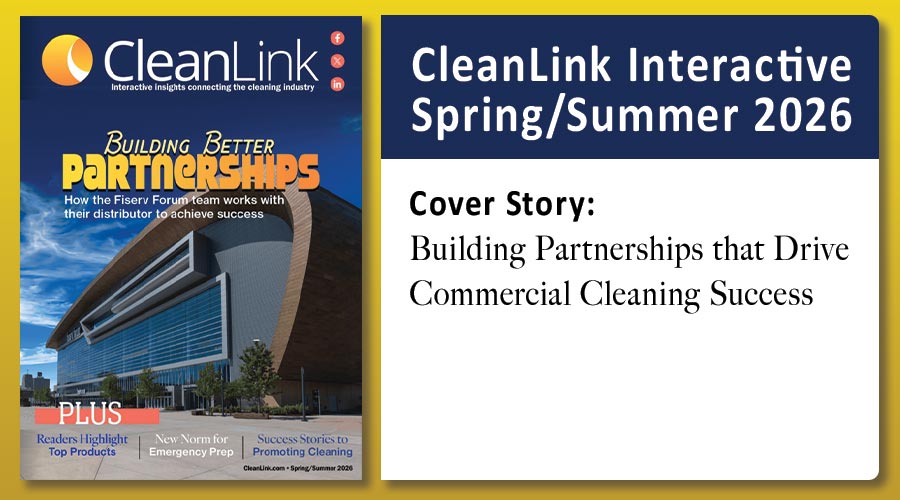
 CleanLink Interactive Spring/Summer 2026 Issue
 Recognizing the 2026 Reader Choice Award Winners
 2026 Emerging Leader Award
 How Surfactant Use is Expanding in Commercial Cleaning
The month of May featured several holidays recognizing the industry’s importance in supporting public health. These celebratory occasions recognize how clean and healthy environments cannot exist without the implementation of quality cleaning programs. While external and internal factors can change how a cleaning system functions, every optimal program contains essential elements that drive success.
To identify these key criteria, CleanLink asked its readers to respond to the following questions:
1) What is today’s biggest supply chain challenge?
Labor shortages
Geopolitical instability
Cybersecurity threats
Rising operational costs
2) What should be the top priority for a successful cleaning program?
Infection control and prevention
Sustainability initiatives
Building occupant experience
Budget efficiency
3) Which modernization effort will have the biggest ROI?
Leverage digital tools (AI, IoT, etc.)
Enhance team training
Prioritize preventive maintenance
Strengthen service offerings
Navigating Industry Challenges
Supply chain disruptions continue to challenge operational efficacy across the industry. According to 58 percent of respondents, labor shortages are a leading contributor to these interferences. Although the U.S. Bureau of Labor Statistics’ April market report showed steady job growth across various sectors, the labor pool continues to shrink. Staff recruitment and retention remain pressure points, costing the cleaning industry upwards of $15.2 billion to replace employees.
Another expense, 33 percent of readers say, is operations. The cost of supplies and doing business is increasing, according to nearly 82 percent of building service contractors (BSCs) surveyed in Contracting Profits’ annual market study. Rising expenditures amid shrinking budgets impact service pricing, delivery, and efficiency.
Just 8 percent believe the largest supply chain challenge is geopolitical instability. Although the long-term effects of the Iran War remain to be seen, uncertainties around supply availability, rising tariffs, and global shipping abound.
People Over Profit
While cost is a concern, only 17 percent of CleanLink readers shared that budget efficiency is a top priority when creating a successful cleaning program. Cleaning is not a labor business; it’s a people one. Therefore, the priority when cultivating an effective cleaning system is on outcomes.
Around half of respondents say cleaning programs should focus on infection prevention and control (IPC). Evidence-based IPC methods enhance occupant well-being and environmental hygiene. With ongoing outbreaks—measles, influenza, hantavirus, and more—consistent cleaning and disinfection protocols can reduce risks across all settings. A quarter of readers believe building occupant experience is the overall goal, yet breaking the chain of disease transmission through IPC helps achieve this objective.
Another trend in cleaning is the rise of green and sustainable cleaning. The eco-friendly cleaning market is expected to reach $75 billion by 2031, an estimate that aligns with a growing consumer perception of company sustainability initiatives. While important for the ecological health of the planet and its people, only 8 percent of respondents shared it’s a cleaning program’s top priority.
Future-Proofing Processes
To meet industry obstacles—such as supply chain disruptions—head on, commercial cleaning executives will need to modernize. Embracing change, even when a business is operating successfully, supports growth that results in the greatest return on investments (ROIs).
One of these innovations is enhanced team training. Half of those surveyed know that a strong workforce starts with a well-trained staff. When frontline employees are equipped with proper and recurring education, they can provide quality levels of clean consistently and confidently.
Digital tools—artificial intelligence (AI), Internet of Things (IoT), and more—can also lead to bigger ROI, as affirmed by a third of respondents. The workforce is rapidly becoming digital- and human-based. Intentional integration provides data in real-time, giving feedback that addresses obstacles and enhances overall operations. Rather than replacing staff, digital tools can also target workforce shortages, improving cleaning outcomes.
Unpredictable disruptions—inclement weather events, civil unrest, and more—are becoming more frequent and can impede cleaning systems. While preventative maintenance and strengthening service offerings are forms of business resilience, only 8 percent of readers share that they are their preferred way to achieve ROIs.