
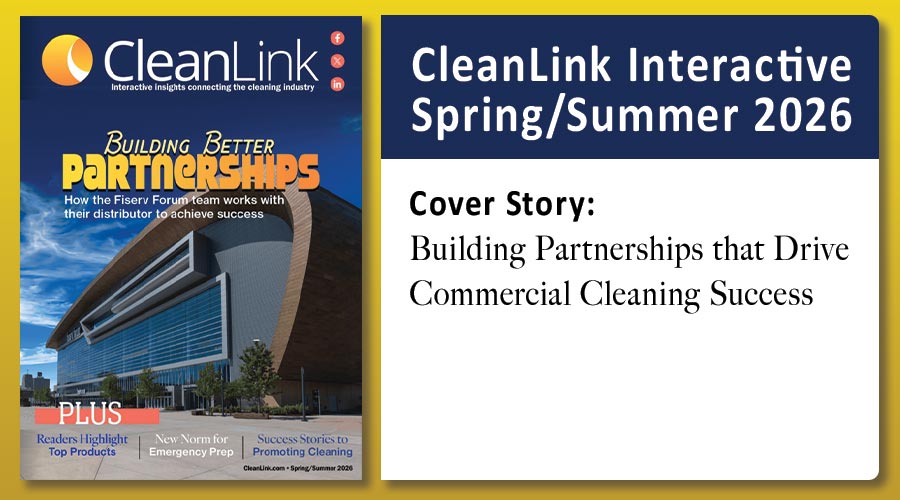
 CleanLink Interactive Spring/Summer 2026 Issue
 Recognizing the 2026 Reader Choice Award Winners
 2026 Emerging Leader Award
 How Surfactant Use is Expanding in Commercial Cleaning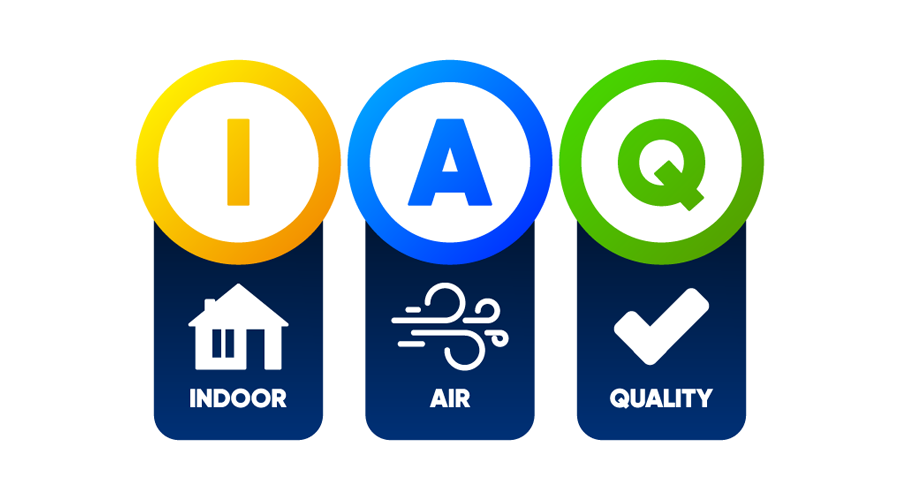
Newly published indoor air quality guidelines elevate the role indoor air quality plays in commercial cleaning. The Global Commission on Healthy Indoor Air launched its Global Framework for Action, a roadmap that embeds healthy indoor air as an everyday expectation in buildings everywhere. Unveiled during Climate Week in New York, the Framework provides a comprehensive and coordinated strategy to establish IAQ as a needed norm.
The publication of this plan coincides with the start of IAQ month. October is a time to recognize the importance of healthy indoor environments for public health. With students back in school and the emergence of fall weather, people are spending more time indoors—90 percent of Americans on average, according to the Environmental Protection Agency (EPA). As this month also marks the beginning of cold and flu season, IAQ becomes an essential element of any cleaning program.
“For decades, we have advanced the science and unequivocally demonstrated that better indoor air is essential to human health,” says Dr. Lidia Morawskia, Co-Chair of the Global Commission on Healthy Indoor Air and Distinguished Professor at Queensland University of Technology. “We know the difference better indoor air can make, and many of the tools we need to support it are already available.”
Frontline teams can prioritize cleaning and disinfecting indoor surfaces to mitigate the spread—or dispersal—of airborne contaminants. However, the types of cleaning products used can also contribute to the type of contaminants polluting the air. Commercial cleaning executives should reduce their use of cleaning chemicals that emit large quantities of volatile organic compounds (VOCs) and turn to low-volume, VOC-producing products, such as those certified by Green Seal, UL ECOLOGO, or EPA Safer Choice.
Another strategy to improve IAQ is to limit the number of contaminants entering a facility. Commercial cleaning executives can introduce a comprehensive matting program at building entryways to mitigate the amount of dust and debris entering a building. Floor care and carpet care can also address indoor contaminants that become trapped in carpeting fibers or get re-released into the air as people come and go. Autoscrubbers, microfiber mops, and vacuum cleaners with HEPA filters are recommended equipment that can support frontline teams when properly monitored and implemented.