
 CleanLink Interactive Spring/Summer 2026 Issue
 Recognizing the 2026 Reader Choice Award Winners
 2026 Emerging Leader Award
 How Surfactant Use is Expanding in Commercial Cleaning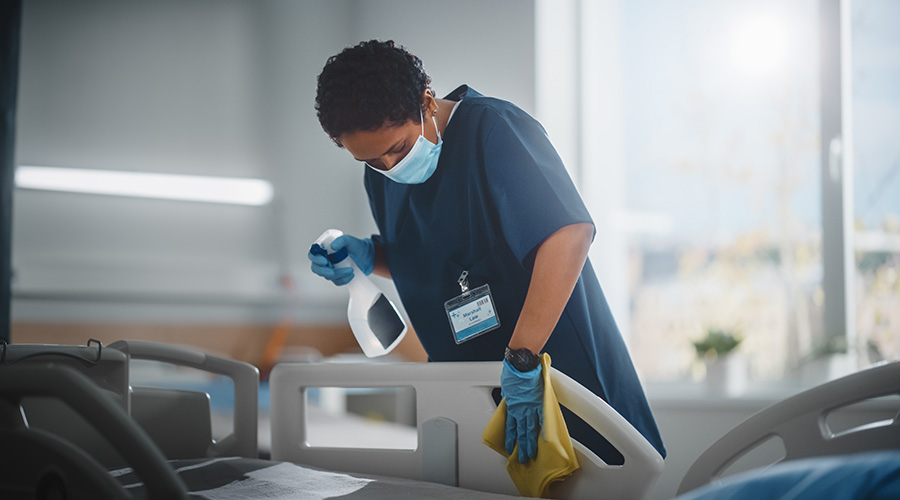
Healthcare-associated infections (HAIs) are declining across hospitals nationwide. A new report from the Centers for Disease Control and Prevention (CDC) found that patients in 2023 were 27 percent less likely to have an HAI compared to patients surveyed in 2015. This reduction could be attributed to industry-wide improvements in antimicrobial tools and enhanced infection prevention and control protocols.
HAIs are a costly consequence of contamination. Although commonly spread by contact with unclean hands, surfaces, and equipment, the CDC determined that 61 percent of all HAIs were not contracted through medical devices or procedures. This indicates an improvement in infection prevention measures, as well as reinforced regulations and compliance by environmental services (EVS) staff.
Innovations, such as Ultraviolet-C (UV-C) disinfection devices, are changing how cleaning is deployed. A Crothall Healthcare case study increased UV-C usage to target 14,600 rooms, resulting in cleanliness scores rising from 70.69 in 2023 to 83.33 in 2024. Other mitigation measures, such as hand hygiene and high-touch surface protocols, are also integral to proper infection prevention efforts.
In fact, a hospital in eastern Australia focused on reviewing and reinforcing cleaning and disinfection practices. Researchers discovered that because of this specialized attention, cleaning thoroughness improved from 24 to 66 percent, reducing one-third of HAIs. Moreover, the cost of labor, cleaning products, and patient care resulted in $1.5 million in savings. This reinforces that maintaining clean and healthy healthcare facilities is not only cost-saving, but also lifesaving.