
 CleanLink Interactive Spring/Summer 2026 Issue
 Recognizing the 2026 Reader Choice Award Winners
 2026 Emerging Leader Award
 How Surfactant Use is Expanding in Commercial Cleaning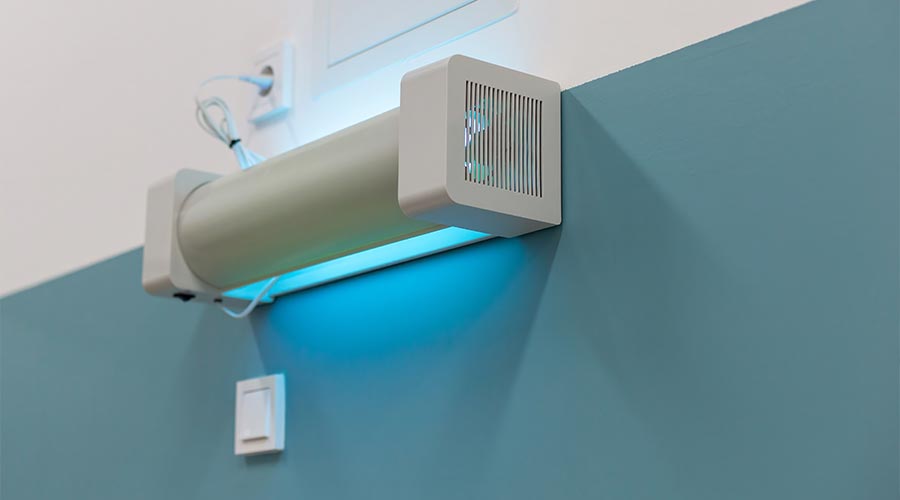
A new market projection predicts ultraviolet-C (UV-C) disinfection systems will grow to $8.12 billion by 2033, Nexalu Group reports. The anticipated growth arises from growing global health concerns in infection control and prevention (IPC) protocols, as well as advancements in AI and smart technologies. However, research published by Cambridge University Press highlights discrepancies in the perceptions of UV-C adoption among cleaning teams. The benefits of UV-C—eco-friendly, cost-effective, and staff safety—support upward market trajectories, but the device's implementation depends upon effective education programming, Uvisan shares.
Recently, the U.S. Green Building Council (USGBC) updated version 5 (v5) of its Leadership in Energy and Environmental Design (LEED) standard to include the use of UV-C disinfecting devices, CleanLink says. The light, about 254 nanometers, can penetrate microbial cell walls to target bacteria, viruses, and fungi, making them inactive, LightTech LightSources explains. As a result, the disinfection tool can reduce healthcare-associated infections (HAIs) without chemical residues, Infection Control Today adds. Yet, the efficacy of UV-C is dependent upon successful application by frontline cleaning staff.
According to the Massachusetts Institute of Technology (MIT), guidelines accompanying targeted training—clear signage, access to outlined disinfection processes and schedules, and UV-C device registration with the Environmental Protection Agency's (EPA) Radiation Protection Program (RPP)—can safeguard cleaning teams using UV-C disinfectant systems. Regardless of wavelengths, the International Agency for Research on Cancer of the World Health Organization (IARC) still rates UV radiation a Class 1 Known Human Carcinogen. Commercial cleaning executives should ensure their employees are minimally exposed and are wearing personal protective equipment (PPE), such as UV-blocking eyewear, gloves, and long sleeves, UV Resources asserts.