
 CleanLink Interactive Spring/Summer 2026 Issue
 Recognizing the 2026 Reader Choice Award Winners
 2026 Emerging Leader Award
 How Surfactant Use is Expanding in Commercial Cleaning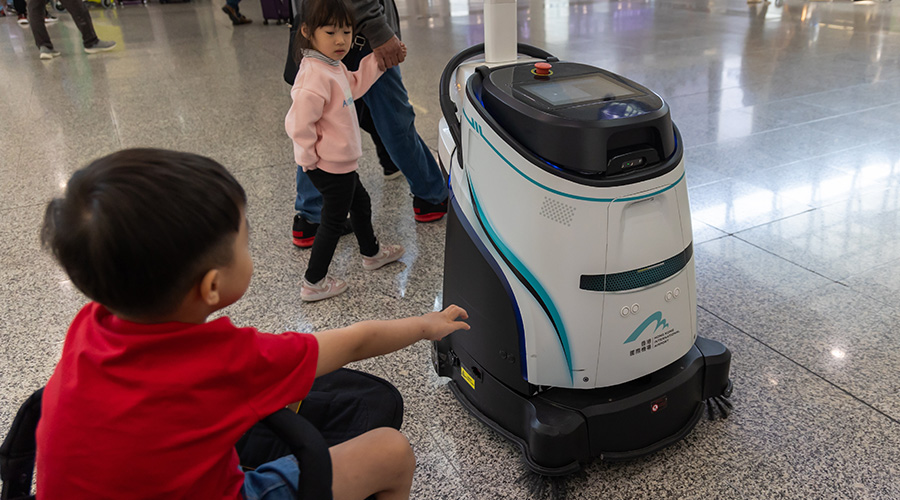
Findings from a 2026 study outline human attitudes and holdbacks around autonomous machines. Hexagon’s global Robot Generation research revealed that adults are open to robots at work but draw the line when it comes to full integration. These sentiments show how commercial cleaning executives can successfully implement technology into their operations.
Asked whether they would prefer a human or robot to handle specific workplace tasks, adults consistently chose robots for physical, repetitive, and hazardous work. This includes tasks such as lifting and transporting heavy items (68 percent), carrying and delivering items (54 percent), and monitoring hazards (52 percent). However, when a task demands empathy or accountability, humans are preferable. For the sick, elderly, or youth, 71 percent prefer a human caretaker.
“There’s real potential for robots in areas like elderly care or classrooms, but as assistive devices, not as replacements for that essential human role,” says Dr. Jim Everett, Associate Professor in Moral Psychology.
When it comes to what people would actually want from a robot, the answer is practical help. Adults prioritize tasks such as capturing measurements or doing simple research (53 percent), managing admin (38 percent), and ensuring workplace safety (34 percent). Automation in the industry is becoming a standard, as shared by 37 percent of building service contractors (BSCs) in Contracting Profits’ annual market study. Implementing digital tools and smart equipment reallocates repetitive tasks that not only reduce repetitive motion injury risks but also enhance operational efficiency.
Yet only 21 percent believe robots should be considered full colleagues, and just 14 percent would want them in charge. Evidently, there remain reservations on how to work alongside robotic employees. While some adults say a robot colleague would be exciting (40 percent), around 38 percent believe it would be frightening. In the commercial cleaning industry, apart from anxieties around job security and innovations, frontline crews are adapting to work with their robotic counterparts.
The environment where robots perform these practical tasks also matters. Adults feel most comfortable with robots helping factories and warehouses (63 percent), well ahead of hospitals and clinics (45 percent), or classrooms (39 percent). In the U.S., school districts and healthcare facilities have started to embrace these technologies to maintain cleaning schedules amidst ongoing labor challenges and budget constraints. As the adoption of robots becomes more widespread, human tolerance and acceptance may increase, as seen in global markets.
Additional preferences also tilt toward machine-like robots (28 percent) over human-like (22 percent), suggesting that trust is built through function, not appearance. Overall, adoption remains conditional: 86 percent of adults say clear rules for what robots can and cannot do are essential. This includes clarity on security (51 percent), reliability (21 percent), and trust (26 percent) from leadership when governing deployment.
“People are telling us exactly where robots belong and where they don’t, and their instincts are remarkably consistent across markets,” shares Burkhard Boeckem, CTO at Hexagon. “This data confirms that the path to adoption runs through industry, not around it.”
To learn more about the study and robotic sentiment, click here.