
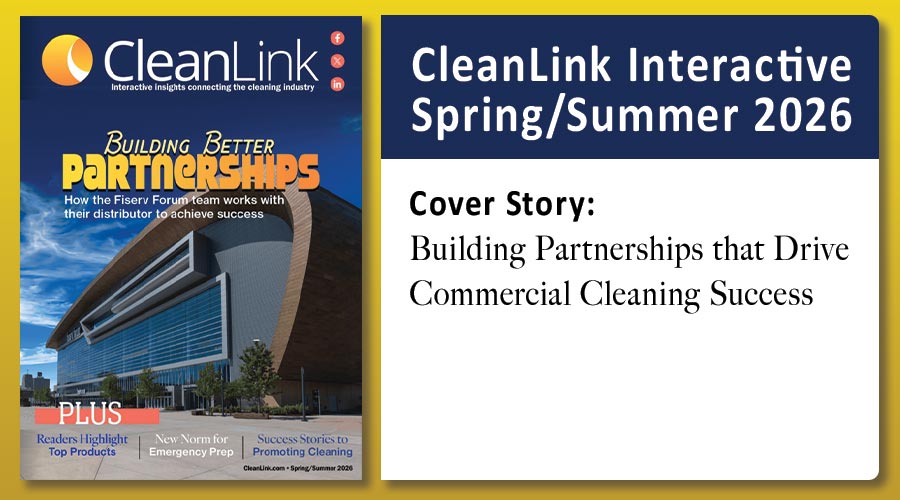
 CleanLink Interactive Spring/Summer 2026 Issue
 Recognizing the 2026 Reader Choice Award Winners
 2026 Emerging Leader Award
 How Surfactant Use is Expanding in Commercial Cleaning
Recent technological developments are transforming traditional cleaning systems. New research reveals how advances in autonomous machines, Internet of Things (IoT) systems, and AI data collection software and sensors are reshaping the industry, Serv Horizon reports. As facility cleaning managers investigate solutions on how to optimize operations and improve cleaning efficiency, a key focus is how these innovations complement foundational hygienic practices.
Facility fundamentals—systematic surface sanitation and disinfection, coordinated chemical selection, and workforce training—results in improved infection control and prevention, as affirmed by the Centers for Disease Control and Prevention (CDC). Technology can enhance these processes, leading to streamlined systems across sectors. Managers are invested in its intended impact, with 63 percent of managers motivated to implement these tools to strengthen transparency, audits, and resources, EIN Presswire states. Although technological integration remains an ongoing development, it has become a permanent reality.
The demand for smart cleaning is growing—PR Newswire discloses in a MarketsandMarkets report that present projections indicate it will increase to $6.8 billion by 2028. However, successful implementation of these instruments relies on strategic, proactive planning. Forbes recommends a review of documentation frequency and methodology, as subsequent revisions can lead to accurate data collection and a 12 to 18 percent expense reduction. When leadership successfully reconfigures technological tools into existing systems, desired outcomes can be achieved.