
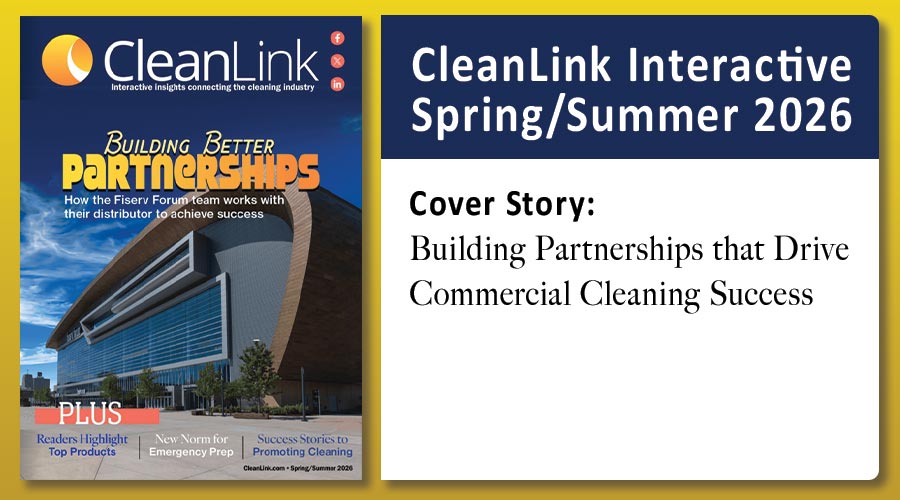
 CleanLink Interactive Spring/Summer 2026 Issue
 Recognizing the 2026 Reader Choice Award Winners
 2026 Emerging Leader Award
 How Surfactant Use is Expanding in Commercial Cleaning
Goodway Technologies, a leader in industrial maintenance and cleaning solutions, is sharing best practice recommendations to help facilities strengthen sanitation and hygiene protocols. As organizations continue to prioritize health, safety, and operational reliability, effective cleaning and sanitation practices remain essential for protecting employees, customers, and production quality.
“Maintaining a clean environment isn’t just about appearance, it’s about keeping the occupants safe while ensuring equipment and processes run at peak performance,” says Tim Kane, President and CEO of Goodway Technologies. “With the right tools, training, and maintenance plans, facilities can significantly reduce contamination risks and improve overall operational efficiency.”
Key Tips for Maintaining Proper Sanitation and Hygiene
Implement a structured cleaning schedule: Establish daily, weekly, and monthly cleaning tasks tailored to high-touch surfaces, equipment, and production areas.
Use the right tools for the job: Specialized equipment such as industrial steam cleaners, HEPA-filtered vacuums, and surface sanitation systems helps remove debris, film, and pathogens more effectively than manual cleaning alone.
Prioritize high-risk areas: Focus on zones where contaminants are most likely to accumulate—HVAC systems, food contact surfaces, drains, and hard-to-reach equipment components.
Train staff regularly: Proper sanitation requires proper technique. Routine training ensures teams understand cleaning procedures, chemical handling, and equipment operation.
Adopt environmentally responsible practices: Choose cleaning solutions and technologies that reduce water usage, minimize chemical exposure, and support sustainability goals without compromising sanitation standards.
Document results: Maintain logs, conduct routine inspections, and use ATP testing or other verification tools to ensure cleaning protocols are effective and compliant with industry regulations.
For additional effective cleaning practices, click here.