
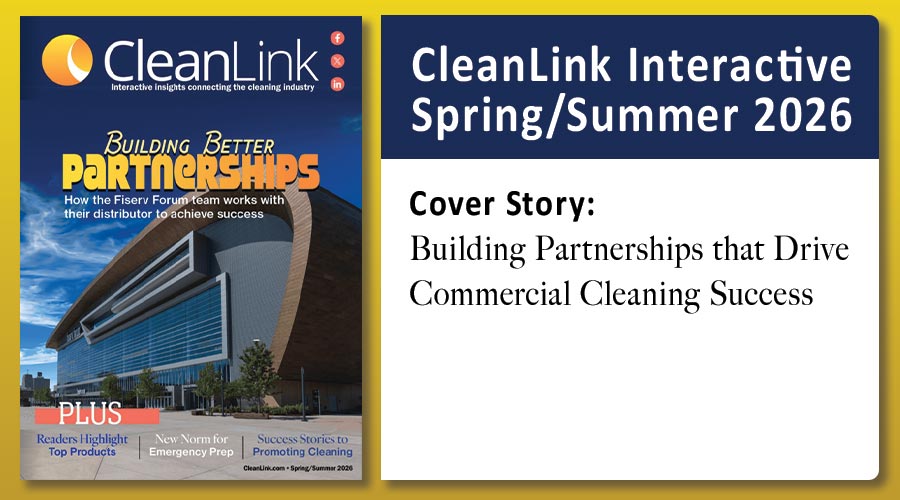
 CleanLink Interactive Spring/Summer 2026 Issue
 Recognizing the 2026 Reader Choice Award Winners
 2026 Emerging Leader Award
 How Surfactant Use is Expanding in Commercial Cleaning
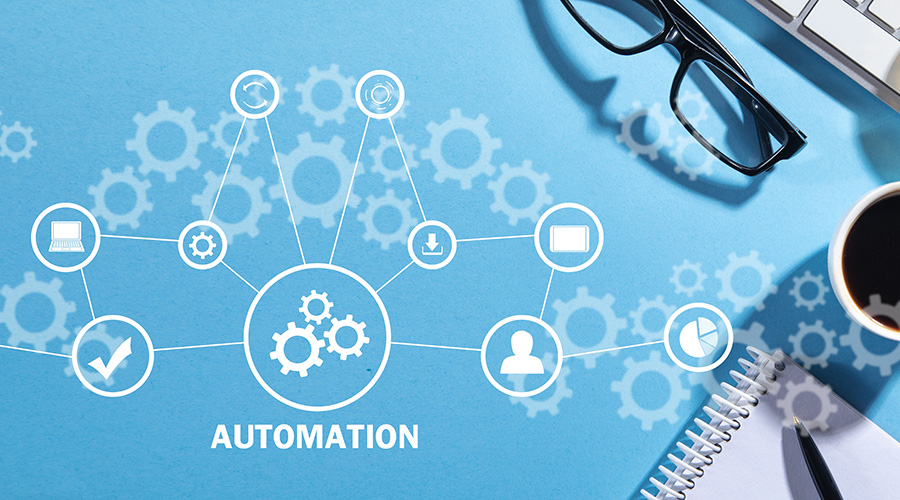
Grupo EULEN is expanding autonomous technology across professional cleaning operations in logistics, commercial facilities, education, and healthcare. Each solution is adapted to the facility's layout, traffic patterns, operating requirements, and security environment.
Through a service-engineering methodology, a specialized implementation team evaluates each client's needs and redesigns tasks, frequencies, and workflows before deployment. The approach is supported by ELIA (EULEN Artificial Intelligence Cleaning) and E-Dash, Grupo EULEN's proprietary software and algorithm for environmental mapping, operational data, and equipment selection.
"We are not simply automating cleaning; we are rethinking how services are designed and delivered. By combining robotics, AI, data, and the experience of our teams, we can create services that are more precise, measurable, and responsive while respecting each client's operational and security requirements," says Ramiro Alvarez, COO of Facility Services, EULEN USA.
Smarter, Safer Options
Autonomous cleaning equipment uses intelligent mapping and sensors to recognize corridors, open areas, people, and obstacles, then adjusts its route in real time. Depending on the equipment and application, robots can sweep, vacuum, scrub and mop, dispense precise amounts of water and cleaning products, and return automatically to their charging base.
Built-in operational safeguards can include obstacle and people detection, controlled speeds, emergency-stop functions, restricted operating zones, and automatic route changes. These features support safer movement around employees, visitors, equipment, and sensitive work areas, while deployments during lower-occupancy periods can further reduce disruption.
Security is another element considered when selecting, configuring, and deploying autonomous cleaning equipment. Depending on the platform and client requirements, protections can include role-based access, encrypted data transmission and storage, secure user authentication, network segmentation, controlled software updates, audit logs, and defined data-retention settings. Mapping and operational data can also be limited to what is necessary for cleaning performance, with access restricted to authorized personnel.
For facilities with confidential processes, proprietary layouts, or sensitive assets, operating zones and data-handling protocols can be configured to reduce unnecessary collection and access. These controls help protect clients' intellectual property while maintaining the visibility required to verify service delivery.
Measurable Service
Autonomous cleaning equipment can record operating times, area serviced, and performance, giving clients greater visibility into when, where, and how cleaning is completed. That information helps teams identify patterns, adjust frequencies, and continuously improve service.
Group EULEN positions robotics as a complement to human expertise. By assigning repetitive tasks to autonomous equipment, employees can focus on supervision, quality control, technical processes, and responsibilities that require human judgement. The result is a more efficient, adaptable, and transparent cleaning model built around people, performance, and responsible technology.