
 CleanLink Interactive Spring/Summer 2026 Issue
 Recognizing the 2026 Reader Choice Award Winners
 2026 Emerging Leader Award
 How Surfactant Use is Expanding in Commercial Cleaning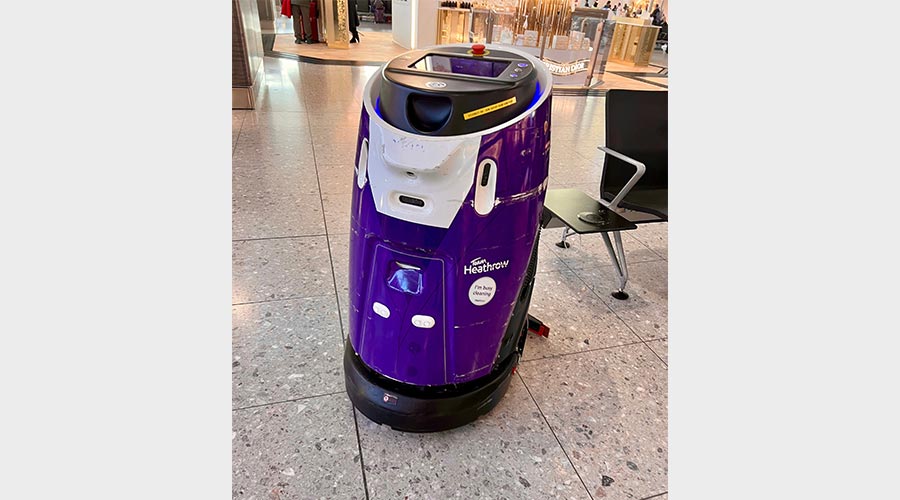
Facilities are embracing automation technologies to enhance floor care and promote cleaning performance. Recently, Heathrow International Airport, London permitted public submissions to name their cobots—collaborative robots designed to work alongside humans—which have successfully cleaned around 4,800 square meters (51,667 square feet) of the airport, Airport World reports. Not only do the machines reduce water waste, but they also operate alongside 850 custodial staff to maintain a quality level of clean, the Londonist adds. The acclimatization of artificial intelligence (AI) technologies to support cleaning processes rather than replace cleaning teams is indicative of the industry’s future.
The International Federation of Robotics' (IFR) World Robotoics 2025 Service Robots report found that the U.S. comprised of 68 percent of the global robotics installation, with 13 percent of service robot applications utilized in the cleaning industry. The primary push for their implementation is its positive impact on cleaning team efficiency. A 2023 study showed that productivity increased by 37 percent when executed, Rayman shares. With an uncertain labor market ahead, as TimeTrex describes, commercial cleaning executives could look to automation to assist their workforce.
However, safety remains a key concern, as raised in a study shared on ScienceDirect. For select cobots equipped with soft robotic pieces, their flexible machinery can lead to unpredictable movements raising the risk of human injury, MIT News explains. Preventative measures—comprehensive training, recurring risk assessments, and feedback—can protect staff and achieve the safe adoption of such collaborative tools, Ken Institute asserts. As cobot robotics continue to evolve, its value for cleaning teams may grow within the cleaning industry.