
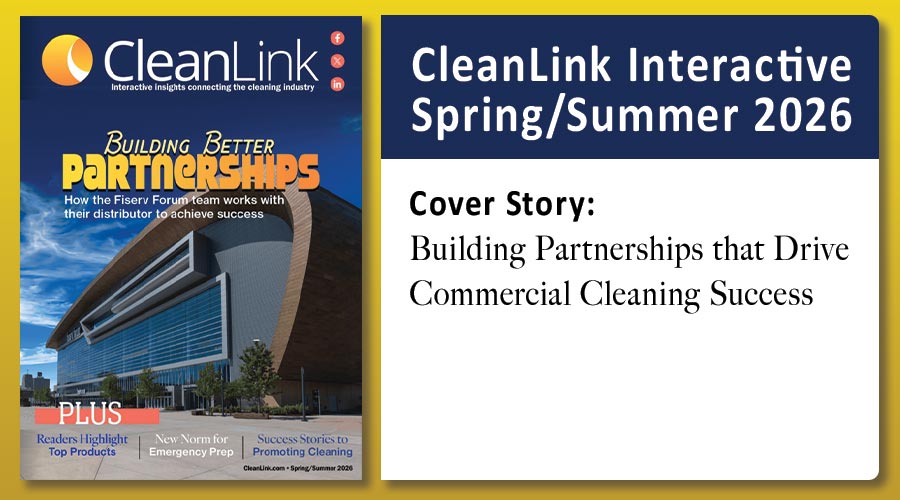
 CleanLink Interactive Spring/Summer 2026 Issue
 Recognizing the 2026 Reader Choice Award Winners
 2026 Emerging Leader Award
 How Surfactant Use is Expanding in Commercial Cleaning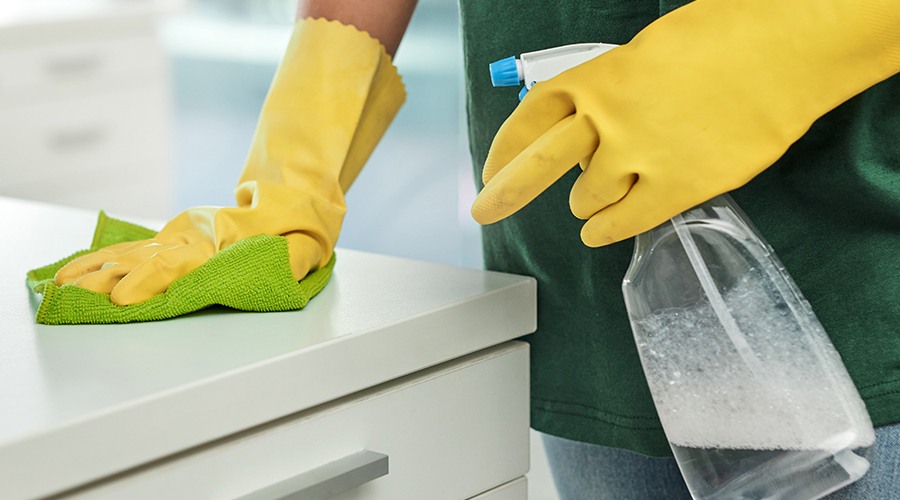
DryMaster Systems released an analysis of how equipment requirements differ across some of the fastest-growing segments of the professional cleaning industry. Drawing on publicly available data, the analysis finds that while the cleaning industry continues to expand, operational requirements vary significantly across healthcare facilities, short-term rentals, and post-construction projects.
The analysis concludes that cleaning equipment selection is increasingly tied to niche specialization rather than general market participation. Healthcare facilities operate under sanitation-focused standards, whereas short-term rentals depend heavily on guest satisfaction. As a result, the most appropriate equipment package depends largely on the type of customer being served.
In 2023, the U.S. contract cleaning services market was valued around $96 billion, and is projected to grow at a compound annual growth rate (CAGR) of 4.8 percent through 2030. The size of this market reflects broad demand for professional cleaning services across commercial, institutional, healthcare, and hospitality-related sectors. However, the aforementioned analysis determined that growth within the industry is not uniform. Different customer groups face different operational challenges, creating distinct equipment requirements that can affect service quality, productivity, and long-term business viability.
Over three million janitors and building cleaners are employed across more than 1.2 million businesses nationwide. The scale of the workforce illustrates both the maturity of the industry and the level of competition facing new service providers. In a market with millions of workers and hundreds of thousands of businesses, specialization has become an increasingly common strategy for differentiation. To differentiate themselves, the analysis found that cleaning companies are frequently targeting specific industries rather than serve every type of client. Healthcare providers require enhanced sanitation standards. Property managers and Airbnb hosts prioritize rapid turnover and guest satisfaction.
These differences influence the equipment required to perform the work effectively. Equipment packages designed for one segment may not deliver the efficacy or performance needed in another.
For example, healthcare-related cleaning reflects increasing attention to infection prevention, patient safety, and environmental sanitation across hospitals, clinics, outpatient facilities, and medical offices. According to environmental cleaning guidance published by the U.S. Centers for Disease Control and Prevention (CDC) and current through 2026, healthcare facilities are expected to follow documented cleaning and disinfection procedures intended to reduce pathogen transmission and support patient safety. The analysis finds that healthcare-oriented equipment packages frequently prioritize:
• High-performance extraction systems
• Advanced filtration capabilities
• Consistent chemical application
• Moisture-control performance
• Equipment surfaces that are easy to clean and maintain
For commercial cleaning executives targeting healthcare facilities, equipment selection is often influenced by cleaning outcomes rather than productivity alone. Reliability, consistency, and sanitation support can become important competitive factors when serving healthcare clients.
On the other hand, hospitality operators are often evaluated through guest reviews and customer satisfaction metrics. In fact, 33 percent of short-term rental guests identified cleanliness as one of their five largest complaints during a booking experience, and 85 percent cite cleanliness as the main contributor to their overall experience. Unlike healthcare environments, where sanitation protocols are a primary concern, short-term rental cleaning directly influences ratings, occupancy, repeat bookings, and revenue performance.
Short-term rental cleaning businesses also face a distinct set of operational challenges. Turnover periods are often measured in hours rather than days, and crews may move between multiple properties throughout a single shift. As a result, equipment packages for this segment frequently emphasize:
• Portability
• Fast setup and teardown
• Quick drying times
• Multi-surface cleaning capability
• Efficient stain removal
The ability to deliver consistent results within limited time windows can significantly influence service performance in this niche. Equipment that performs well in large commercial environments may not provide the flexibility required in residential-style rental properties. Therefore, hospitality businesses could benefit from equipment configurations designed around speed and mobility rather than maximum capacity alone.
The Cost of Equipment Mismatch
According to ISSA's review of U.S. Bureau of Labor Statistics (BLS) employment data, equipment mismatches can create operational costs that extend beyond the initial purchase price. Businesses entering specialized markets with equipment designed for different applications may experience lower productivity, longer project completion times, and increased maintenance requirements.
In some cases, equipment limitations can also affect business development. Certain clients may require documented cleaning procedures or specific operational capabilities before awarding contracts. Equipment that cannot support those requirements may limit access to higher-value opportunities. Rather than focus on purchase price alone, the total cost of an equipment package should be evaluated according to long-term operational suitability.
As the commercial cleaning industry continues to expand, equipment decisions can influence a company's ability to enter new markets and scale operations.
Businesses equipped for healthcare environments may pursue additional opportunities in medical offices, dental clinics, and outpatient facilities. Operators specializing in short-term rentals may expand into property-management partnerships and hospitality portfolios. In either case, scalable equipment packages can reduce future reinvestment requirements while supporting service consistency across a growing customer base.
Growth opportunities often emerge when equipment capabilities align closely with customer expectations. For that reason, equipment selection is increasingly viewed as a strategic business decision rather than a purely operational purchase.