
 CleanLink Interactive Spring/Summer 2026 Issue
 Recognizing the 2026 Reader Choice Award Winners
 2026 Emerging Leader Award
 How Surfactant Use is Expanding in Commercial Cleaning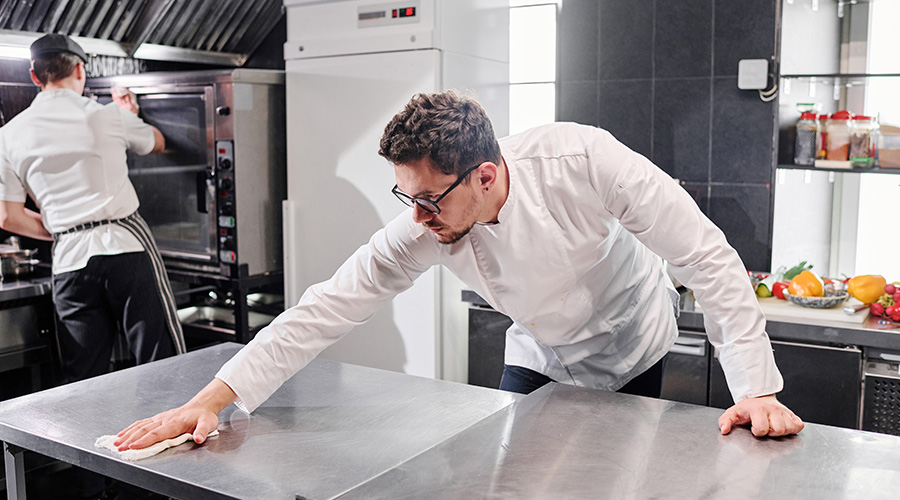
As health and fire safety inspections become increasingly stringent nationwide, commercial kitchens are facing a growing problem: many fail inspections not because they appear dirty, but because of hidden grease buildup, bacteria, and contamination in areas that routine cleaning does not always reach.
Industry experts warn that what lies behind and beneath kitchen equipment—ducts, hard-to-access surfaces, and vent insides—can pose serious risks like fire hazards, bacterial growth, and operational shutdowns.
According to Calamus Enterprises, a multi-state provider of commercial kitchen cleaning services, deep cleaning has become a critical requirement for maintaining safety, compliance, and long-term efficiency in food service environments.
Behind a Clean Kitchen
Restaurant owners may assume that a clean-looking kitchen is a safe one. However, grease accumulation behind appliances and within ventilation systems often goes unnoticed until it becomes a serious issue.
“In some kitchens, grease buildup can become a fire hazard much faster than people expect,” says Mike Calamus, Owner of Calamus Enterprises. “What we see on the surface is only a fraction of what’s actually there. Deep cleaning exposes and eliminates those hidden risks.”
This hidden contamination is one of the leading causes of:
- Failed health inspections
- Increased fire risk
- Equipment breakdowns
- Bacterial spread in food preparation areas
While regular cleaning focuses on visible surfaces, deep cleaning targets hidden contamination, grease buildup, and full sanitation of the kitchen system.
A Commercial Kitchen Deep Clean
Unlike routine cleaning, restaurant deep cleaning services focus on the entire kitchen system—not just visible surfaces.
A typical commercial kitchen deep cleaning includes:
- Cleaning behind and under heavy equipment
- Degreasing exhaust hoods, ducts, and ventilation systems
- Steam cleaning ovens, fryers, grills, and food prep equipment
- Sanitizing floors, walls, and ceilings
- Cleaning walk-in coolers and storage areas
- Servicing food truck interiors and mobile kitchens
This process ensures that grease, bacteria, and contaminants are removed from areas that are typically inaccessible during daily operations.
Deep Cleaning Project Guide
Professional commercial kitchen cleaning companies follow a structured, multi-step process that typically takes between two and four days, depending on the size, layout, and condition of the kitchen. Moreover, a commercial kitchen should be deep cleaned at least once per year, with high-volume kitchens requiring more frequent cleaning.
Step-by-step process:
1) Inspection
Technicians assess grease buildup, contamination levels, and potential fire risks.
2) Preparation
Surfaces are protected, and the kitchen is prepared for intensive cleaning.
3) Equipment Movement
Heavy appliances are carefully moved to access hidden grease zones.
4) Deep Steam Cleaning
High-temperature steam penetrates surfaces, breaking down grease and eliminating bacteria.
5) Degreasing
Specialized solutions remove stubborn residue from critical areas.
6) Final Check
A comprehensive inspection ensures the kitchen meets health and fire safety standards.
Cleaning Insider: Steam Cleaning
Steam cleaning has become a preferred method in commercial kitchen cleaning services due to its effectiveness in removing both grease and biological contaminants.
High-temperature steam can break down hardened grease in vents and equipment, eliminate bacteria and pathogens, reach deep into tight and hidden areas, and significantly reduce the fire risk caused by grease accumulation.
This approach is particularly important in high-risk environments such as hospitals, schools, government facilities, and high-volume restaurant kitchens.
Case Study: Hospital and Government Kitchen Deep Cleaning
In a recent institutional project, a large commercial kitchen serving a high-traffic facility required full inspection preparation. The kitchen had passed routine cleanings but failed to meet deeper sanitation and safety requirements.
The deep cleaning process included:
- Full equipment relocation
- Degreasing of ventilation systems
- Steam sanitation of all surfaces
- Final compliance verification
As a result, the kitchen successfully passed inspection, reduced fire risk, and improved operational efficiency.
Learn additional tips to enhancing cleaning operations across commercial kitchens here.