
 CleanLink Interactive Spring/Summer 2026 Issue
 Recognizing the 2026 Reader Choice Award Winners
 2026 Emerging Leader Award
 How Surfactant Use is Expanding in Commercial Cleaning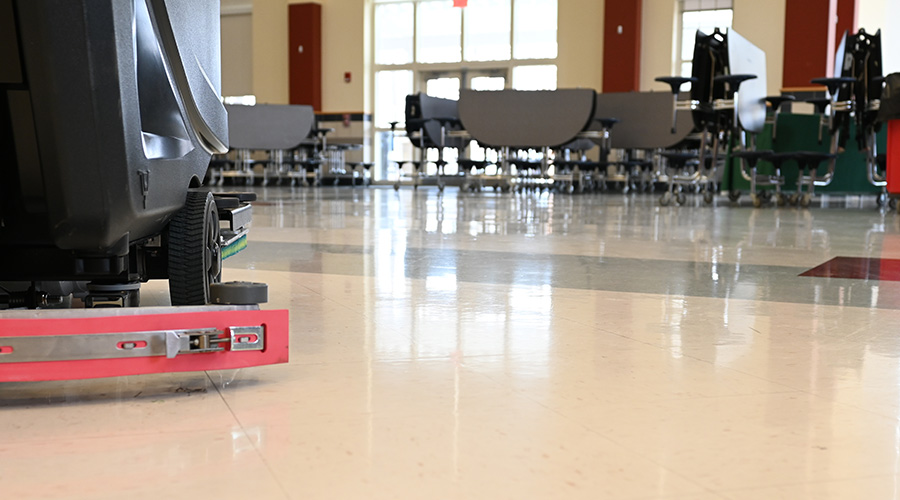
A South Carolina-based school district is leveraging autonomous machines to maintain cleaning schedules amidst ongoing labor challenges.
Greenville County Schools implemented a robotic floor sweeper and scrubber program across its 85 campuses to address staffing shortages. The $21.1 million system plans to address high-traffic areas—hallways, cafeterias, and gym floors—restructuring custodial tasks to address prioritized school needs. For instance, frontline staff can focus on high-touch surfaces and exterior maintenance versus laborious tasks, such as floor cleaning and care.
Presently, 900 custodial members are employed by the district. With the adoption of Greenville’s robot team—Rosie the robotic sweeper and HAL the robotic scrubber—Superintendent Burke Royster believes it will enhance operational capability for current staff rather than replace them. Overall, the autonomous machines are predicted to save cleaning crews four to six hours per day.
South Carolina is not the only state integrating robots into their cleaning systems. In February 2026, Spokane Public Schools, Washington, invested $1 million in 14 robotic floor cleaners placed across its middle and high schools. Similarly, De Pere High School, Wisconsin, added an $89,000 autonomous floor scrubber to address the time management needs of their custodial operations.
Both models rely on a “cobot” model, where direct human interaction is necessary for autonomous machine efficacy. The solution aims to alleviate job security concerns among staff and the workforce shortage for commercial cleaning executives.