
 CleanLink Interactive Spring/Summer 2026 Issue
 Recognizing the 2026 Reader Choice Award Winners
 2026 Emerging Leader Award
 How Surfactant Use is Expanding in Commercial Cleaning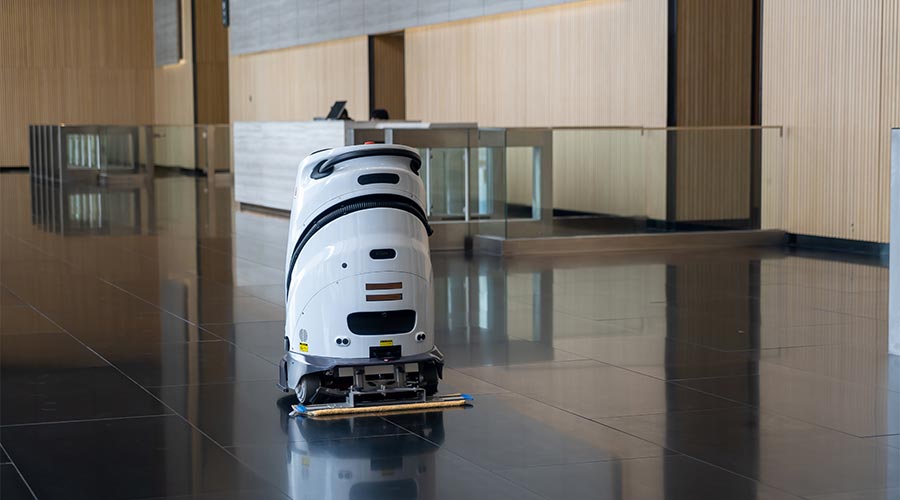
A new study shows a significant reduction in on-site injuries as a result of automation integration. Research by Lamber Goodnow found that the application of artificial intelligence (AI) and automation technologies across all industries will lessen workplace injuries by an estimated 6 percent by 2030. As AI transforms business operations, its impact on cleaning teams is a consideration for commercial cleaning executives.
Around 86 percent of employers anticipate AI will fully amalgamate into the industry by 2030, the World Economic Forum reports, with an expected one-third of current tasks becoming automated, Inc. adds. At present, cleaning teams are at an elevated risk of injury due to slips, trips, and falls (STFs)—as a study in the Applied Ergonomics journal examined—repetitive motions, and chemical exposure, Kelly Pittman Law lists. When considering solutions for mitigating the health and wellbeing of custodial staff, automation is presented as a preventative option, particularly for the healthcare sector. Robotics 24/7 shares that automation will lessen 161,000 injuries annually, with the number of injuries in healthcare falling by 6.3 percent.
Employee concerns in the face of innovative technologies are nothing new. In 1970, the advent of computer numerical control (CNC) technologies changed operational processes, which led to differentiated productivity without the loss of jobs, Phys Org describes. This historical perspective provides a glimpse at how the present workforce may respond to the adoption of automative technologies and systems. While the current context and conditions differ from the past, the need to safeguard staff remains a present priority.
Examining both AI and workplace safety is an important discourse to have alongside the advent of automation.