
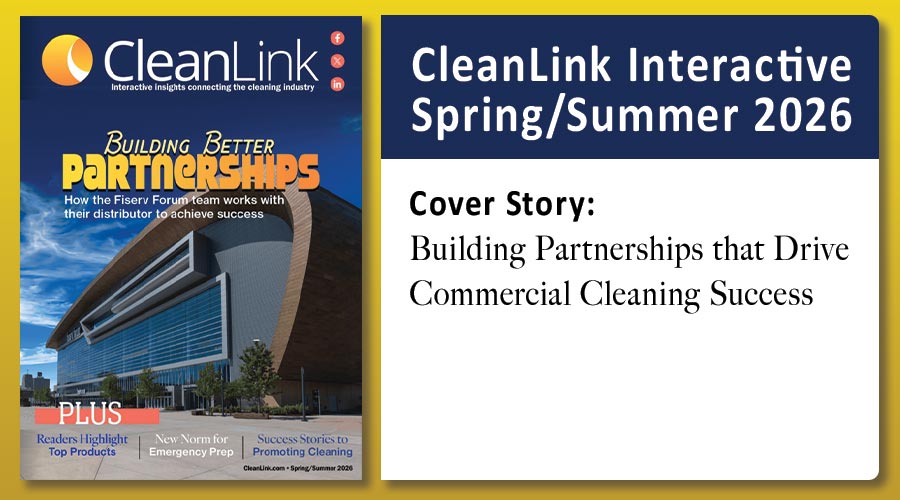
 CleanLink Interactive Spring/Summer 2026 Issue
 Recognizing the 2026 Reader Choice Award Winners
 2026 Emerging Leader Award
 How Surfactant Use is Expanding in Commercial Cleaning
 CleanLink OpEx Series Module 2: Productivity
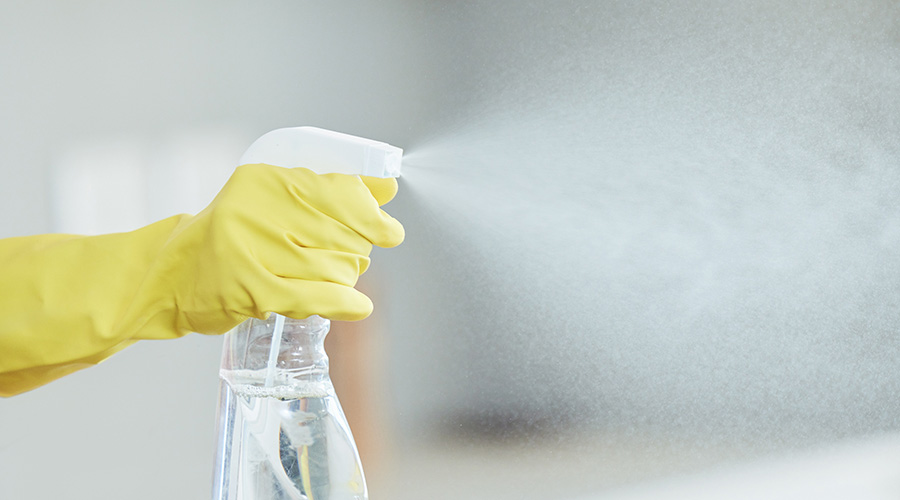
A recently published article in CleanLink spotlighted new research from Environmental Science & Technology that raised concerns about the use of quaternary ammonium compounds (QACs or quats) in long-term care facilities, suggesting that “facilities should review their cleaning protocols, determine whether disinfection is truly needed, and consider effective alternatives.”
In response to that news post, Jenny Bender, MPH, BSN, RN, a registered nurse, infection preventionist, and PDI’s Clinical Science Liaison for the Northeast, issued the following statement:
What the article did not fully address—and what deserves equal attention—is the immediate and pressing risk within long-term care settings.
From a clinical standpoint, infection risk remains the most urgent concern in these environments. Millions of serious infections occur each year in U.S. long-term care facilities, where residents are particularly vulnerable due to advanced age, underlying chronic conditions, and shared living spaces.
Quat-based disinfectants have demonstrated effectiveness against a wide range of bacteria and viruses commonly found in long-term care environments. They are formulated for routine use in resident-care settings and tend to be gentler on surfaces and equipment. Because many quat formulations are near-neutral in pH, they are less likely to cause corrosion or material degradation compared with more acidic or alkaline alternatives.
In addition, these products are often available as ready-to-use wipes that support simplified, one-step cleaning and disinfection. Unlike more aggressive chemistries, quats typically have a mild or neutral odor, helping maintain the homelike atmosphere that is important in long-term care while still delivering protection against harmful pathogens.
When selecting a cleaning and disinfection approach, efficacy must remain a primary consideration. While there are variables that can impact the effectiveness of quats—such as adherence to required contact times, often in the two-to-three-minute range—similar challenges exist with soap-and-water cleaning. In practice, many facilities do not have sufficient staffing to thoroughly clean and dry every surface at the frequency required for soap alone to be consistently effective.
If quats are excluded, facilities are often left to rely on alternatives such as peroxides or bleach, which introduce their own considerations. Compared to bleach, quats are generally less irritating to the skin, eyes, and respiratory system when used as directed. This is particularly relevant in environments with older adults who may have respiratory sensitivities or fragile skin. Safety Data Sheets (SDSs) can provide further insight by outlining hazard classifications across multiple exposure categories, including dermal and respiratory risks.
The referenced research also indicates that application methods can influence QAC exposure. Specifically, “spraying and fogging of products may elevate inhalation exposure, while handling concentrated disinfectant solutions may increase dermal uptake.” As a result, many long-term care professionals opt for ready-to-use (RTU) formats to help reduce potential exposure risks. Fortunately, a variety of RTU QAC disinfectant wipes are readily available.
Finally, while the study reported measurable levels of QACs in dust, air, and silicone wristbands worn by staff and residents, it is important to interpret these findings in context. Although concentrations were higher in long-term care settings than in nearby homes, these measurements do not directly equate to internal exposure. The researchers used these data to estimate daily intake, which ultimately “remain[ed] significantly below regulatory limits.”
From a clinical perspective, it is important for readers to understand that QACs are widely used not only in disinfectants but also in many personal care products. They have been in use for decades, are well studied, and are regulated by the Environmental Protection Agency (EPA). When used appropriately, they remain both safe and effective.
Jenny Bender, MPH, BSN, RN, CIC, is a registered nurse and infection preventionist with more than 15 years of experience across healthcare and public health settings. She currently serves as PDI’s Clinical Science Liaison for the Northeast and is an active member of her local APIC chapter and county immunization coalition boards.