
 CleanLink Interactive Spring/Summer 2026 Issue
 Recognizing the 2026 Reader Choice Award Winners
 2026 Emerging Leader Award
 How Surfactant Use is Expanding in Commercial Cleaning
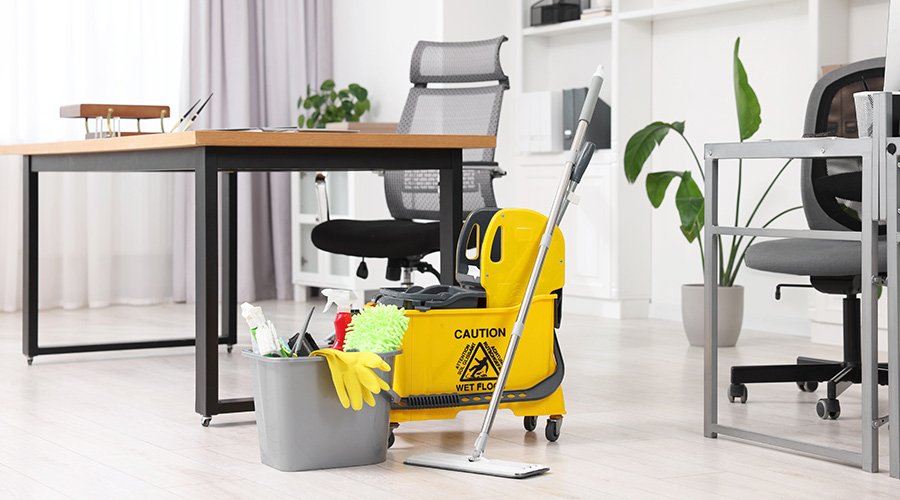
Making informed decisions that prioritize quality and cost-effectiveness is an ongoing challenge for facility cleaning managers, and hand tool purchases are no exception. Nevertheless, investing in high-quality brushes, brooms, and mops can offer substantial, long-term benefits despite the higher upfront investment.
“Certainly, a well-constructed hand tool that withstands heavy use and keeps performing well will provide a better return on investment,” says Foy. “The initial expense creates upfront cost, but the overall return on investment makes good business sense.”
One way cleaning managers can strike a balance between quality and cost is by purchasing multifunctional hand tools with adjustable handles and interchangeable heads. This allows frontline janitors to perform myriad tasks with only one tool. Additionally, a team cleaning approach may require fewer tool purchases, thereby justifying the higher cost of quality tools that tackle cleaning tasks more effectively.
Before committing to a purchase, however, cleaning executives should consider the following questions: How well does it work? How easy is it to use? Does it solve a problem? And will it increase job productivity?
If these questions can’t be answered in the affirmative, the tool may not be the best solution.
Prior to making a sizable financial commitment, Bill Griffin, President of Cleaning Consulting Services in Seattle, advocates testing the merchandise when feasible.
“One thing I always say about equipment and tools is to test them,” he advises. “See if you can get a sample of one. Or buy one or two—don’t buy 500 of them—and try them out. Give them to employees and get the team involved in the process, because they have more hands-on experience using these on a day-to-day basis than owners and managers.”
He also recommends supplementing field experience with online research.
“I wouldn’t buy anything without doing an online search using an AI program to ask the question, ‘What are some elements I should take into consideration before I purchase brushes, brooms, and mops?’” he explains. “It may give you insight into things you hadn’t thought of before.”
Even though AI can serve as a valuable research tool, distributors are still the best resource for navigating hand tool options that boost productivity and maximize savings.
Cleaning for Health
Distributors play an especially important role in education and training. Even top-quality hand tools are ineffective if not used and maintained correctly. Distributors will work with cleaning teams post-sale to prevent the spread of infection.
“One of the problems we have in the industry is we’re often moving soil around,” says Griffin. “We’re not following the definition of cleaning, which is to remove contaminants and soil from the surface or area and dispose of it without injury to the individual or damage to the surface.”
To address these deficits, he recommends facility cleaning managers partner with their distributors to educate employees using a combination of hands-on training, written procedures, and short how-to videos.
Of course, no discussion about cross-contamination would be complete without mentioning the benefits of color coding—particularly as it relates to hand tool purchases.
“We encourage our end user customers to adopt a color-coding system and standardize it throughout their program,” says Foy. “Keep it simple and consistent. Train and retrain teams. The number of manufacturers who now have color-coded systems has expanded, which makes it easier to purchase from multiple suppliers without jeopardizing the program.”
In addition to implementing color coding, cleaning managers may want to consider anti-bacterial and/or disposable mop heads to prevent cross-contamination.
“Consider when and where disposable microfiber mops and cloths make sense,” says Foy. “Research supports the idea that even if your team adheres to a rigid color-coded system, it can all fall apart in the wash.”
When cleaning with reusable mop heads and cloths, distributors stress the need to launder them frequently and store them in a dry place to prevent mold and bacteria from growing.
“Make sure to keep track of how often you wash mop heads, and when you use them, don’t leave them in the mop bucket,” advises Taylor. “Have a place where you can hang them up to dry.”
Griffin agrees. He recalls an occasion when a high school reached out for help because students were getting infections from wrestling mats. He discovered the mops used to clean the mats were stored in a dirty mop sink, where they were growing and then spreading bacteria.
“Mops should be laundered after every use and hung up,” he says. “The proper measurement of chemicals and a clean bucket also come into play. If you have a clean mop but a dirty bucket, you’re not going to get a clean surface.”
For cleaning teams looking to tackle floor care effectively, it’s not only about the right process. Proper tools are an essential part of a cleaning program.
Kassandra Kania is based in Charlotte, North Carolina, and is a frequent contributor to Facility Cleaning Decisions.
A Guide to Purchasing Floor Cleaning Equipment