
 CleanLink Interactive Spring/Summer 2026 Issue
 Recognizing the 2026 Reader Choice Award Winners
 2026 Emerging Leader Award
 How Surfactant Use is Expanding in Commercial Cleaning
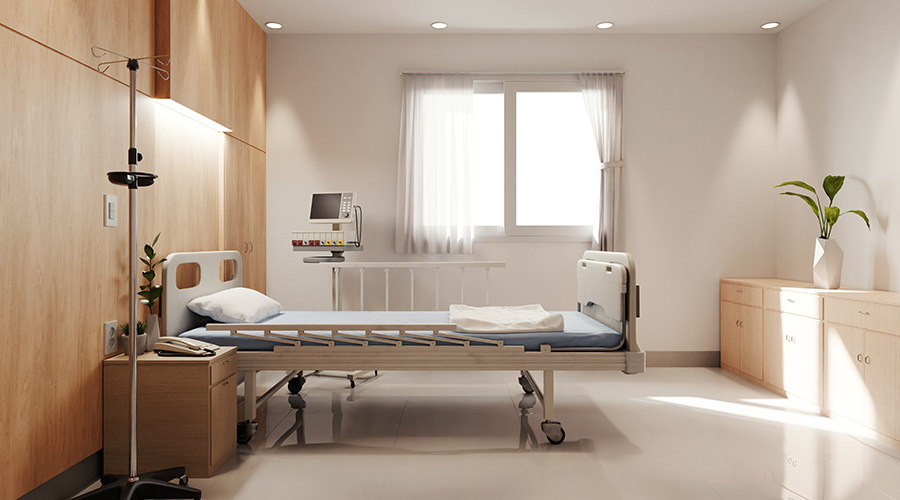
New cleaning technologies designed to aid in terminal cleaning have evolved since 2008. The COVID-19 pandemic, in particular, prompted even more products to market. EVS departments treat these innovations as supplements to— not replacements for—manual cleaning and disinfection.
“While thorough cleaning and disinfection remain the foundation of infection prevention, healthcare organizations now have access to evidence-based adjunct technologies that can help reduce environmental contamination, maintain cleaner environments between cleaning events, and provide greater visibility into environmental risk,” explains Sophia McCrae, Vice President of Operational Strategy, Crothall Healthcare.
Ultraviolet-C (UV-C) lights are one of those technologies gaining acceptance—to a point.
“We use UV-C light as an adjunct, not a replacement, to our cleaning program,” says Hedding. “It provides another level of security. It takes it to the nth degree.”
While the technology is popular, Hicks offers caution around UV-C lights.
“Patient beds and tables have a lot of plastic parts, and UV light ages and cracks plastic,” he warns. “Those cracks create great unintended hiding places for germs.”
Electrostatic sprayers are another tool that was rapidly deployed during the COVID-19 pandemic. Hicks likes this technology, but Hedding avoids it because he often sees the tools used incorrectly.
“I have seen them misused,” Hedding explains. “The process is supposed to be quick, but technicians will move slowly because they think that’s more thorough. There’s just too much room for error. In the end, manual cleaning and disinfection wins the day.”
Monitoring the effectiveness of cleaning and disinfection protocols is another important component of terminal cleaning. Monitoring can include ATP testing, fluorescent gel/blacklight testing, and good old-fashioned direct observation. All three have their place in effective terminal cleaning protocols. All three also have drawbacks.
“ATP testing is prone to operator error. Three different operators can get three different ATP readings on the same surface,” explains Hicks. “And it’s expensive to conduct the test.”
Hedding agrees, adding, “We only use ATP testing in our operating room suites because of costs and logistics.”
Fluorescent gels that glow under a black light offer a cheaper, low-tech testing method. The idea is managers place the invisible gel on a surface before the EVS worker starts. Then, after cleaning has been completed, they check that surface with a black light to ensure the gel was removed. This well-established method is good for training and bringing awareness to commonly missed surfaces.
But glow testing comes with its own set of issues. Managers must mark the room before cleaning starts, adding to their already heavy workload. Even if they get there on time, results can be murky because of textured surfaces or gels that are not compatible with disinfectants.
“I watched an EVS worker clean and reclean the foot of the bed, and the gel didn’t budge,” recalls Hicks.
Gels and black lights also open up the opportunity to game the system.
“If administers only relied on black-light testing, you would see a huge bump in EVS workers buying personal black lights to make sure they were getting the marks,” shares Hicks. “I advocate for more supervision versus putting more money into technology that is not perfected.”
Of course, direct supervision comes at a cost. Managers can’t be everywhere or watch everything. Still, the value of more eyes on the work can’t be overstated.
“They make sure the recipe is followed,” says Hicks.
Training is the Key
That recipe is introduced and reinforced through thorough training. For example, at MedStar Health, new hires go through two days of orientation in a simulated lab environment. They must be observed cleaning the room 12 times without any errors before being allowed to terminally clean a patient's room.
But that’s just the start. A vetted EVS associate goes through more education and evaluation throughout their career.
“We instill a culture of training,” Hedding reports. “We want them to be experts at what they are doing.”
McCrae agrees that education should be an ongoing process that goes beyond annual training.
“We provide ongoing competency development, leadership communications, pathogen-specific guidance, toolbox talks, and field education to ensure our teams understand not only what procedures may change, but why those changes matter,” she says. “When new pathogens or multidrug-resistant organisms emerge, we work closely with infection prevention teams to rapidly operationalize evidence-based practices and ensure our frontline caregivers are prepared to respond safely and effectively.”
Trainers must also be taught how to deliver this information in meaningful ways to be absorbed by EVS employees.
“I’m hearing from colleagues that new hires are not used to receiving critiques and feedback,” says Carrico. “That makes training harder. We need to be aware that people hear messages in different ways and adapt.”
Amy Milshtein is a freelancer based in Portland, Oregon. She is a frequent contributor to Facility Cleaning Decisions.
Infection Prevention Advice for Patient Room Turnover