
 CleanLink Interactive Spring/Summer 2026 Issue
 Recognizing the 2026 Reader Choice Award Winners
 2026 Emerging Leader Award
 How Surfactant Use is Expanding in Commercial Cleaning

Key Takeaways:
- Facility cleaning managers should prepare for continued budget pressure, rising costs, and supply chain challenges while finding ways to maintain service levels and operational efficiency.
- Staffing remains the industry's biggest challenge, with labor shortages, wage competition, and workforce shifts continuing to impact recruitment and retention.
- Advances in technology, automation, and data-driven management tools offer opportunities to improve productivity and help cleaning operations adapt to future demands.
Mid-year is a critical moment for facility managers as they start taking a closer look at their operations—staffing, products, equipment, processes, productivity—and, most specifically, their budgets and the future of their department. Facility cleaning managers have had plenty of time to feel out 2026, giving them an educated guess of the trends that will carry over into 2027 and beyond.
To better examine these trends, Facility Cleaning Decisions interviewed four facility management experts nationwide.

Aaron Uresti
Assistant Director of Custodial & Housekeeping Services, Facilities Services
University of California-Riverside

David Crowell
Director of Facilities
Maine Veterans’ Homes
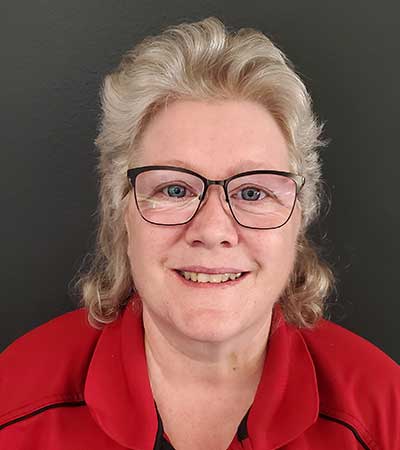
Jodi Krause
Assistant Director – Building Services
University of Wisconsin-Madison

Ada Baldwin, M.R.E.H.
Director for University Housekeeping
North Carolina State University
How would you describe the state of building occupancy for your operation? What do you think occupancy will look like moving forward?
Uresti: Hybrid learning and office schedules are still around post-pandemic levels, but they are not as prevalent.
Krause: Our building occupancy is not only back to pre-pandemic levels, but it's above pre-pandemic levels. We continue to search for ways to provide more housing to incoming freshman, and I believe occupancy will continue to rise. Our applications to the university continue to grow, and many of those students are applying to live in student housing for at least their first year.
Crowell: I would say our occupancy is back to normal, pre-pandemic levels. I also think the pandemic has taught us that it is possible to learn and work remotely, and the hybrid model is here to stay.
Have budgets been up, down, or about the same in recent years, and what do you expect in 2027?
Baldwin: Due to inflation, our budgets are up, down, and all around. Budgets are not keeping up with the number of staff exiting due to retirement, higher wages, and better benefits elsewhere, and that is being felt throughout the department.
The cost of equipment, repairs, and routine supplies has also increased due to inflation. And the demand for paper products, soap, and more has gone up due to the rising matriculation at our university. However, our budget has not increased.
Budgeting has been a major issue for years, and going into 2027, I expect more of the same but hope for the best.
Crowell: Budgets have remained neutral; we expect next year to be similar.
Krause: I expect that budgets will continue to be cut, and we will be forced to look for new ways in which to stay within those budgets. We are not sacrificing staff or the cleaning levels we expect, and I sincerely hope that we don’t have to.
How have fluctuations in the economy, tariffs, and other trends impacted product availability and costs?
Urseti: Tariffs are real. We recently purchased metal-based products from another country and faced a 50-percent tariff.
Crowell: This has caused great volatility within our industry, mostly in potential funding for projects.
Krause: The economic fluctuations have impacted us in terms of the costs needed to continue providing the level of services that we do.
Shifting tariffs have impacted us as well. Equipment costs more than expected and the wait times for getting that equipment is increasing significantly. There are also many equipment parts for current equipment that can no longer be found or sourced.
How would you describe the state of staffing, recruitment, and retention?
Baldwin: Baby Boomers are reaching the age where they should be exiting the workforce, but more are staying due to the economy, inflation, and concerns regarding social security. Many are working until they are 70, rather than retiring between 65 and 67. In some cases, these individuals are not productive due to aging, or they impede progress. Remember, this is the generation that used products that were not only not sustainable, but they also thought harmful and hazardous products were more effective for cleaning.
Retention of Generation X workers is a little more stable than for Millennials in the industry. Working at a company for 10-plus years is rare. The new average is closer to 1 to 3 years.
Generations aside, recruitment is becoming more difficult because of the misconception of the cleaning service industry; we are more than just mops, buckets, brooms, and vacuums. Changing the mindsets of future generations is often difficult, but we need to communicate that we clean for health, safety, and the environment.
Uresti: So far, so good. We just wrapped up our first recruitment for custodians in 2026 and saw a very robust and large number of applicants with solid experience.
Crowell: Staffing levels on the service side have remained steady. I think staff realize that the job market is not growing right now and are holding tight.
Krause: We continue to have an excellent workforce within housing at UW-Madison. Our retention hasn’t decreased above normal levels, although there are a few more obstacles for staff and housing to overcome. We get more than enough candidates for open custodial positions, but there’s an issue with them not passing background checks. When we do struggle to fill other roles, it’s largely due to wages offered, which are lower—sometimes significantly lower—than market value. This is causing some of the more specialized vacancies to stay open.
The public is more aware of infection prevention than it was because of the pandemic. However, reports suggest many have reverted back to old bad habits, such as less hand washing. How can the industry improve infection prevention?
Uresti: Make sure that your restrooms have an adequate number of handwashing dispensers that are functioning properly. Also, posting signage in strategic areas of buildings can create awareness.
Crowell: Our organization has continued to do staff audits and provide consistent reminders to be good stewards of infection prevention.
Krause: I think the reality is that all we can do as facility managers and administrators is educate the public using as many different methods as possible. Keep hanging signs regarding hand washing. Continue to train staff on the importance of monitoring their own health. And make the best decision on whether to attend work. We should educate building residents and users about monitoring their health and safety, use of masks when needed, and practice hand washing, distancing, and resources for health checks.
What's your greatest reason for optimism for this industry? And what's your greatest reason for pessimism?
Uresti: I am optimistic that the advancement of technology in the industry has been nothing short of amazing in the last five years. AI tools, custodial management software, and robotics continue to improve and become more user-friendly. I think these are exciting times where there are more tools available to managers to find ways to achieve greater productivity, efficiency, and sustainability in operations.
My greatest reason for pessimism is that staffing continues to be the greatest challenge in our industry. Finding ways to overcome this on a daily basis will continue to be the main focus of cleaning operations.
Baldwin: We are an industry that is needed across the world. This was demonstrated during the pandemic. Not only that, but once you begin working in the industry, you realize it is more than a job. It is about the students, staff, faculty, teachers, nurses, patients, doctors, travelers, etc. We all thrive in a healthy, safe, and clean environment. Cleaning for health and the environment will thrive and continue.
And what's my greatest reason for pessimism? Nothing. I guess you can say I’m an optimist and forever will be. I love this industry and all the people that are a part of it.
Crowell: My reason for optimism is the staff and commitment of all who work in our industry.
I’m most pessimistic about the growing number of competing or conflicting priorities for state and local funding. I feel the erosion of good governmental stewards will continue to stress an already overworked healthcare system.
Krause: I’m optimistic because we continue to learn and grow. We continue to look for safe, healthy, and effective ways to clean and maintain needed environments. We continue to care.
That said, change takes time, and, in some ways, it’s been way too long for even the smallest changes to come. I’d like to see changes that would be of serious benefit to workers, to end users of the facilities, to departmental budgets, to the greater environment that we all live in, and to the natural resources we all share.
Jake Meister is the Managing Editor for Trade Press Media Group's Cleaning Group of brands. He works on three magazines: Sanitary Maintenance, Contracting Profits, and Facility Cleaning Decisions, as well as on Cleanlink.com, the home of all three publications. Jake has over five years of experience covering the commercial cleaning industry as an employee of Trade Press Media Group, but also spent time as a freelance journalist for the company.
Jake has attended many commercial cleaning events where he enjoys connecting and networking with representatives from all corners of the industry. This often lays the groundwork for profile articles featured across the group. He excels at identifying outstanding individuals and/or programs that showcase the great things the commercial cleaning industry represents.
In addition to writing, Jake moderates many of CleanLink's educational webcasts, and he is the voice behind much of the social posts.