
 CleanLink Interactive Spring/Summer 2026 Issue
 Recognizing the 2026 Reader Choice Award Winners
 2026 Emerging Leader Award
 How Surfactant Use is Expanding in Commercial Cleaning
 CleanLink OpEx Series Module 2: Productivity

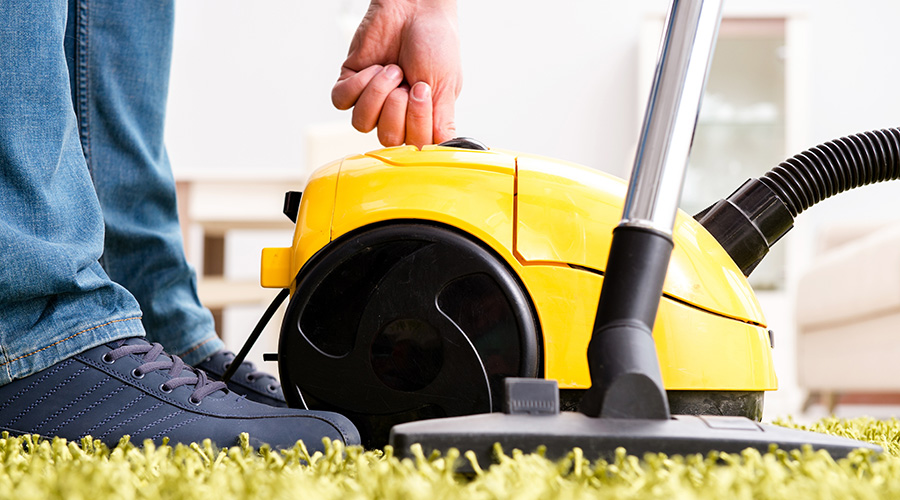
Carpet equipment comes in many sizes, meaning finding the right vacuum or cleaning machine for the job can take some effort. For example, when facility cleaning managers shop for new equipment, they should identify the best matches that will tackle specific types of dirt, fit the dimensions of the space, and align with the experience of the cleaning staff.
In most cases, bigger isn’t necessarily better. Here’s some advice on how to pair the right sized equipment with the needs of the cleaning team.
There are many sizes and styles of carpet equipment. Vacuums can be small or large, corded or battery powered, uprights or backpacks, or sit-down/stand-on riding models. The same could be said of carpet cleaning equipment. Manufacturers make everything from portable spot cleaners to ride-on extractors.
When it comes to considering vacuums and carpet cleaners for purchase, size is just the tip of the iceberg, says Dale Franke, Vice President of Sales and Marketing of Savage, Maryland-based Acme Paper & Supply Co, Inc. He says what really sets equipment apart is power, performance, and function.
Some think size is the least important.
“Machinery size could be irrelevant,” argues Bill Griffin, President, Cleaning Consultant Services, Inc., Seattle. “You must look at the style of building, the type of work performed, carpet fiber, carpet color, and seasonality. It’s a whole process. Choosing the right tool/equipment requires a system. Equipment size is just a piece of that puzzle.”
Mark Exner, an IICRC approved instructor and ISSA Master Trainer.
“You have to know the soils, the history of the carpet, the chemistry being used, the equipment, and the process,” he adds.
Pros and Cons
There are advantages and disadvantages to both large and small carpet equipment. For instance, smaller carpet equipment costs less up front, making it accessible to smaller operations or ones with a tighter budget. Smaller equipment is also more nimble and more maneuverable around tight spaces like offices, classrooms, and patient rooms. It is also ideal for spot cleaning and quick touch-ups because operators don’t have to move furniture or disrupt traffic.
Small-sized equipment can also be easier to use. Inherently weighing less, it can reduce operator fatigue. Additionally, since smaller tools typically have simple, straightforward controls, training can be facilitated more easily.
For all its benefits, there are some downsides to using small equipment. Smaller size means “reduced PSI, airflow, and vacuum lift, which limits soil removal, especially in high-traffic areas,” says Franke. He points to additional challenges with slower productivity due to narrow cleaning paths and smaller tanks.
“That leads to more passes, more refilling, more dumping, and longer total cleaning times,” Franke says. “Also, smaller equipment tends to leave more moisture behind, increasing the risk of a slip and fall.”
Perhaps the biggest issue with smaller carpet equipment is its lack of scalability. More square footage means more costly labor if staff are tied to small equipment. If the work is taking too long, it might be time to consider larger machines that improve cleaning times.
Larger equipment comes with obvious productivity advantages. Wider cleaning paths, bigger tanks, and increased output mean operators can clean two to four times more square footage than they could with smaller tools. Larger-sized equipment also brings more power: higher water pressure, stronger vacuum lift, and greater airflow. This power infusion leads to deeper soil removal, better carpet restoration, and fewer repeat cleanings. Operators can also expect faster drying times, leading to safer floors overall.
Because larger machines work faster and cover more ground, experts tout that they can act as a labor multiplier. One operator can clean substantial areas, allowing a facility to maintain appearances without needing additional staff. These tools also produce consistent results, reducing variability among operators.
While the initial investment of these machines can be high, larger equipment costs less over time. The labor savings and improved efficiency lower the total cost of ownership—if one is willing to wait on the return on investment (ROI).
Still, the upfront cost may be off-putting, while the sheer size of the large equipment can intimidate staff. These machines also require more training and dedicated storage space. They can be difficult to move from floor to floor or to other locations on a commercial campus, and forget about using them in tight spaces.
“You might have 200-foot-long hallways that are only 5.5 feet wide,” says Chris Bowlby, Janitorial Program and Equipment Specialist for East Coast-based Penn Jersey Paper Co. “That’s a lot of carpet to service, but you wouldn’t want to use a large walk behind machine there. You can’t turn it around.”
Other experts agree.
“Bigger is usually the right answer,” admits Keith Schneringer, Senior Director of Marketing JanSan and Sustainability, BradyPLUS, Las Vegas. “But the tool still has to be rightsized, and the process has to be right as well.”
As an example, Schneringer points to backpack vacuums. These machines would not be considered large by any means. Yet, the process—where workers can move their bodies and the backpack wands from side to side to reach under furniture or around obstacles—covers more square footage per hour than an upright. If adjusted to fit the user properly, these machines cause less fatigue than an upright vacuum.
Carpet Care Cleaning Times and Autonomous Equipment Benefits