
 CleanLink Interactive Spring/Summer 2026 Issue
 Recognizing the 2026 Reader Choice Award Winners
 2026 Emerging Leader Award
 How Surfactant Use is Expanding in Commercial Cleaning
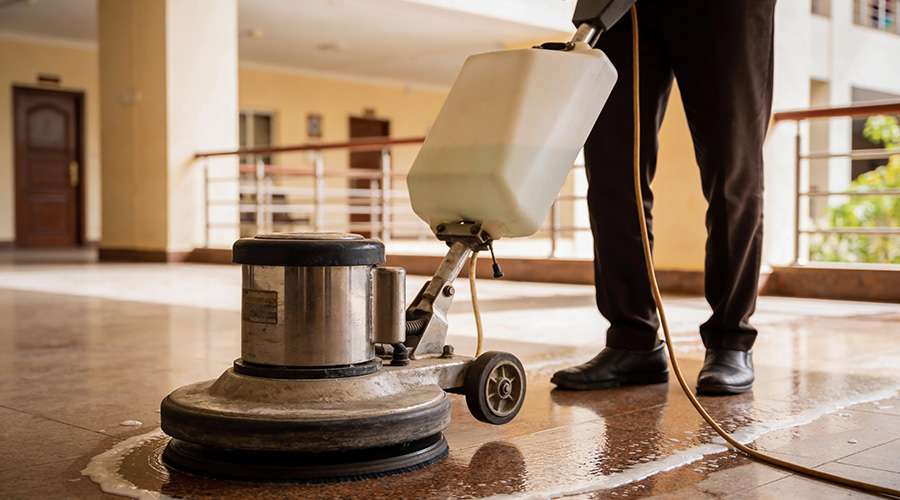
Facility cleaning teams rely heavily on brushes, brooms, and mops when maintaining cleanliness inside facilities. Despite their indispensable role, these hand tools account for a relatively small percentage of equipment sales. In fact, for many distributors, hand tools amount to 10 percent or less of their total sales, and some have noticed a decline in sales over the last few years.
One of the reasons for this downturn is the changing nature of floor care. RJ Hartt, Operations Manager for PR Chemical & Paper Supply, Pensacola, Florida, has noticed a slump in hand tool sales, which he attributes to new, low-maintenance flooring materials. And Bill Allen, Sales Rep at Fagan Sanitary Supply, West Elizabeth, Pennsylvania, says the implementation of backpack vacuums for “short” floor surfaces, such as those in stairwells, has reduced the use of hand tools—albeit a small change.
In addition to new flooring technology and evolving maintenance practices, team cleaning has had a noticeable impact on hand tool usage inside facilities.
“There’s more focus on a team cleaning approach where employees perform specific tasks,” says Allen. “Instead of every person in a facility needing each and every tool, some employees may be assigned to tasks that don’t require brushes, brooms, or mops.”
Finally, the intrinsic properties of hand tools keep sales rates steady: Brushes, brooms, and mops are designed to last a long time, and typically do.
“They’re not a disposable or consumable product, so they don’t require constant replenishment,” says Robert Taylor, Owner of BIP Supply Company, Atlanta, Indiana. “Hand tools are pretty sturdy and don’t break often, so from an end user standpoint, that’s a good thing.”
Lightening the Load
Longevity is a desirable quality in hand tools. Facility cleaning executives want durable, high-quality brushes, brooms, and mops that stand up to a multitude of cleaning tasks warranted by their cleaning teams. To this end, Taylor suggests managers pay attention to product materials when purchasing hand tools. As a rule of thumb, synthetic materials typically outlast and outperform natural materials. Meanwhile, microfiber mop heads tend to clean more effectively than their cotton counterparts, while fiberglass or aluminum handles last longer than wooden handles and have the added advantage of being lightweight.
“We recommend cleaning managers choose upgraded synthetic materials, like nylon bristles instead of straw bristles that break easily,” says Taylor. “We don’t like to sell to people that are price hunters, because if you don’t get the longevity out of the purchase, you’re not getting a deal.”
Similarly, distributors encourage facility managers to assess hand tools for technological advancements and designs that enhance user comfort and improve productivity. Many of these ergonomic improvements reduce strain on employees’ wrists, hands, and backs.
When purchasing brushes, for instance, Taylor encourages purchasing agents to pay careful attention to both the handles and the bristles.
“Look for angled handles and softer bristles so the team doesn't have to scrub as hard, and they’re putting less pressure on their hands and wrists,” he says. “The harder the bristle, the more pressure workers have to apply. Today’s bristles are softer yet stronger. The old, stiff bristles are gone for the most part.”
According to Erroll Foy, Corporate Accounts Sales Manager for Imperial Dade, New Brighton, Minnesota, new designs in trigger sprayers that help avoid hand fatigue are becoming more common on mops. Additionally, enhanced design features such as adjustable lengths, swivel heads for hard-to-reach areas, soft-grip handles, and lighter weight tools make it easier to clean properly when repetition is required.
Quick-release handles that allow for hands-free mop head changes are another growing trend that can mitigate potential back injuries. Allen has noticed an uptick in charging buckets and flat mop holders that allow frontline custodians to release the mop from the frame without using their hands.
What to Know Before Buying Cleaning Hand Tools