
 CleanLink Interactive Spring/Summer 2026 Issue
 Recognizing the 2026 Reader Choice Award Winners
 2026 Emerging Leader Award
 How Surfactant Use is Expanding in Commercial Cleaning
Key Takeaways:
• Well-maintained entry mats prevent dirt and moisture while improving safety and cleanliness perceptions.
• Clean glass, touchpoints, and waiting areas help visitors feel confident in the facility's cleanliness.
• Restrooms are a top priority because small cleanliness or supply issues can create lasting negative impressions.
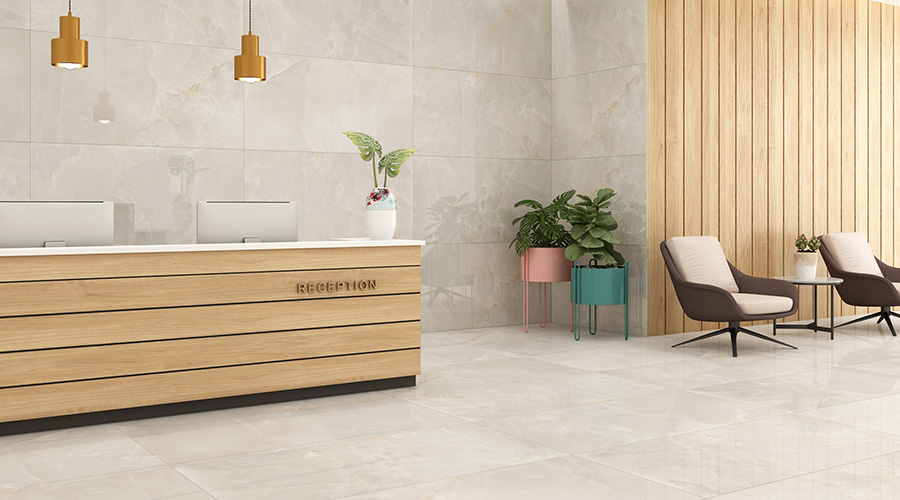
Judging by the grandiose waterfalls, statement reception desks, and sometimes aggressive brand integration from the first step inside, it’s safe to assume businesses feel first impressions matter. Many facility executives believe refinery projects professionalism, which is why it’s important their entryways appear clean from the jump.
While the foundation of commercial cleaning companies is to create healthy spaces, they're no strangers to customers prioritizing "cleaning for appearance," with a strong emphasis on first impressions. Luckily, the spaces building occupants first see upon entry can both look and be clean if the proper strategies are practiced.
The Usual Suspects
If a business is wise, the first step an occupant will take in its facility is on some sort of matting. All mats must be cleaned vigorously and continuously—especially during inclement weather. They should be vacuumed and rotated 180 degrees daily to maximize effectiveness and extend their life.
The amount of matting to be used is what's up for debate. Some experts say matting must cover a person's first 20 steps; some claim 30 feet of matting is needed; and others suggest 50 feet as the benchmark. In any case, different mats perform different jobs.
"There should be a scraper mat outside, a scraper-dryer mat in the foyer, and a finishing mat inside," says Dave Thompson, Director, Academy of Cleaning Excellence. "Together, they remove soil and moisture before those contaminants reach the building’s floor surfaces."
Thompson has been involved in the commercial cleaning industry for decades. He takes the business very seriously, so he isn't joking or being hyperbolic when he says matting provides one of the great returns on investment of any cleaning tool.
"I tell building service contractors (BSCs) that mats are as or more important than an autoscrubber," he says. "If you are willing to invest in equipment to clean the floor, you should also invest in preventing soil from reaching it."
Entrance matting systems are also great safety tools because they collect the liquid and debris that can cause one to trip and fall—potentially preventing serious injury, and in some cases, a lawsuit against the business. However, if a mat isn't lying flat, and instead has a rolled corner or is bunched up, it's ironically a trip hazard. Occupants notice this, which can have a negative effect on their perception of the facility.
"Properly maintained matting contributes to both the perception of cleanliness and the actual safety of the entrance," says Thompson.
Of course, people don't just walk with their heads cast down to the ground. When gazes are affixed ahead, building visitors are looking at something else pervasive across most facility entrances: glass.
At minimum, frontline workers should spot clean entry glass each shift and clean all glass from top to bottom once a week, says Ben Walker, President, Walker Foundry, LLC. Ideally, entryway glass is cleaned as traffic necessitates, using appropriate tools—Walker prefers a quality, folded microfiber cloth sprayed with a properly diluted all-purpose cleaner or glass cleaner. It's important that any tool used is clean, and that the janitor doesn't use too much solution on the glass surface.
Many facilities have a waiting room near the entrance. While intended to be an inviting place where visitors can relax during idle time, these areas can quickly make people uncomfortable.
"People first notice the areas they physically touch, including chair arms and other high-touch surfaces," says Thompson. "If those surfaces are sticky, occupants immediately question whether the area is being serviced properly."
If the occupant doesn't feel anything off, they often start to look around as they wait. Cleaning teams should target fingerprints on glass, smudges on surfaces, dust, or even damaged furnishings.
"A tear on the surface of a waiting-room chair is not merely unattractive," explains Thompson. "Damaged material can hold bacteria and contaminants and may no longer be properly cleaned for health."
Restrooms aren't usually the reason a visitor stops at a facility, but they're certainly one of the first spaces they frequent. Fittingly, that's also the environment both Thompson and Walker view as the priority in the perception of clean.
"One of the first lessons I learned about restrooms was that you never get a second chance to make a first impression, followed by you never know how much of a mess will be in a restroom during the hours of operation," recalls Walker.
When grading restroom cleanliness, Thompson begins with the baseboard. If he spots a brown line about 2 inches above the floor, he knows a mop has picked up contaminants from the floor and spread them to the wall. This isn't cleaning, but rather spreading contaminants around—one of the profession’s cardinal sins.
"If I find that condition, the restroom is neither healthy nor safe, and it gives me a good indication of how the remainder of the facility is maintained," says Thompson.
Of course, restroom issues go beyond baseboards. Dirty toilets and urinals, unsightly stall disposal bins, malodors, no toilet paper, empty hand soap and towel dispensers, overflowing trash bins, sticky floors—the list goes on. One or more of these issues in a restroom is enough to cause a lasting bad impression.
"Restrooms may represent only about 5 percent of a building, but they generate approximately 50 percent of its complaints," shares Thompson. "Many complaints involve supplies that have run out. No occupant should enter a restroom and find that soap, towels, or tissue are unavailable."
Luckily, there are things commercial cleaning companies can do to avoid these issues. They can work with the facility to install different dispensers or incorporate restroom equipment that leverages Internet of Things (IoT) technology to notify staff when product runs out.
Frontline teams should also be trained to service restrooms based on usage and occupancy, not just follow an arbitrary schedule. When cleaning that space, janitors should focus on high-touch points, such as handwashing stations, door handles, toilet flushers, soap pumps, hand dryers, and towel dispensers.
Hidden Cleaning Issues in Commercial Facilities