
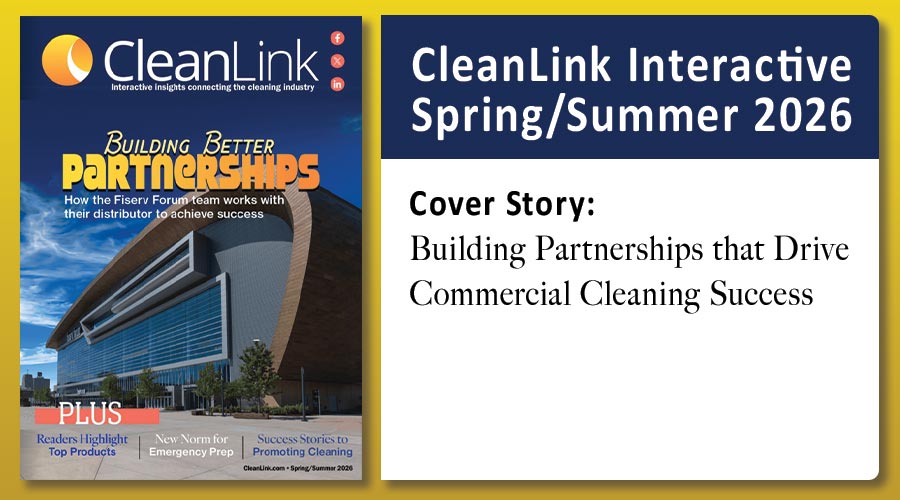
 CleanLink Interactive Spring/Summer 2026 Issue
 Recognizing the 2026 Reader Choice Award Winners
 2026 Emerging Leader Award
 How Surfactant Use is Expanding in Commercial Cleaning

As customer expectations evolve, sustainability is becoming less about compliance and more about competition—which is a good thing.
“It’s no longer enough to do a good job,” Ashkin says. “[BSCs] have to compete in so many other areas, and sustainability can provide a roadmap to help them organize what it is they’re doing.”
McGarvey agrees, but he also believes too many BSCs react to customer sustainability requests instead of preparing for them.
“They should be looking at adopting a program of their own that they can take to those customers,” he says. “That way, when they bid on a new job, they don’t have to create a sustainability program because they already have one.”
McGarvey believes that approach will be more important as sustainability expectations grow. Rather than scrambling every time a request for proposal demands sustainability documentation, BSCs with established programs can show consistent practices from the beginning.
Taking a proactive approach also positions BSCs to show greater transparency throughout their supply chain. California’s climate disclosure requirements, for example, will mandate many large companies to collect sustainability information from suppliers beginning in 2027. That means any BSC looking to do business with Californian companies must soon provide information pertaining to sustainability practices.
Two decades ago, the cleaning industry had an issue with manufacturers making environmental claims that couldn’t be substantiated. Ashkin believes the industry is entering a similar phase with sustainability. He emphasizes that many BSCs have sustainability pages on their websites but cannot back up their claims with meaningful data. Instead of broad statements about protecting the environment, customers expect measurable information that includes documented fuel consumption, water use, waste diversion, employee retention, training hours, volunteer activities, and governance practices.
McGarvey recommends that BSCs “turn the sustainability mirror back on their own operation,” and evaluate more than the chemicals they use. There are plenty of questions to ask. Are fleet routes efficient? Is fuel consumption tracked? How much electricity and water does the company consume? What happens to equipment when it reaches the end of its useful life? How are employees trained? Are suppliers operating ethically?
“It’s a much broader lens than when we start talking about sustainability,” McGarvey says. “Green products are a piece of the puzzle, but they are not the entire puzzle.”
Ashkin shares that BSCs often discover inefficiencies when they begin measuring those activities.
“When companies start looking holistically at what they’re doing, they find inefficiencies that, once addressed, can help them save money,” he says. “Sustainability is good business.”
People Matter
Green building programs once zeroed in on building occupants. Newer standards now include the frontline workers who clean and maintain those facilities every day. McGarvey says he has supported that perspective for years.
“When we first started talking about green cleaning, it was always about the people that were being served by the cleaners,” he says. “But we never worried about the person with the spray bottle in their hand for eight hours a night.”
McGarvey says sustainability programs must recognize that protecting janitors is as important as protecting building occupants. That means providing safer product chemistry, comprehensive training, proper personal protective equipment (PPE), and responsible employment practices. It also includes thorough onboarding and ongoing education.
“Employees are less likely to use products correctly, wear PPE consistently, or follow established cleaning procedures without proper training,” he says.
Certified products still matter, too. These products simply become the baseline. Now the conversation has moved from what BSCs buy to how they run their businesses.
One recent example is the industry’s response to PFAS. Rather than waiting for regulations to force change, many manufacturers began reformulating products years in advance.
“They got in front of this and have been working on reformulating the floor finish so that they do not have added PFAS,” McGarvey says.
As sustainability requirements become more complex, jan/san distributors are becoming trusted advisors. Distributors can help BSCs find certified products, gather documentation, and interpret evolving certification requirements. Whether a customer needs certification, recycled-content verification, or documentation for a LEED project, distributors have direct access to manufacturer information. That guidance saves BSCs time while helping them meet rigorous customer expectations.
Back to the Future
Neither expert believes sustainability expectations will slow anytime soon. Ashkin expects customers to request more detailed information about transportation emissions, purchased products, operational resilience, and organizational performance. McGarvey agrees and believes preparation will separate future industry leaders from everyone else.
“I think preparation will be key,” McGarvey says. “Those organizations that get in front of it and map it out will be in a much better position than those that try to figure it out after they’ve been asked about it.”
He also encourages BSCs to consider pursuing certifications for their own operations, such as Green Seal’s GS-42 or ISSA’s CIMS-GB. Even BSCs who decide certification isn’t necessary can benefit from reviewing the standards.
The biggest takeaway isn't which certification changed this year—it’s why those changes matter. Today's sustainability programs challenge BSCs to look beyond products and profits by asking if they are reducing waste, retaining employees, and measuring environmental impact. BSCs must also know if they can withstand disruptions.
That’s the real message behind the latest updates to LEED, WELL, Green Seal, UL ECOLOGO, Fitwel, and additional sustainability initiatives. These programs exist to help BSCs build businesses centered on sustainability.
Ronnie Wendt is a freelance writer and owner of In Good Company Communications in Waukesha, Wisconsin.
How BSCs Use Sustainability Programs to Earn Business