
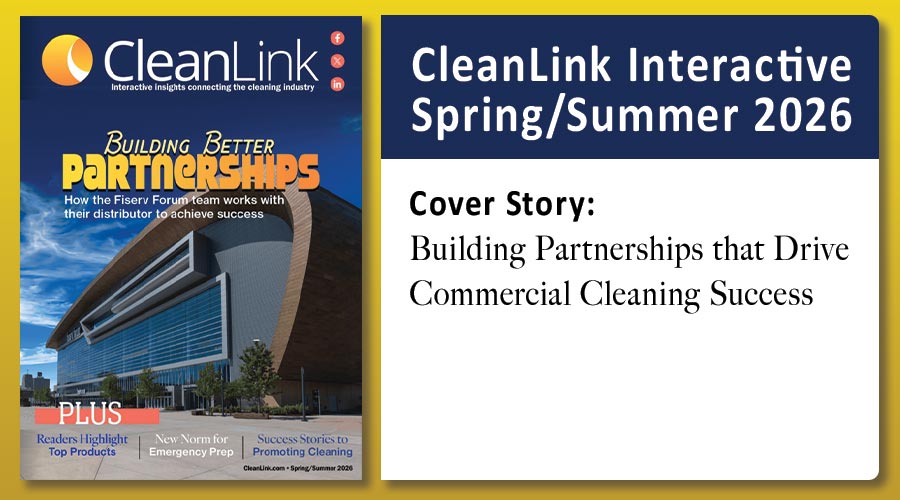
 CleanLink Interactive Spring/Summer 2026 Issue
 Recognizing the 2026 Reader Choice Award Winners
 2026 Emerging Leader Award
 How Surfactant Use is Expanding in Commercial Cleaning

Building a loyal, hardworking, and dedicated cleaning team starts with strong, intentional training programs. In an industry often challenged with high turnover and limited long-term retention, effective training serves as both a foundation and a differentiator. While many building service contractors (BSCs) struggle to maintain consistent staffing, a select few have successfully created cultures of accountability, growth, and continuous improvement.
These BSCs understand that training is more than onboarding—it is an investment in people. By equipping frontline workers with clear expectations, practical skills, and opportunities for advancement, a BSC can foster engagement and long-term commitment. As a result, teams feel empowered to take ownership of their work and contribute meaningfully to the organization’s success.
This piece explores how David Murphy, President/CEO of Supreme Maintenance Organization (SMO) in Greensboro, North Carolina, emphasizes training and staff engagement as key tools to retention. He outlines strategies that have proven effective in building and retaining strong cleaning teams, as well as the approaches that have fallen short. By examining real-world successes and challenges, Murphy offers practical insights for other BSCs seeking to strengthen their workforce and reduce turnover.
What motivates you to invest in strong training and development programs for your staff?
MURPHY: At a very basic level, training is the most scalable way to deliver consistent quality to our customers. We’re not really in the cleaning business, we’re in the customer service business—which ultimately means we’re in the people business. If we don’t invest in our people up front, we end up paying for it later through higher turnover, customer complaints, and frustrated managers.
On a deeper level, we believe most people genuinely want to do a good job. They just need clear expectations, the right tools, and consistent support. Training is how we provide that foundation and honor the trust people place in us when they join our team.
How do you structure your onboarding and initial training for new employees?
MURPHY: We start with a structured electronic onboarding process to handle the administrative basics and set expectations before day one. New team members then attend an in-person “New Team Member Orientation” where we introduce our culture, standards, and what success looks like at SMO.
On day two, they participate in a classroom training session through SMO University that follows a show, tell, do, review learning model. The focus is on helping team members understand not just what to do, but why it matters.
Once classroom training is complete, we transition to onsite orientation and hands-on training, where employees learn the specific routines, expectations, and nuances of their assigned facility. This progression, from fundamentals to real-world applications, helps build confidence and consistency from the start.
What core skills and values do you prioritize when training new team members?
MURPHY: Cleaning skills can be taught, so we start with attitude. We want team members to understand the importance of the role they play in helping our customers do their jobs. They’re not just emptying trash cans or cleaning restrooms; they’re supporting environments where children are educated, and critical healthcare services are delivered.
We train our teams to serve with purpose and to take pride in the impact of their work. Along with that sense of purpose, we emphasize safety, professionalism, and teamwork.
How do your training programs contribute to building strong, cohesive teams?
MURPHY: Training creates shared experiences and shared expectations. When everyone understands the standards and processes, it reduces friction and finger-pointing. Teams function best when people know what’s expected of them and their coworkers. That clarity builds trust.
What specific process improvements have significantly impacted employee performance or satisfaction?
MURPHY: One improvement that has made a meaningful difference is reinforcing training after onboarding. We now follow initial training with an online review and knowledge check through our learning management system (LMS). This allows us to confirm that each team member truly understands our standards and expectations, rather than assuming the information stuck the first time.
Just as importantly, it gives us an early opportunity to provide additional coaching or clarification where needed.
In what ways do you encourage continuous learning and professional growth within your organization?
MURPHY: We create clear pathways for growth and make development accessible at every level. All team members have the opportunity to participate in our Career Track Program, a four-course series focused on foundational supervision and leadership skills. Team members who complete the program are identified for potential advancement, which proves that growth at SMO is achievable.
How do supervisors and managers support employee development on a day-to-day basis?
MURPHY: Their primary job is coaching and motivating. That means regular communication, real-time feedback, and addressing small issues before they become big ones. Supervisors and managers are trained to reinforce standards, recognize high performers, and remove obstacles that prevent team members from being successful.
Have you seen measurable changes in employee retention since implementing these programs?
MURPHY: Because these programs have been part of our culture for many years, it’s difficult to isolate them as a single data point. That said, we firmly believe they play a significant role in retention. The clearest evidence is tenure. Many of our team members have been with us for five, 10, 15, 20, and even over 25 years.
Another strong indicator is internal advancement. A large percentage of our supervisors and managers began in frontline roles, which demonstrates that when people are trained, supported, and given growth opportunities, they’re far more likely to stay and build long-term careers within the organization.
What role does communication and employee recognition play in strengthening teamwork and reducing turnover?
MURPHY: It is critical to the mission. People don’t leave companies; they leave leaders and environments where they feel invisible or unheard. Consistent communication and genuine recognition reinforce our belief that team members are just as important as customers. Recognition doesn’t have to be expensive; it simply must be sincere and timely.
What advice would you give to other BSCs who want to reduce turnover and empower their workforce?
MURPHY: Start by simplifying and standardizing your training processes. Confusion drives turnover. Invest in your new hires and make sure they understand expectations and have the tools and training necessary to be successful. Finally, treat training as an operational necessity, not an expense. If you build systems that help people succeed, retention becomes a byproduct rather than a constant struggle.
Corinne Zudonyi has been in the commercial cleaning industry for over 20 years and is proud to serve as Editor-In-Chief of Contracting Profits (the official publication of BSCAI), Facility Cleaning Decisions, and Sanitary Maintenance (the North American media partner of Interclean Amsterdam) magazines, publications that serve the professional cleaning industry. Additionally, Corinne manages CleanLink.com, the leading digital resource for the commercial cleaning industry, and she uses her industry knowledge to steer educational topics for Clean Buildings at NFMT East.
Corinne is the sole U.S. representative to serve on the international Interclean Amsterdam Innovation Jury, where she weighs in on product trends impacting commercial cleaning on a global scale. She also works closely with Healthy Green Schools & Colleges to advance healthy and sustainable cleaning in educational facilities. As a member of the CLEAN Awards Jury, through the Building Service Contractors Association International, Corinne also helps recognize cleaning contractors and their companies for outstanding service to the industry.
Corinne can commonly be found moderating industry panel discussions, presenting education, and focusing on bringing awareness and affirmation for the wonderful work that people do to keep facilities clean and building occupants safe and healthy.
Follow Corinne on LinkedIn here.