
 The Down and Dirty on Cleaning in Virus Season
 Industry Report Reveals Burnout Prevalence Among Cleaning Professionals
 How Surfactant Use is Expanding in Commercial Cleaning
Established consistency in developing standards for cleaning, disinfecting, and sanitizing is imperative, according to J. Darrel Hicks, Owner and Principal of Safe, Clean, and Disinfected, St. Louis.
“I think many mistakes were made by contractors during COVID,” he says. “One of those was indiscriminate spraying of disinfectants on surfaces that weren't intended to be disinfected. The result was damage to these surfaces.”
Hicks feels the pendulum is swinging back to a more measured and measurable approach, which is good for all involved.
To establish consistent practices of cleaning for health and safety, BSCs should start with an infection prevention framework that serves as a foundation across all facilities. This should include risk assessments—evaluating each facility’s layout, occupancy, and high-touch points—and defining frequency, methods, and validation practices based on those assessments.
“We emphasize proactive, targeted cleaning (called 'processing') to break the chain of infection,” explains Dave Thompson, Director of Education at the Academy of Cleaning Excellence, Orlando, Florida. “Priority is given based on risk factors such as frequency of touch, presence of outbreaks, vulnerability of occupants, and regulations.”
According to Thompson, these processes consist of routinely disinfecting high-touch surfaces using both common sense and professional guidelines, with a focus on areas with ready food supplies for microbes—i.e., organic matter—and moisture, such as sinks and restroom fixtures. It also includes elevated priority during high-risk periods.
“For offices and schools, in particular, BSCs should adopt a seasonal infection prevention program, paying special attention to high-touch areas during periods of high infection, such as flu season or during outbreaks,” he says. This includes more frequent processing to prevent the spread of infection. If there's an outbreak of any illness or when vulnerable individuals are present, that increases the priority of an infection prevention program.
In healthcare settings, experts explain that BSCs need to follow the facility's bloodborne pathogens exposure control plan to minimize exposure to contaminated surfaces or fluids. Also, local, state, or federal regulations may require specific disinfectants for blood or bodily fluid cleanup.
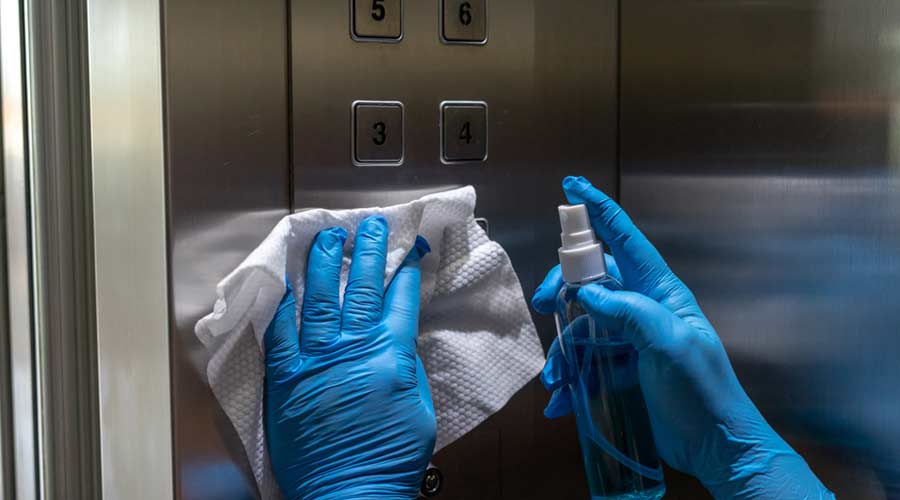
Segura identifies several high-risk areas within facilities where contamination is more likely to occur, including restrooms, kitchens and food prep areas, reception areas, and break rooms. All are high-traffic areas that contain high-touch surfaces, such as counter tops, handrails, and light switches. Regular cleaning and disinfection of these high-touch points are essential to minimize the risk of illness and maintain a healthy environment.
Once BSCs have established standards and practices for cleaning for infection prevention, they should also consider product standardization—selecting a core group of disinfectants and cleaning products that meet a wide range of needs—and standardized personal protective equipment (PPE) for specific tasks to protect staff and reduce cross-contamination.
Hicks recommends using the same disinfectants in all facilities.
“We need to be going to a higher level with the disinfectants,” he says. “You need to use hospital-grade products in commercial cleaning, because you don't know what infections people have and may be leaving behind.”
While Hicks recommends the “sledgehammer effect” of a hospital-grade disinfectant—“it kills bacteria, fungus, viruses”—he stresses the importance of appropriately mixing/diluting and not watering the product down. In other words, BSCs need to stick to the instructions on the label.
What to Use
The first step in pairing appropriate products with the application is to evaluate all the options with suppliers. Discuss what the cleaning team needs to execute, test products, discuss training, and outline a path to implementation.
“Distribution partners possess valuable expertise and can guide you in selecting the most effective cleaning products tailored to the specific needs of the diverse facilities you are tasked with maintaining,” says Segura. “By understanding the unique challenges and requirements of each environment, your supplier can recommend the right solutions to ensure optimal cleanliness and hygiene.”
Considerations should include products with broad-spectrum efficacy against viruses, bacteria, and fungi; selecting disinfectants with manageable dwell times for operational efficiency; ensuring products do not damage surfaces, particularly in sensitive environments (electronics and food prep areas); products that are low in toxicity and have minimal scent or odor to support indoor air quality; and products that carry third-party certifications from the EPA, Green Seal, or ECOLOGO.
Thompson says the product selection process should emphasize safety, efficacy, and environmental responsibility. The goal is to select EPA-registered products that effectively target pathogens while minimizing toxicity and harm to users and the environment.
Establishing protocols for effective cleaning goes beyond selecting the best products and tools. These protocols can fail without consistent execution. BSCs should also invest in comprehensive training programs for their staff that go beyond the basics of how to clean, but also focus on why it matters. The incorporation of digital tools, such as apps and portals, can provide real-time updates, compliance tracking, and standardized task checklists.
Hicks also stresses the importance of training workers so as not to cross-contaminate spaces in the facilities they're tasked with cleaning. He trains workers to clean “from top to bottom, from the cleanest part of the room to the dirtiest,” and that only clean microfiber cloths go into a bucket (soiled cloths are bagged for laundering).
It’s also essential that BSCs supply frontline workers with adequate PPE. Segura stresses that gloves, masks, boot covers, and aprons will all help minimize a worker’s exposure to dangerous pathogens.
In addition to physical tools to properly tackle infection prevention, BSCs would be wise to consider the importance of customer feedback when outlining processes.
“In today's fast-paced environment, the interactions and dynamics within the facility are continually shifting and transforming,” Segura says. “This necessitates a keen understanding of customer needs and preferences, making their feedback invaluable for improving services and adapting to change.”
Ultimately, infection prevention is not just a behind-the-scenes component of cleaning. By establishing structured, evidence-based cleaning practices, selecting safe and effective products and equipment, and training and protecting workers, BSCs can deliver high-quality, dependable service across a wide variety of facilities, and increase trust among facility owners and occupants. This not only safeguards health and safety, but also positions BSCs as trusted partners in building resilience and operational continuity.
Shannon O'Connor is a freelance writer from Mason, Ohio.
Techniques BSCs Use to Carry Out Infection Prevention Practices