
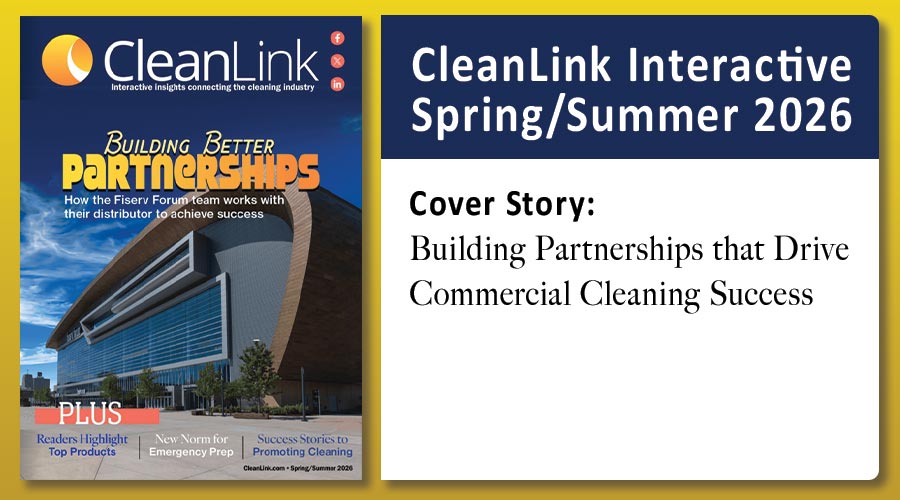
 CleanLink Interactive Spring/Summer 2026 Issue
 Recognizing the 2026 Reader Choice Award Winners
 2026 Emerging Leader Award
 How Surfactant Use is Expanding in Commercial Cleaning

By David Green, Founder and CEO of Rediscover Clean
Housekeeping operations are the backbone of cleanliness and customer satisfaction in hotels, hospitals, and other facilities. For years, cleaning teams have relied on paper-based assignment systems, verbal communication, and manual tracking to ensure areas are cleaned efficiently. However, these traditional methods often lead to inefficiencies, duplication of effort, and missed opportunities for optimization — which ultimately impact productivity, labor costs, and service quality.
In today’s fast-paced world, digital work assignment solutions have emerged as a game-changer, offering automation, real-time tracking, and improved workflow management. But with so many options available, how do managers know what to look for when selecting the right system?
This guide will break down the key features and benefits of digitizing housekeeping assignments, ensuring the cleaning team is equipped with the best technology to increase efficiency, standardize processes, and support housekeepers in doing their best work.
Banning Paper
Traditional cleaning assignment methods involve distributing printed task sheets, manually tracking progress, and relying on radio communication for updates. While these processes have worked in the past, they come with significant challenges:
Duplication of effort and miscommunication – Paper-based systems often require repeated updates and reassignments when unexpected changes arise.
Lack of real-time visibility – Managers have no way to track completed versus pending tasks without checking manually.
Inefficient task distribution – Without real-time insights, some frontline workers may be overloaded, while others have lighter workloads.
Difficulty in measuring productivity – There’s no easy way to analyze labor trends or identify areas for improvement.
The best cleaning teams today are moving away from outdated inefficiencies and embracing digital solutions that streamline operations.
Review Digital Options
Reviewing digital assignment options can be daunting. Here are six areas to consider when shopping for the best fit.
1. Lean approach with continuous real-time measurement
A strong digital system should track real-time activity and continuously measure performance, allowing for:
-Identification of optimization opportunities – Understand where inefficiencies exist and make improvements in staffing and scheduling.
-Schedule refinement – Adjust assignments based on real-time conditions, ensuring the right number of cleaners are in the right places at the right time.
-Quick response to workflow changes – Whether its last-minute area requests or staff shortages, a digital system should adapt quickly.
A lean approach ensures that operations remain smooth and responsive without wasted time or excessive labor costs.
2. Productivity tracking at every level
A digital cleaning system should provide insights into employee, shift, and department-level productivity to ensure fairness and efficiency.
-Employee Level: Assignments should be automatically balanced so no individual is overloaded or underutilized. The staff should also be able to see their tasks in real-time and mark them complete.
-Shift Level: Supervisors should have real-time progress tracking, allowing them to redistribute workloads as needed to maintain efficiency.
-Department Level: Over time, managers should be able to analyze data to identify trends, improve workflows, and enhance overall labor management.
By digitizing assignments, productivity is no longer left to guesswork. Managers have concrete data to ensure fairness and efficiency.
3. Real-time dashboards with color-coded progress bars
The most effective digital assignment systems eliminate the need for verbal check-ins and manual progress tracking. Instead, they offer:
-Color-coded dashboards – Tasks should be visually represented, showing completed versus pending assignments in an easy-to-read format.
-Live progress bars – Managers and supervisors should be able to track real-time status updates at a glance.
-Instant alerts – If areas are falling behind schedule or additional staff are needed, the system should notify the right people immediately.
This level of visibility allows for proactive decision-making, reducing delays and ensuring a seamless customer experience.
4. Standardization and automation of workflows
A digital system should not only streamline daily assignments but also bring standardization to the cleaning process. Consistency is key in maintaining high-quality cleaning standards and ensuring that every area meets the same level of cleanliness.
Look for a system that eliminates inefficiencies by automatically assigning and tracking work progress. It should ensure standardized cleaning checklists so every worker follows the same process. And it should balance workloads effectively to prevent inefficiencies and labor imbalances.
When standardization is built into the workflow, it becomes easier to train new employees, measure performance, and maintain high-quality standards across the board.
5. Embedded training and customization capabilities
One often-overlooked feature is embedded training within the system. A robust digital platform should allow housekeeping personnel to access procedural guidance when necessary. This is especially important in complex environments such as hospitals where specific protocols must be followed for isolation areas.
Additionally, find out how customizable the system is. Some platforms are rigid and offer limited flexibility in generating reports. Ensure that the software allows for customized reporting and data analytics to meet the facility’s unique needs.
6. Investment in research and development (R&D)
Technology is evolving rapidly, particularly with the rise of artificial intelligence (AI) and automation. When evaluating digital assignment software, ensure that the company behind it is actively investing in research and development. A forward-thinking provider will continuously enhance its platform, ensuring cutting-edge features, better AI-driven optimizations, and long-term adaptability.
Cleaning Smarter, Not Harder
When searching for a digital cleaning assignment system, managers should look for:
-Automated workflows that eliminate inefficiencies and increase efficiency.
-Real-time dashboards with color-coded progress bars for full visibility.
-Standardization in cleaning processes to ensure consistency.
-Productivity tracking at the employee, shift, and department levels.
-Built-in training features to support housekeeping personnel.
-Customization capabilities for tailored reporting and analytics.
-A commitment to R&D to keep up with digital advancements.
Cleaning teams work hard to maintain high standards and they deserve the best tools to support them. It’s time to move beyond paper, embrace digital solutions, and bring efficiency to the forefront of cleaning operations.
David Green is the Founder and CEO of Rediscover Clean, a consulting and leadership development company focused on luxury hotel housekeeping, healthcare EVS, and operational performance improvement. With nearly 40 years of experience in hospitality and healthcare operations, David has led teams for organizations including Cleveland Clinic and The Ritz-Carlton Hotel Company.
David specializes in leadership development, workforce engagement, operational assessments, labor optimization, sustainability initiatives, and service excellence strategies for hospitals, hotels, and facility service organizations. Through Rediscover Clean and the Yer A Rockstar Leadership Academy, he works closely with frontline leaders and executive teams to create practical systems that improve quality, accountability, employee engagement, and operational consistency.
Known for his “Leading with Kindness is the New Cool” philosophy and his Kindness Metric Driven Leadership approach, David combines operational expertise with entertaining and engaging teaching methods designed specifically for frontline service industries. He is a frequent speaker on topics including leadership, employee engagement, cleaning for health, sustainability, and operational efficiency. David is also a contributing industry writer for Cleanlink as well as other publications and podcast host who enjoys blending leadership development with music, storytelling, and real-world operational experience.
Follow David on LinkedIn here.
posted on 3/18/2025
