
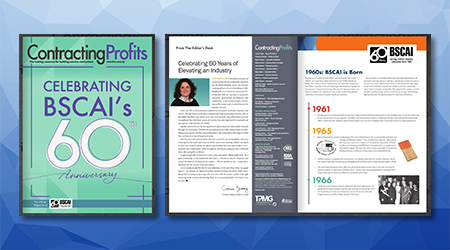
 Celebrating BSCAI's 60th Anniversary eBook
 Recognizing the 2026 Reader Choice Award Winners
 2026 Emerging Leader Award
 How Surfactant Use is Expanding in Commercial Cleaning
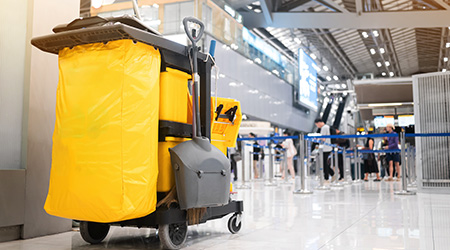 Boost Cleaning Efficiency and Sustainability in Just 40 Minutes
 Case Studies & White Papers
Case studies & white papers for the cleaning professional
Vacuums: A System to Clean Hospitals with Increased Productivity and Better Results
The healthcare environment is one of the most challenging, and critical, to clean. Pathogens are abundant and spread with ease, giving hospitals the reputation of causing more illnesses as they attempt to heal. And bureaucratic considerations and set protocols for cleaning must be negotiated.
One cleaning method is rapidly being adopted by environmental service managers in hospitals across the nation for raising the standard of quality, increasing productivity and saving on costs. Team Cleaning®, a system that organizes a cleaning crew into four distinct specialties, has been retrofitted to precisely fit the needs of healthcare, with astonishing results.
A typical four-person Team Cleaning crew is made up of a light duty specialist to dust and empty trash, a vacuum specialist, a restroom specialist and a utility specialist for miscellaneous tasks, including floorcare. Crew members develop levels of expertise that sharpen their job focuses and allow them to reach near surgical precision.
The 900,000 sq. ft. Kaiser Permanente Medical Center in Fontana, Calif. made the switch to Team Cleaning over a decade ago, when it was only in place at one other hospital in the U.S.
Bob Brewster, then director of environmental services for the facility, worked with his staff for months to develop a plan and introduce the concept. When implemented, the results were even better than they expected.
“I’m very much sold on Team Cleaning,” says Brewer. “We looked at the potential for labor savings, capital equipment savings, increased productivity and labor savings. We attained all four benefits.”
The new system proved to be 10 to 15 percent less expensive than zone cleaning.
In part, the success was due to the high filtration and ergonomic performance of the backpack vacuums used in the process. ProTeam®, the vacuum company, has partnered with the American Lung Association to educate consumers on indoor air quality issues. The backpack vacuums feature Four Level® Filtration that captures 99.9 percent of dust and microscopic pollutants down to one micron in size. And the improved indoor air quality was accompanied by another benefit: increased productivity.
“Team Cleaning has become our ‘best practices’ model not only for California but system-wide,” says Kaiser Permanente environmental services director, Dave Holsinger. “The majority of employees would not go back to conventional machines. Backpacks are easier. Mobility is less restricted. They don’t get hung up on furniture.”
West Park Hospital, a 265,000 sq. ft. facility in Cody, Wyoming, also made the transition to team cleaning, with exceptional results. Productivity went up by 15 to 20 percent, and the overall appearance and level of cleanliness shot up significantly. Worker absenteeism even went down by a third.
Deaconess Hospital in Bozeman, Mont. is another Team Cleaning convert. Productivity improvements saved the facility at least $30,000 annually in labor costs and $10,000 to $20,000 in overtime expenditures. The hospital has also saved on equipment costs.
“I spend about $480 for a backpack, but I spent around $490 for the upright I was using,” says Phil Sparks at Deaconess. “I had to replace six uprights a year. In three years I haven’t replaced a single backpack.”
He adds, “We were looking for ways to become more efficient, while improving the productivity of the staff we already had. Saving money was a goal, but our main priority was preventing quality from slipping — while covering our responsibilities more effectively. From that perspective, Team Cleaning made sense.”